
Backyard Landscaping Ideas That Turn Your Ordinary Yard Into a Private Escape
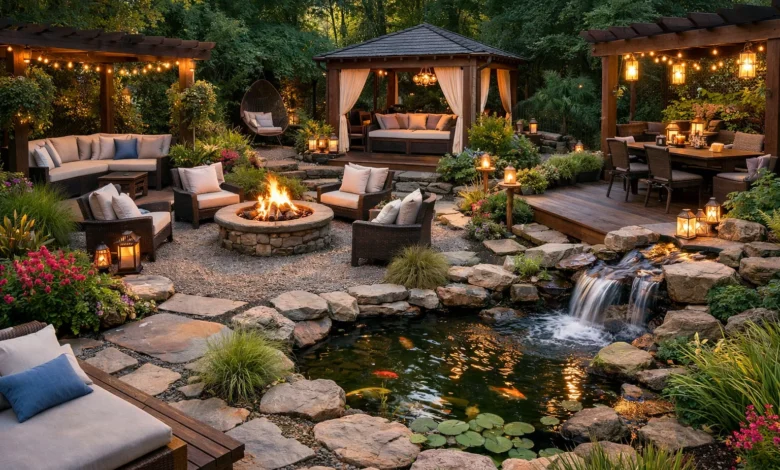
Backyard Landscaping Ideas: Let’s be honest for a minute. Most backyards are just… there. A patch of grass, a sad little bush, maybe a birdbath if you’re feeling fancy. But your backyard has so much more potential. It could be a quiet reading nook, a fire pit hangout spot, a vegetable garden, or even a mini wilderness retreat. The right backyard landscaping ideas can take a boring rectangle of lawn and turn it into the favorite room of your house—except this room has fresh air and sunshine. I’ve seen tiny city yards become lush jungles and sprawling suburban lots transform into entertainers’ dreams. And the best part? You don’t need a landscape architect or a fortune to get started.


The secret to great backyard landscaping ideas is thinking in layers. Start with the hardscape (paths, patios, walls), then add the softscape (plants, trees, flowers), then finish with the details (lighting, decor, water features). Each layer builds on the last. And you don’t have to do it all at once. In fact, the most beautiful backyards I’ve seen were built over the years—one weekend project at a time. So whether you have a green thumb or you’ve killed every houseplant you’ve ever owned, there’s a landscaping plan here for you. Grab a notebook, maybe a cold drink, and let’s dig into some ideas that will make your neighbors peek over the fence with envy.
Why Backyard Landscaping Ideas Matter More Than You Think
You might be wondering, “Why should I put time and money into landscaping when my yard is fine as is?” Fair question. But here’s the thing: smart backyard landscaping ideas don’t just make your property look pretty—they add real value to your life. Studies show that well-landscaped homes sell for five to fifteen percent more than those without. That’s thousands of dollars in your pocket if you ever move. But even if you’re staying put forever, landscaping improves your daily happiness. There’s actual science behind it: being around plants reduces stress, lowers blood pressure, and boosts creativity. Your backyard becomes free therapy.
Beyond the health and money benefits, landscaping gives you usable space. A plain lawn doesn’t invite you to linger. But add a stone patio, some shade trees, and a few flower beds, and suddenly you’re eating dinner outside, reading on weekends, and hosting bonfires. Backyard landscaping ideas also help the environment. Native plants support local bees and butterflies. Trees cool your house in summer, cutting air conditioning bills. Rain gardens prevent flooding. So no, landscaping isn’t just about vanity. It’s about creating a backyard that works for you, your family, and the planet. And the best time to start? Today.
Budget-Friendly Backyard Landscaping Ideas That Pack a Punch
Let’s start with the wallet-conscious among us. You don’t need to spend ten thousand dollars to have a gorgeous yard. Some of the best backyard landscaping ideas are almost free. First, embrace the power of mulch. A fresh layer of hardwood or pine mulch costs pennies but makes flower beds look instantly polished. It also suppresses weeds and retains moisture. Second, divide and conquer. Most perennials like hostas, daylilies, and black-eyed Susans can be dug up and split every few years. Trade divisions with neighbors. You’ll fill a whole garden bed for zero dollars. Third, use free or cheap materials. Craigslist and Facebook Marketplace often have leftover pavers, bricks, and gravel from other people’s projects.
Another killer low-cost idea is to create “garden rooms” using simple materials. A few wooden pallets standing on end become a rustic privacy screen. A sheet of corrugated metal makes a modern fence accent. Paint old tires and stack them as planters. And don’t underestimate the power of a clean edge. Just taking a flat shovel and cutting a crisp line between your lawn and your flower beds makes everything look ten times more intentional. For pathways, use stepping stones made from concrete pavers spaced apart with gravel or creeping thyme in between. These budget backyard landscaping ideas prove that creativity beats cash every time. Start small, think smart, and watch your yard transform.
Low-Maintenance Backyard Landscaping Ideas for the Lazy Gardener
Let’s be real—not everyone wants to spend every weekend weeding, watering, and pruning. And that’s totally fine. Low-maintenance backyard landscaping ideas are designed for people who want a beautiful yard without the full-time job. The secret is choosing the right plants. Native plants are your best friend because they’ve evolved to thrive in your local climate without extra water or fertilizer. For example, if you live in a dry area, plant lavender, yarrow, or sedum. In wetter regions, try ferns, hydrangeas, or Joe Pye weed. Once established, these guys take care of themselves.
Hardscaping is another low-maintenance hero. Replace large sections of lawn with patios, gravel beds, or decking. Grass needs mowing, edging, watering, and fertilizing. A stone patio needs… nothing. Maybe a sweep once a month. You can also use ground covers instead of grass. Creeping thyme, clover, or moss stay short, never need mowing, and feel soft underfoot. For mulch, use rubber mulch or decorative gravel—they don’t break down, so you never have to replace them. And install drip irrigation on a timer. You’ll spend ten minutes setting it up in spring and then forget about it. These backyard landscaping ideas give you the beauty without the burnout. Perfect for busy parents, frequent travelers, or anyone who’d rather grill than garden.
Stunning Hardscaping Backyard Landscaping Ideas for Structure and Flow
Hardscaping is the bones of your yard. It’s the patios, walls, paths, and pergolas that give shape to your backyard landscaping ideas. Without hardscaping, plants just look like a chaotic jungle. With it, everything has purpose. Start with a patio or deck as your main gathering space. You don’t need fancy stone—poured concrete with a stamped pattern, looks expensive but isn’t. Or use gravel with large stepping stones for a casual, cottage feel. Next, add pathways. Curving paths are more inviting than straight lines. Use flagstone, brick, or even wood rounds. Connect the patio to the garden, to the shed, to the fire pit. Every path should lead somewhere.
Walls and raised beds add vertical interest and define spaces. A low retaining wall of dry-stacked stone creates a natural border between lawn and garden. Raised beds made of cedar or concrete blocks make planting easier (less bending) and look tidy. For shade, a pergola or arbor is classic. Train climbing roses or wisteria over it. For a modern look, use a steel-and-cable trellis. And don’t forget seating walls. Build a low wall around your fire pit or patio that doubles as seating. That’s two functions for one price. Hardscaping backyard landscaping ideas like these turn a flat, boring yard into a series of outdoor rooms. And the best part? Hardscaping lasts for decades with almost no maintenance.
Small Yard Backyard Landscaping Ideas That Maximize Every Inch
Got a tiny backyard? No problem. Small yard backyard landscaping ideas are all about illusion and efficiency. First, trick the eye. Use vertical space. Install a trellis against a fence and grow climbing plants like jasmine or clematis. Hang pots on walls. Use a vertical planter made from pallets or gutters. This gives you a garden without using ground space. Second, choose scale-appropriate features. A massive tree will overwhelm a small yard. Instead, plant dwarf varieties of evergreens or small ornamental trees like Japanese maple or redbud. For patios, use large pavers (fewer grout lines make the space feel bigger) or pour a single concrete slab.
Third, create zones. Even a two-hundred-square-foot yard can have a dining zone, a lounging zone, and a planting zone. Define each with different flooring: gravel for dining, decking for lounging, and mulch for plants. Use furniture that folds or stacks when not in use. And mirrors! A weatherproof mirror mounted on a fence reflects light and greenery, instantly doubling the perceived size of your yard. Fourth, avoid clutter. One beautiful pot is better than ten plastic ones. One small water feature is better than a messy collection of garden gnomes. Finally, use corners. A corner bench with built-in planters turns a dead space into a cozy nook. These small backyard landscaping ideas prove that square footage isn’t everything—smart design is.
“The best time to plant a tree was twenty years ago. The second best time is today, even if your yard is the size of a postage stamp.” — Old gardener’s proverb.
Native Plant Backyard Landscaping Ideas That Help Local Wildlife
Let’s talk about something bigger than just looking pretty. Native plant backyard landscaping ideas are good for the earth, good for local animals, and good for your water bill. Native plants are species that evolved in your specific region. They’re adapted to your rainfall, your soil, and your temperature swings. That means they need less water, no fertilizer, and almost no pesticides. Once established, you basically ignore them. Meanwhile, they provide food and shelter for local birds, bees, butterflies, and beneficial insects. A yard full of native plants is a tiny nature reserve.
To get started, research what’s native to your area. In the eastern US, think milkweed for monarch butterflies, purple coneflower for goldfinches, and oak trees that support hundreds of caterpillar species. In the southwest, try agave, desert marigold, and palo verde trees. In the Pacific Northwest, salal, sword fern, and red flowering currant. Group plants by their needs: sun lovers together, shade lovers together. And leave some “messy” areas—a pile of sticks, a patch of bare soil, a log. These are homes for ground-nesting bees and lizards. You can also add a birdbath or small pond. Native plant backyard landscaping ideas create a living, breathing ecosystem. And you get to watch the show from your patio chair.
Water Feature Backyard Landscaping Ideas for Peace and Tranquility
There’s something about the sound of moving water that just melts stress away. Water feature backyard landscaping ideas range from simple to spectacular, but all of them add a sense of calm. The easiest and cheapest option is a “fountain in a pot.” Buy a large glazed ceramic pot, a small submersible pump, and some tubing. Drill a hole in the pot, run the tubing, fill with water, and plug it in. Set it on your patio or nestle it in a flower bed. The gentle bubbling sound masks traffic noise and lures birds. Total cost? Under a hundred dollars.
For something more ambitious, build a small pond. You don’t need a huge hole in the ground. A preformed plastic pond liner from a home improvement store is beginner-friendly. Dig a hole, drop it in, add water, and surround it with rocks and aquatic plants like water lilies or cattails. Add a few goldfish to eat mosquito larvae. For a modern look, try a “spillway bowl” fountain where water cascades from one stone bowl to another. Or a recirculating stream that trickles over river rocks. If you have a slope, a small waterfall is dramatic. The key with any water feature is to keep it simple. You don’t want a maintenance nightmare. Clean the pump every few months, top off water, and in cold climates, winterize by removing the pump. These backyard landscaping ideas bring a spa-like vibe to any yard.
Edible Backyard Landscaping Ideas That Feed Your Family
Why have a yard that only looks good when it can also taste good? Edible backyard landscaping ideas blend beauty with bounty. The concept is simple: replace ornamental plants with edible ones, but arrange them just as prettily. For example, instead of a hedge of boxwoods, plant a hedge of blueberries. They have white spring flowers, green summer berries, red fall foliage, and winter interest. Instead of a shade tree, plant a dwarf apple or pear tree. Instead of flower beds, plant beds of kale (which looks like ruffled lettuce), rainbow chard (neon stems), and purple basil (gorgeous and fragrant).
You can also integrate edibles into existing landscaping. Tuck strawberry plants as ground cover under trees. Grow pole beans up a decorative trellis. Use large terracotta pots for cherry tomatoes and peppers on the patio. Plant rhubarb for its huge, dramatic leaves. For herbs, create a dedicated spiral garden: a mound of soil shaped like a snail shell, with different herbs in each microclimate (rosemary at the top, mint at the bottom). And don’t forget edible flowers: nasturtiums, violets, and calendula add color to salads. The only caution: be mindful of pesticides. If you’re growing food, skip the chemicals. These edible backyard landscaping ideas turn your yard into a grocery store that’s always open. And nothing tastes better than a tomato you grew yourself.
Fire Pit and Cozy Gathering Backyard Landscaping Ideas
A fire pit is the ultimate social magnet. Backyard landscaping ideas that center around a fire pit create a natural gathering spot for family and friends. The options range from a simple metal bowl on gravel to a custom stone structure with built-in seating. For a DIY fire pit, buy a steel fire ring (about $50) and surround it with retaining wall blocks. No mortar needed—just stack them. Keep the pit at least ten feet away from structures, trees, and fences. And always check local burn bans. For seating, build a low wall of the same blocks, or use Adirondack chairs, or even large logs laid on their sides.
To make the area feel like a room, define the space with different flooring. Use gravel, pavers, or decking for the fire pit circle. Add lighting: string lights overhead, tiki torches around the perimeter, or solar pathway lights leading to the pit. For comfort, have a basket of blankets nearby (even summer nights get chilly). And a small side table for drinks and marshmallow supplies. If you want to get fancy, add a propane fire pit instead of wood—instant on/off, no smoke, and allowed in more areas. But I’m a traditionalist. Wood smoke, crackling sounds, and roasting marshmallows are hard to beat. These cozy backyard landscaping ideas will make your home the go-to spot for Friday nights.
Shade Garden Backyard Landscaping Ideas for Dark Corners
Got a spot in your yard that never sees the sun? Don’t fight it—embrace it. Shade garden backyard landscaping ideas turn those dark, damp corners into lush, mysterious retreats. The key is choosing the right plants. Hostas are the classic shade lovers, with leaves in every shade of green, blue, and gold. Ferns add delicate texture. Astilbe brings feathery pink or white flowers. Bleeding heart has romantic heart-shaped blooms. And for ground cover, try sweet woodruff or creeping jenny. These plants don’t just tolerate shade—they prefer it.
To make a shade garden feel intentional, layer your plants. Put taller plants like rhododendrons or hydrangeas in the back. Mid-sized ferns and hostas in the middle. Low-growing ajuga or moss in front. Add a bench or a couple of moss-covered rocks as a focal point. Paint a fence or wall a light color to reflect what little sun there is. Use white or silver-leafed plants (like variegated hostas or Japanese painted fern) to brighten the space. And consider a small mirror or shiny metal art to bounce light around. For paths, use light-colored gravel or stepping stones so visitors can see their feet. These backyard landscaping ideas prove that shade isn’t a problem—it’s an opportunity.
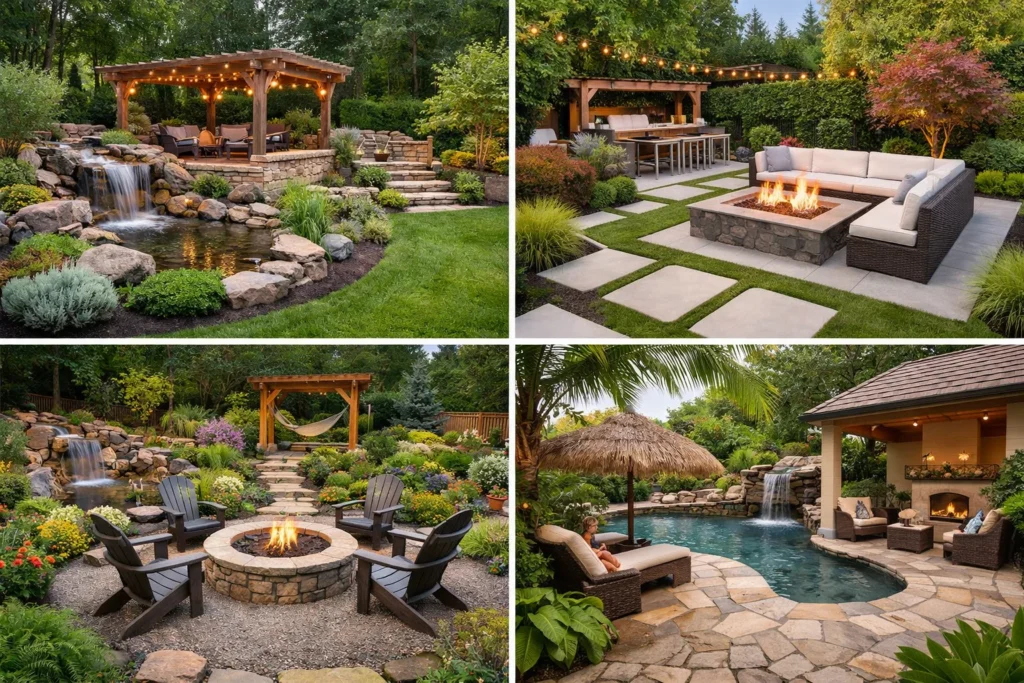
Modern Minimalist Backyard Landscaping Ideas for Clean Lines
Some people love a cottage garden explosion of flowers. Others prefer clean, calm, uncluttered spaces. Modern minimalist backyard landscaping ideas are for the latter group. The philosophy is simple: less is more. Use a limited palette of materials and plants. Stick to two or three colors. For hardscaping, think concrete, steel, gravel, and wood. For plants, think ornamental grasses, succulents, boxwoods, and bamboo. Avoid anything too frilly or chaotic.
A typical modern minimalist yard has large, geometric patios of poured concrete or large-format pavers. The furniture is low, sleek, and often black or gray. Plantings are grouped in sweeping masses rather than scattered individually. For example, a row of identical planters with the same grass. A single specimen tree, like a Japanese maple or olive tree, is placed perfectly off-center. A water feature might be a sheer descent waterfall into a black granite basin. Lighting is subtle: in-ground uplights, linear LED strips along edges. No garden gnomes, no wind chimes, no birdbaths. Just peace. These backyard landscaping ideas are low-maintenance by design because fewer plants mean less work. Perfect for urban professionals or anyone who finds visual clutter stressful.
Cottage Garden Backyard Landscaping Ideas Full of Romance
On the complete opposite end of the spectrum from modern minimalism, we have the cottage garden. These backyard landscaping ideas are all about abundance, nostalgia, and a little bit of chaos. Think flowers spilling over paths, roses climbing arbors, and vegetables mixed in with perennials. The cottage garden style originated in England, where working-class homes had small yards packed with both food and flowers. There are no straight lines or empty spaces. Everything is layered and lush.
To create a cottage garden, start with a picket fence or low stone wall to define the boundary. Then plant in drifts—not rows. Use old-fashioned flowers like peonies, delphiniums, foxgloves, hollyhocks, and lavender. Add climbing roses on an arch over the gate. Include edibles like chives, strawberries, and rhubarb—their flowers are pretty too. For paths, use crushed gravel or brick laid in a herringbone pattern. Add whimsical touches: a weathered bench, a birdhouse, a watering can used as a planter, maybe a sundial. Don’t be afraid of “weeds” like violets or clover—they add charm. The key to cottage garden backyard landscaping ideas is to relax. Don’t over-prune. Let plants go to seed. Embrace the wild. It’s not messy—it’s romantic.
Desert and Drought-Tolerant Backyard Landscaping Ideas
Living in a dry climate doesn’t mean you have to have a yard of dirt and rocks. Desert backyard landscaping ideas can be stunningly beautiful while using almost no water. The style is often called “xeriscaping,” from the Greek word for dry. The principles: use native and adapted drought-tolerant plants, group plants by water needs, minimize lawn, and use efficient irrigation (like drip systems). The result is a yard that looks like a natural desert oasis.
Key plants for desert landscaping include agave, yucca, prickly pear cactus, barrel cactus, desert spoon, and palo verde trees. For color, add penstemon, desert marigold, and red bird of paradise. Use gravel as your primary ground cover—decomposed granite in warm earth tones. Create dry creek beds with river rocks to channel rainwater. For hardscaping, use flagstone or concrete pavers in earthy colors. Add a ramada (a shade structure made of wood and palo verde branches) for seating. And for drama, backlight a large agave at night—the spines glow. These backyard landscaping ideas save thousands of gallons of water per year. And they look like high-end resort landscaping. No one will miss the grass.
“In the desert, every plant is a survivor. Your yard should be too.” — Southwestern landscape designer.
Backyard Landscaping Ideas for Families with Kids and Pets
If you have children or furry friends, your backyard landscaping ideas need to be functional and safe. First, choose durable materials. Avoid sharp gravel (paws and bare feet hate it). Use pea gravel, rubber mulch, or wood chips for play areas. For lawns, choose tough grass varieties like Bermuda or fescue, or consider artificial turf (no mud, no bare spots). Second, create zones. A lawn for running and ball games. A sandbox or play structure in one corner. A vegetable garden that kids can help with. A patio for parents to supervise.
Third, think about safety. Avoid toxic plants like oleander, azalea, lilies, and sago palm. The ASPCA has a full list. Fence the entire yard securely, with self-closing gates. If you have a pool, it needs a separate fence with a lock. For fire pits, use a screen or build it high enough that kids can’t fall in. Fourth, add fun features. A mud kitchen, a small hill for rolling down, a butterfly garden, or a “sensory path” with different textures underfoot. For pets, create a designated potty area with gravel or artificial turf that’s easy to clean. And provide shade—dogs overheat quickly. These family-friendly backyard landscaping ideas let everyone enjoy the yard without constant worry.
Vertical and Slope Backyard Landscaping Ideas for Challenging Terrain
Got a steep hill or a slope that’s impossible to mow? Don’t fight gravity—work with it. Slope backyard landscaping ideas turn a problem area into a dramatic feature. The most important thing is erosion control. Use terracing: build retaining walls across the slope to create flat planting beds. Walls can be made of stone, timber, or concrete blocks. Between walls, plant deep-rooted ground covers like creeping juniper, vinca, or ornamental grasses. Their roots hold the soil.
Another option is a “rock garden.” Scatter large boulders on the slope, then plant alpine plants and succulents in the pockets between them. Sedum, sempervivum, and creeping phlox thrive on slopes. For a more natural look, plant a meadow of native grasses and wildflowers. They only need mowing once a year. If the slope is very steep, consider a “green wall” or living retaining wall made of stacked blocks with pockets for plants. For access, build switchback paths or steps with railroad ties or stone. And always install drainage—a French drain at the top of the slope prevents washouts. These backyard landscaping ideas turn a liability into a landscape highlight. Plus, hillside gardens look incredibly cool and sculptural.
Lighting and Nighttime Backyard Landscaping Ideas
Why should your yard disappear when the sun goes down? Nighttime backyard landscaping ideas with good lighting extend your outdoor hours and create a magical atmosphere. The trick is layering three types of lighting: task, ambient, and accent. Task lighting illuminates functional areas like the grill or the path to the door. Use downlights or spotlights on a timer. Ambient lighting provides overall glow—string lights, lanterns, or bistro lights overhead. Accent lighting highlights special features: uplight a tree, silhouette a statue, or line a path with low-voltage path lights.
Solar lights are cheap and easy, but they’re dim and unreliable. For serious backyard landscaping ideas, invest in low-voltage LED landscape lighting. It’s safe (only 12 volts), easy to install (no electrician needed for most kits), and uses pennies of electricity. Run a transformer from an outdoor outlet, then bury the cable along your paths. Add a photocell so lights turn on automatically at dusk. For drama, place lights low and point them up (uplighting) or place them high and point them down (moonlighting). Avoid over-lighting—you want pools of light and shadow, not an airport runway. And use warm white bulbs (2700K to 3000K) for a cozy feel. These backyard landscaping ideas turn your yard into an evening destination.
Seasonal Color Backyard Landscaping Ideas for Year-Round Interest
A common mistake is planting only spring flowers. Then by July, everything looks tired and brown. The best backyard landscaping ideas plan for color in every season. Spring: bulbs like daffodils, tulips, and crocus. Also, flowering trees like dogwood and redbud. Summer: perennials like coneflower, black-eyed Susan, daylily, and lavender. Annuals like petunias and marigolds fill gaps. Fall: asters, mums, ornamental grasses (their plumes are beautiful), and trees with fall color like maple, oak, and ginkgo. Don’t forget berries—holly and beautyberry provide red and purple in autumn.
Winter is harder, but not impossible. Evergreens are your backbone: pine, spruce, holly, boxwood. Also, plants with interesting bark, like red twig dogwood (bright red stems) or paperbark maple (peeling cinnamon bark). Ornamental grasses leave standing for winter texture. And hellebores (Lenten rose) bloom as early as February. Also consider hardscaping for winter interest: a stone wall, a pergola, a bird feeder full of activity. To plan for year-round color, take photos of your yard each month for a year. Note the gaps. Then fill them. These seasonal backyard landscaping ideas ensure there’s always something to look forward to. No more sad, barren winter yards.
Privacy Backyard Landscaping Ideas to Block Nosy Neighbors
We all love our neighbors, but we don’t always love them watching us grill in our sweatpants. Privacy backyard landscaping ideas create a secluded haven. The fastest solution is a fence. A six-foot cedar privacy fence is classic. But fences can feel boxy. For a softer look, use living screens. Plant a row of arborvitae, laurel, or bamboo (clumping type only—running bamboo is invasive). Evergreens give year-round privacy. For faster growth, try Leyland cypress (grows three feet per year), but know they get huge.
Layering is more interesting than a single hedge. Plant a mix of evergreen trees, deciduous shrubs, and tall grasses. Add a trellis with climbing vines like ivy, jasmine, or clematis on top of a lower fence. Use raised planters on a deck railing to block sightlines at seated level. For a modern look, use horizontal slat screens made of cedar or metal. They filter views without blocking light completely. And don’t forget sound privacy. A fountain or waterfall creates white noise that masks conversations. These backyard landscaping ideas give you the feeling of being alone in the woods, even if you’re twenty feet from the neighbor’s barbecue.
Common Backyard Landscaping Mistakes and How to Avoid Them
Let me save you some regret. I’ve seen too many people make the same mistakes with backyard landscaping ideas. Mistake one: planting trees too close to the house. That cute little sapling will be a monster in ten years, with roots threatening your foundation and branches scraping your roof. Rule of thumb: plant a tree as far from the house as its mature height. Mistake two: ignoring soil. You can’t just dig a hole and hope. Get a soil test (your county extension office does them cheaply). Amend with compost. Mistake three: poor drainage. If water pools after rain, you’ll kill plants and breed mosquitoes. Fix grading or install French drains first.
Mistake four: planting without a plan. Resist the nursery impulse buy. Sketch your yard, note sun exposure, and buy plants that fit. Mistake five: overcrowding. Read the tag—that “small” perennial might spread three feet. Give plants room to grow. Mistake six: forgetting about maintenance. A high-maintenance garden is fun for exactly one month. Then it’s a chore. Be honest about your free time. Mistake seven: bad hardscape installation. A wobbly patio or heaving walkway is dangerous. Use proper base material (compacted gravel and sand). Mistake eight: no focal point. Every yard needs something that draws the eye—a tree, a sculpture, a bench. Avoid these errors, and your backyard landscaping ideas will thrive instead of just surviving.
Future-Proofing Your Backyard Landscaping Ideas for Climate Change
This might sound heavy, but it’s practical. Our climate is changing—hotter summers, weirder winters, more droughts and floods. Smart backyard landscaping ideas plan for the future. First, choose plants that are hardy in the next warmer zone. If you’re in zone 6 now, buy plants rated for zone 7. They’ll handle future heat. Second, reduce the lawn. Lawns are water hogs and carbon emitters (from mowing). Replace with meadows, ground covers, or hardscape. Third, plant more trees. Trees cool the air, absorb carbon, and manage stormwater. A single mature oak can drink fifty gallons of water a day.
Fourth, improve water management. Install rain barrels, rain gardens, and permeable paving. Permeable pavers let rain soak into the ground instead of running off. Fifth, create windbreaks. A row of evergreens on the north side cuts winter heating bills. Sixth, choose native plants—they’re resilient to local extremes. Finally, avoid invasive species. They’ll spread aggressively as temperatures shift, choking out natives. These forward-thinking backyard landscaping ideas protect your investment and help the planet. Your grandchildren will thank you.
Conclusion
Designing your backyard isn’t about following some rigid set of rules. It’s about creating a space that feels like you—a place where you want to spend time, whether you’re hosting a party, reading a book, or just watching the birds. The best backyard landscaping ideas are the ones that fit your lifestyle, your budget, and your local climate. Start small if you need to. A single flower bed, a path, a fire pit. Live with it for a season, then add more. There’s no finish line. A garden is always growing, always changing. And that’s the beauty of it.
So grab a shovel, or a notebook, or just your imagination. Walk outside and really look at your yard. See the potential. That sunny corner could be a vegetable patch. That shady spot under the tree could be a fern garden. That blank fence could hold a trellis of roses. Every great yard started with a single idea. Now you have dozens. Get to work—or better yet, get outside and enjoy the process. Your backyard is waiting.
FAQ Section
What are the cheapest backyard landscaping ideas that still look good?
The cheapest backyard landscaping ideas start with cleaning and editing. Remove dead plants, weeds, and edge your beds—it costs nothing. Then add a thick layer of mulch ($30–$50 for a yard) to make everything pop. Divide perennials from friends or neighbors for free plants. Use free pallets to build a simple bench or planter. Paint old pots in bright colors. Create a path with inexpensive pea gravel ($40 per ton) or wood chips (often free from tree services). And use solar lights from dollar stores for evening ambiance. You can have a stunning yard for under $200 if you focus on elbow grease and creative reuse.
How do I start backyard landscaping if I know nothing about plants?
Start with a simple plan. First, observe your yard for a week. Note where the sun falls (full sun, part shade, full shade). Note where water puddles. Then go to a local nursery—not a big box store. Tell them you’re a beginner. Ask for “tough, foolproof plants for your area.” Good starter plants include hostas (shade), daylilies (sun or part sun), black-eyed Susans (sun), and sedum (sun, dry). Buy small pots—they’re cheaper and adapt better. Dig a hole twice as wide as the pot, plant at the same depth, water well, and add mulch. That’s it. Then add one or two new plants each season. Before you know it, you’ll have a garden. And you’ll have learned along the way.
Can I do backyard landscaping myself, or do I need a professional?
Most backyard landscaping ideas are totally DIY-able if you’re patient and willing to learn. Planting beds, mulching, installing small patios (up to 100 square feet), building simple fire pits, and planting trees are all reasonable for a motivated homeowner. However, leave these things to pros: major grading or drainage changes, large retaining walls over three feet tall (they need engineering), natural gas line hookups, large tree removal, and complex irrigation systems. Also, if you have physical limitations or zero free time, hiring out is fine. There’s no shame in paying for expertise. A good compromise: design it yourself, then hire day laborers for the heavy digging.
How do I choose the right plants for my climate?
Use the USDA Plant Hardiness Zone Map. Find your zone (e.g., Zone 7a). When you buy a plant, the tag will say “hardy to Zone X.” Only buy plants rated for your zone or colder. For example, a Zone 7 plant is fine in Zone 7 or 6, but not in Zone 8 (too hot). Also, pay attention to the sun and water needs. A “full sun” plant needs at least six hours of direct sun. “Part shade” means three to six hours. “Full shade” means less than three hours. For water, “drought-tolerant” means little watering after establishment. “Moist” means regular watering. If you want foolproof, buy native plants for your region—they’re already adapted.
What’s the best ground cover to replace grass in backyard landscaping ideas?
The best ground cover depends on your conditions. For sunny, dry areas: creeping thyme (fragrant, purple flowers, tolerates light foot traffic). For sunny, average soil: clover (stays green, needs less water, fixes nitrogen). For shade: sweet woodruff (white flowers, smells like vanilla) or creeping jenny (bright lime green). For heavy foot traffic: blue star creeper or dwarf mondo grass. For no foot traffic: pachysandra or vinca minor. All of these need no mowing, less water than grass, and many have flowers. To convert lawn to ground cover, kill the grass with cardboard or solarization, then plant plugs or seeds. It takes one season to establish, then you’re done.
How do I keep my backyard landscaping low-maintenance?
Focus on hardscaping (patios, paths, gravel) over planting beds. Choose slow-growing, drought-tolerant plants that don’t need deadheading or staking. Evergreens and ornamental grasses are your friends. Install drip irrigation on a timer—no hand-watering. Use a thick layer of mulch (three inches) to suppress weeds. Replace lawn with ground cover or artificial turf. Avoid high-maintenance plants like roses (black spot, pruning), hybrid tea roses (finicky), and any plant that says “requires regular deadheading.” Group plants by water needs so you’re not overwatering some to save others. And design for easy access—no beds wider than you can reach from the edge. With these backyard landscaping ideas, you’ll spend weekends relaxing, not working.
| Style | Key Features | Best For | Maintenance Level |
| Modern Minimalist | Concrete, gravel, grasses, succulents, clean lines | Small yards, urban homes | Very low |
| Cottage Garden | Mixed flowers, climbing roses, picket fences, paths | Romantic, traditional homes | Medium to high |
| Desert Xeriscape | Cactus, agave, gravel, dry creek beds | Arid climates, water conservation | Very low |
| Woodland Shade | Ferns, hostas, moss, natural stone | Yards with mature trees | Low |
| Family Fun Zone | Lawn, sandbox, play set, vegetable beds | Households with kids and pets | Medium |