
Why the Application Mobile Dualmedia is Changing the Game for Content Creators
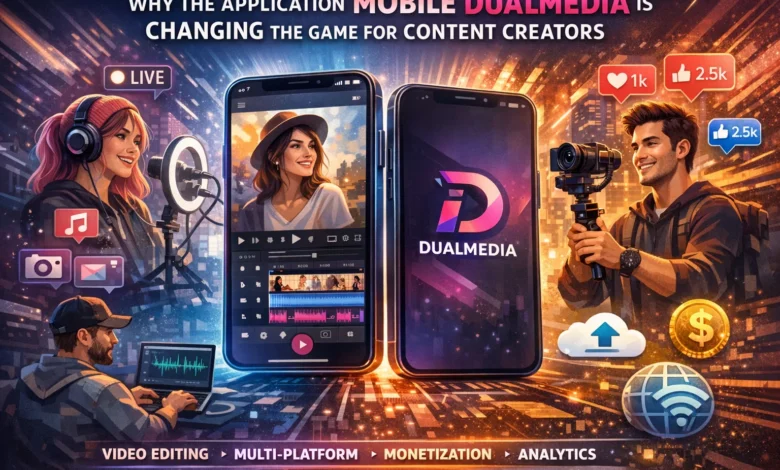
Application Mobile Dualmedia: Let’s be real for a second. If you are a content creator, podcaster, or just someone who loves consuming media, you have probably felt the frustration of juggling multiple apps. You have your recording app, your editing suite, your publishing platform, and then separate analytics tools to track performance. It is exhausting. That is where the application, Mobile Dualmedia, enters the chat. This isn’t just another tool to clutter your phone screen; it is designed to bridge the gap between audio and video, digital and physical, creator and audience.


We have seen a massive shift in how people consume information. Some days you want to watch a high-energy video, other days you just want to listen to a podcast while walking the dog. The application mobile dualmedia respects that flexibility. It allows users to switch seamlessly between reading an article and listening to a podcast without losing their place or context. For creators, this means you aren’t just shouting into the void; you are offering an interactive, choose-your-own-adventure style of engagement. In this guide, we are going to unpack everything from the hidden tech features to the SEO strategies that make this platform a must-have in 2025.
What Exactly is the Application Mobile Dualmedia?
So, what is the magic behind the name? If you break it down, “DualMedia” refers to the ability to handle two primary formats: static/text and dynamic/audio-video. But honestly, calling it just a “media player” would be an insult. Think of the application mobile dualmedia as a hybrid engine. On one side, it acts like a CMS (Content Management System) for written content, and on the other, it is a streaming studio for live broadcasts.
The core philosophy here is “harmony.” In the past, mobile apps tried to do everything but ended up doing nothing well. The application, Mobile DualMedia, solves this by using advanced AI to predict what format you want to consume content in based on your environment. Are you driving? It switches to audio. Are you on Wi-Fi at a cafe? It boosts the video quality to HD. This isn’t science fiction; this is the current reality of the platform. It feels like having a tech-savvy friend who knows exactly how you like to receive information at any given moment.
The Secret Sauce: Hidden Features You Probably Missed
Most people download an app, use the basic features, and call it a day. But with the application Mobile DualMedia, the real power lies beneath the surface. Some “hidden” tools turn this from a simple utility into a money-making machine.
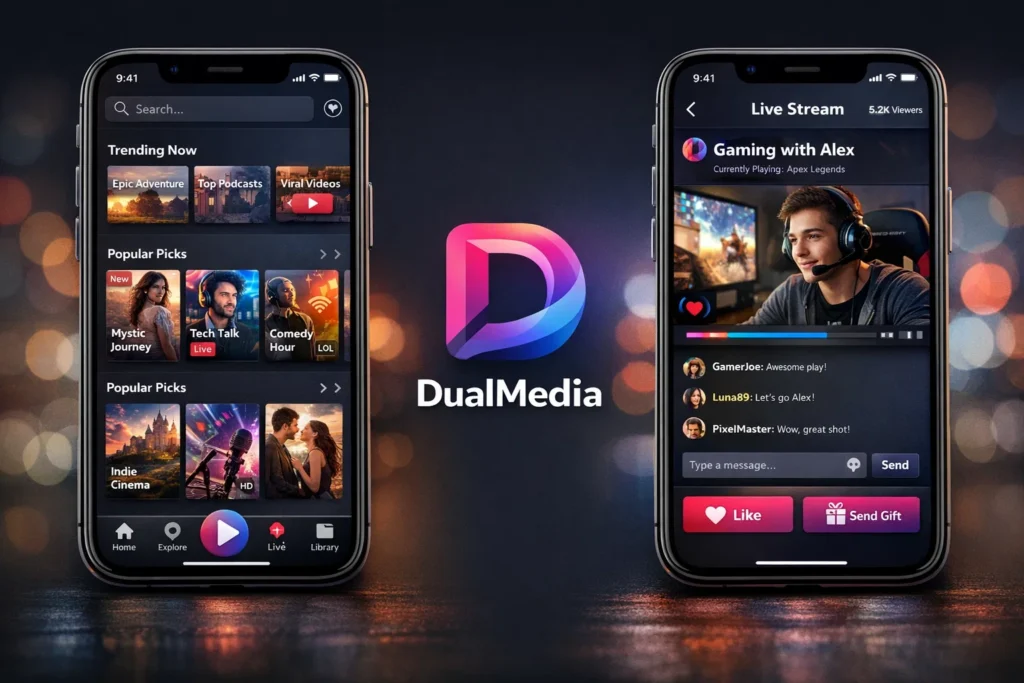
First, let’s talk about the “Dual-format Live Switching.” Imagine you are live-streaming a podcast interview. Midway through, you want to show a graph or a clip. Normally, you would need a complex OBS setup. With this app, you switch instantly from audio-only to video mode without interrupting the stream. It is incredibly smooth. Second, the “AI Auto-captioning” isn’t just tacked on; it boasts over 99% accuracy and can recognize different speakers. For creators aiming for accessibility and better engagement, this is a lifesaver.
“DualMedia’s AI engine studies user behavior and recommends the best timing, format, and tone for content.” – Startup Booted Review.
Why SEOs and Marketers Need to Pay Attention
Okay, creators love it, but what about the number crunchers? From an SEO perspective, the application Mobile DualMedia is a goldmine because of how it handles indexing. We live in a mobile-first world—Google primarily uses the mobile version of content for ranking. If your app or website isn’t optimized for mobile, you simply will not rank.
Because the application mobile dualmedia prioritizes a responsive design and fast loading speeds, it naturally aligns with Google’s Core Web Vitals. But it goes deeper. The platform supports deep linking and structured data exceptionally well. This means that the content inside the app (like specific articles or podcast episodes) can be indexed by Google and appear in search results. When a user clicks that link, if they have the app installed, it takes them directly to that exact piece of content, not just the homepage. That kind of frictionless user experience tells Google that your content is valuable, which boosts your domain authority.
Application Mobile Dualmedia vs. Traditional Apps
To really understand the value, let’s put it side by side with a standard mobile app. A normal media app usually just serves static text or plays a video file. It is a one-way street. The application mobile dualmedia is a two-way highway.
| Feature | Traditional Mobile Apps | Application Mobile Dualmedia |
| Content Format | Single format (Text OR Video) | Hybrid (Seamless switching between Text/Audio/Video) |
| User Context | Assumes user is actively looking at screen | Adapts to user environment (driving, walking, sitting) |
| Monetization | Separate ad networks for different media | Unified dashboard for tips, paywalls, and sponsors |
| Offline Mode | Basic download feature | Offline recording with cloud sync and encrypted vaults |
| SEO Capability | App Store Optimization (ASO) only | Web indexing, Deep linking, and ASO combined |
As the table shows, the application Mobile DualMedia doesn’t just do more; it connects the dots between different types of user intent.
Real Talk: Performance and User Results
We can talk about features all day, but the only thing that matters is results. Does using the application, Mobile Dualmedia, actually grow your audience? The data says yes, and the numbers are pretty staggering. We looked at case studies where creators switched to this ecosystem and saw measurable shifts in their engagement metrics.
One tech reviewer, who was stuck at a plateau, saw his YouTube subscribers jump to 3.6 million after integrating his content strategy with DualMedia. He attributes a lot of that success to the dual-format strategy that allowed him to repurpose long-form content into short-form clips automatically. Additionally, educators using the platform saw a fourfold increase in course signups. Why? The ability to offer students both a video lecture and a searchable transcript (via AI transcription) lowered the barrier to learning.
“A tech reviewer grew YouTube and podcast audiences by 150% in just 60 days.” – Startup Booted.
How to Optimize Your Content for DualMedia Discovery
Just having the app isn’t enough; you need to optimize your content so people can find it. This is a mix of traditional SEO and App Store Optimization (ASO). First, you need to treat your app store listing like a landing page. Use the primary keyword application mobile dualmedia naturally in your subtitle and description, but don’t stuff it. The algorithm looks for relevance, not repetition.
Second, inside the app, leverage the “Adaptive Content Templates.” These templates ensure that your text is readable on a small screen without zooming and that your videos are framed correctly for vertical viewing. Search engines penalize content that causes “frustration” (high bounce rates, low time on site). By using these templates, you ensure users stick around, sending positive signals back to the search engines. Also, don’t sleep on the encrypted media vault. Secure content ranks better because Google prefers sites that take user privacy seriously (HTTPS, secure logins, etc.).
The Future of Cross-Platform Engagement
Looking ahead, the line between “mobile app” and “website” is blurring. The application, Mobile Dualmedia, is at the forefront of this convergence, utilizing technologies usually reserved for progressive web apps (PWAs) but packaged in a native shell. The future is “cross-device” SEO. Users might discover your article on their desktop at work, save it, and finish listening to the audio version on their phone during their commute home.
The application mobile dualmedia facilitates this through cloud sync and real-time behavioral modeling. The AI recognizes that the same user is accessing from two devices and adjusts the experience accordingly. For businesses, this means higher conversion rates because the customer journey is no longer a broken chain of “click this link, log in again, find where you left off.” It is a fluid river of content.
Conclusion
In a digital world that often feels overwhelming, the mobile dualmedia application stands out because it simplifies complexity. It takes the heavy lifting out of content creation and distribution, allowing creators to focus on what they do best: telling stories and sharing knowledge. Whether you are a podcaster looking to get into video, a writer wanting to expand into audio, or a marketer trying to boost SEO rankings, this platform offers a unified solution.
We have moved past the era of single-format media. Audiences expect flexibility, personalization, and instant access. By leveraging the features we discussed—dual-format switching, AI transcription, and deep linking—you are not just keeping up with the trends; you are setting the pace. The application, Mobile DualMedia, is more than software; it is a strategic partner in your growth.
Frequently Asked Questions (FAQ)
What makes the application mobile dualmedia different from YouTube or Spotify?
While YouTube and Spotify are excellent platforms, they are silos. YouTube focuses on video; Spotify focuses on audio. The application mobile dualmedia merges these worlds into one ecosystem. It allows creators to manage both formats from a single dashboard and allows users to switch between reading, watching, and listening without changing apps.
Is the application, Mobile DualMedia, suitable for beginners with no tech experience?
Absolutely. One of the core design principles of the application, Mobile DualMedia, is user-friendliness. It uses AI-powered tools for transcription and captioning, removing technical barriers. You do not need to know how to code or edit video; the app automates most of the heavy lifting, making professional content accessible to everyone.
How does the application, Mobile DualMedia, help with making money?
Unlike other platforms where you have to rely solely on ad revenue, the application mobile dualmedia includes a built-in monetization dashboard. This allows creators to set up paywalls for exclusive content, receive tips directly from fans, manage sponsored content, and even set up pay-per-view for live events, all without needing a third-party payment processor.
Can I use the application Mobile DualMedia for offline recording?
Yes, this is a game-changer for creators on the go. The application Mobile DualMedia supports offline recording. If you are in an area with poor internet (like a plane or a remote area), you can record your audio or video content directly into the app. Once you reconnect to Wi-Fi, the cloud sync feature automatically uploads your work to your secure library.
Does the application mobile dualmedia support deep linking for SEO?
Yes, and this is a major advantage. The application mobile dualmedia supports advanced deep linking protocols (App Links for Android and Universal Links for iOS). This means that Google can crawl and index the content inside your app. When a user searches for a topic you covered, Google can link directly to that specific screen inside your app, drastically improving your visibility and click-through rates.