
Outdoor Kitchen Ideas That Will Make You the King or Queen of Backyard Cooking
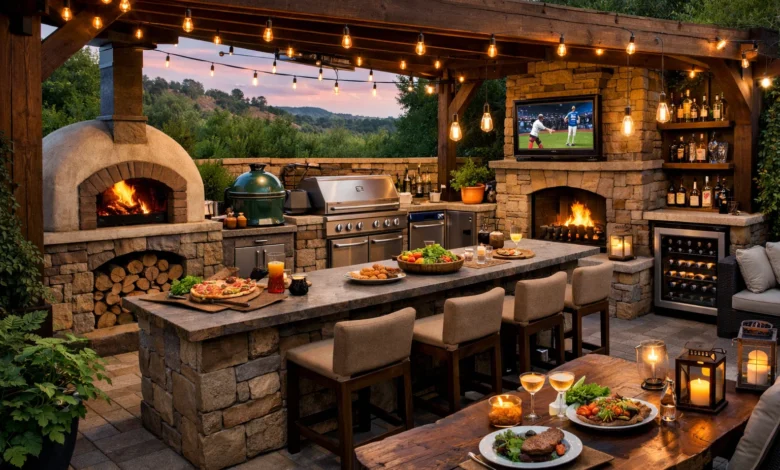
Outdoor Kitchen Ideas: Let’s be real for a second. Cooking indoors is fine, but have you ever flipped burgers while the sun is setting, a cold drink in your hand, and the smell of smoke mingling with fresh air? That’s the dream. And the only way to truly live it is by building an outdoor kitchen. Not just a rusty grill on a concrete slab—I’m talking a full-blown cooking, dining, and entertaining zone. Whether you have a tiny urban patio or a sprawling suburban lawn, there’s an outdoor kitchen idea out there with your name on it. In this guide, we’re going to walk through everything from budget-friendly hacks to jaw-dropping luxury setups. By the end, you’ll be itching to grab a toolbox (or a contractor’s number) and start building.


The beauty of modern outdoor kitchen ideas is that they’ve come a long way from the “basic barbecue” stereotype. Today, you can integrate pizza ovens, sink stations, refrigerators, and even WiFi-enabled smokers. But don’t worry—you don’t need a millionaire’s budget to get started. Some of the smartest designs use simple materials like concrete blocks, repurposed cabinets, and creative layouts. The key is planning your workflow: cooking zone, prep zone, and serving zone. Get those right, and the rest falls into place. So grab a notebook, because we’re about to dive deep into designs, materials, layouts, and mistakes to avoid. Let’s fire up that imagination.
Why Your Backyard Deserves a Dedicated Outdoor Kitchen
You might be thinking, “Can’t I just roll my grill out when needed?” Sure, you can. But there’s a massive difference between a temporary setup and a permanent outdoor kitchen. First, convenience. Once you have a fixed cooking area with storage, you’ll never haul propane tanks or charcoal bags again. Everything has its place. Second, property value. Real estate experts agree that a well-designed outdoor kitchen can recoup 100% to 200% of its cost upon resale. That’s insane return on investment. Third, lifestyle. When your outdoor kitchen is always ready, you cook outside more often. You eat healthier (less processed food, more grilled veggies). You host more gatherings. It changes how you use your entire home.
Beyond the practical perks, there’s an emotional benefit. Cooking outdoors taps into something primal and relaxing. The sounds of sizzling, the open flame, the breeze—it’s therapy. An outdoor kitchen also extends your living space. Instead of cramming twenty people into your indoor kitchen for a party, you spill out into the yard. Kids run around while adults man the grill. Pets aren’t underfoot. And cleanup? Way easier when you have a dedicated sink and trash station outside. So no, it’s not an unnecessary splurge. It’s an upgrade to your daily life. And the best part? There’s a version for every budget, which we’ll explore right now.
Budget-Friendly Outdoor Kitchen Ideas That Don’t Look Cheap
Let’s start with the wallet-conscious among us. You don’t need to spend twenty thousand dollars to get a functional and attractive outdoor kitchen. One of the smartest budget outdoor kitchen ideas is the “cinder block special.” Buy standard concrete blocks, stack them into an L-shape or straight line, and cap them with concrete pavers. Leave cavities for a drop-in grill or kamado-style cooker. The whole thing costs under $500, looks industrial-chic, and lasts for decades. Paint the blocks with heat-resistant masonry paint if you want color. Another low-cost route is repurposing an old metal tool cabinet or workbench. Roll it next to your grill, add a cutting board on top, and boom—you’ve got storage and prep space.
For those who want a bit more polish without breaking the bank, consider using prefab cabinets from big-box stores. Many brands offer weather-resistant resin or stainless steel cabinets that assemble in an afternoon. Pair them with a portable gas grill that you build into a simple wood frame. Add a cantilever umbrella for shade and a small outdoor rug to define the space. Total cost? Often under $1,500. Also, don’t sleep on Facebook Marketplace or Craigslist. People sell used outdoor kitchen components all the time when they remodel. You can snag a sink, fridge, or even a pizza oven for pennies on the dollar. The trick is patience and knowing how to clean up stainless steel (Bar Keepers Friend works wonders). Remember: budget outdoor kitchen ideas aren’t about being cheap—they’re about being smart with your spending.
Mid-Range Marvels: Balancing Cost and Quality in Outdoor Kitchen Ideas
Once you have a budget of $5,000 to $15,000, the world of outdoor kitchen ideas opens up dramatically. At this level, you can hire a handyman or DIY with higher-end materials. Think granite or concrete countertops, built-in natural gas grills, and weather-sealed cabinets. A popular mid-range layout is the “U-shaped” kitchen that wraps around two sides of a patio. One leg holds the grill and side burner. Another leg holds a sink and refrigerator. The third leg becomes a bar counter with stools. This design promotes conversation because the cook faces guests. Materials like galvanized steel, cedar wood, and porcelain tile are affordable yet durable at this price point.
Another killer mid-range idea is the “modular outdoor kitchen.” Companies like RTA (Ready to Assemble) sell weatherproof cabinet sets that click together like Legos. You choose the modules: drawers, doors, trash pull-outs, and even an ice chest. Then you pick a grill head from a brand like Napoleon or Bull. The modular approach lets you customize without custom fabrication costs. And if you move houses? You can disassemble and take it with you. Don’t forget lighting at this tier. Add low-voltage LED strip lights under the counter and a pendant light over the dining area. It’s small touches like these that make mid-range outdoor kitchen ideas feel luxurious. Also, consider a drop-in beverage center. Nothing says “host with the most” like an outdoor-rated mini fridge full of cold sodas and beers.
Luxury Outdoor Kitchen Ideas for the Ultimate Entertaining Experience
Now we’re talking serious coin—$20,000 and up. At this level, your outdoor kitchen becomes a true architectural feature. Luxury outdoor kitchen ideas include full roof structures with ceiling fans, built-in heaters for chilly nights, and even outdoor televisions. You’ll see materials like natural stone veneer, marine-grade polymer cabinets, and soapstone countertops (which don’t burn or stain). A top-tier layout often features a “cooking spine”: a long island with a gas grill, charcoal grill, flattop griddle, and pizza oven side-by-side. Yes, that’s four cooking methods. Because why choose? Add a smoker off to the side, and you can feed an entire block party.
But the real hallmark of luxury is automation. Imagine controlling your outdoor kitchen with your phone. Smart grills from brands like Lynx or Twin Eagles have probes, timers, and temperature alerts. Outdoor-rated dishwashers and kegerators are becoming common. Some people install misting systems for hot climates or infrared heaters for cold ones. Another jaw-dropping idea: a built-in fire pit integrated into the kitchen island, so guests can roast marshmallows while you sear steaks. And don’t forget the bar area. A luxury outdoor kitchen almost always includes a wet bar with a sink, icemaker, and glass rack. Pair it with a pergola draped in outdoor curtains for privacy and shade. These outdoor kitchen ideas aren’t just about cooking—they’re about creating a resort in your backyard.
Small Space Outdoor Kitchen Ideas That Maximize Every Inch
Got a tiny balcony, patio, or courtyard? No problem. Small space outdoor kitchen ideas rely on vertical thinking and multi-function furniture. First, ditch the idea of a full island. Instead, use a narrow “grill station” that’s only 24 inches deep. Wall-mounted fold-down tables give you prep space only when you need it. A rolling cart with a butcher block top can serve as both a storage and serving area. For cooking, choose a compact 2-burner gas grill or a small kamado like the Joe Jr. These pack serious heat without eating up square footage. Also, look for combo units that include a grill and side burner in one small footprint.
Another genius small-space trick is to use the back of a house or garage as your kitchen’s backbone. Mount a metal pegboard on the wall to hang tools, spices, and even small shelves. Below it, place a narrow stainless steel table (restaurant supply stores sell them cheaply). Add a portable induction cooktop for backup cooking. For seating, use wall-mounted folding stools or a bench that doubles as storage for propane tanks. And don’t forget to use mirrors or glossy backsplashes to reflect light and make the space feel larger. The key with small outdoor kitchen ideas is to avoid clutter. Stick to one cooking appliance, one prep surface, and one storage solution. Everything else is extra. You can still host a mean taco night—trust me.
Choosing the Perfect Layout for Your Outdoor Kitchen
Layout is everything. Even the best appliances feel wrong if the flow is awkward. The most common and effective layout is the “work triangle,” borrowed from indoor kitchen design. That means your grill (cooking zone), sink (cleanup zone), and refrigerator (cold storage zone) should form a triangle with no leg longer than nine feet. This minimizes steps and keeps you efficient. For outdoor kitchen ideas, the triangle works beautifully, but you have to account for traffic. Guests will naturally gravitate toward the grill. So place seating and serving areas outside the triangle to avoid collisions. A straight-line layout works for narrow spaces: grill on one end, sink in the middle, fridge on the other end.
Another popular layout is the “galley,” with two parallel counters facing each other. This is great for couples who cook together—one person mans the grill while the other preps on the opposite side. But leave at least four feet of walkway between them. For larger parties, consider an “L-shaped” layout that creates a natural corner for a bar or pizza oven. The inside of the L becomes the cook’s domain, while the outside edges serve guests. Also, think about wind and sun. In most climates, position the grill so that the smoke blows away from seating. In hot regions, put the kitchen on the north or east side of the house to avoid afternoon sun. Layout mistakes are the hardest to fix later, so mock it up with hoses and chairs first. Live with the mock layout for a weekend. You’ll spot problems before you pour concrete.
Must-Have Appliances for Outdoor Kitchen Ideas That Work
Let’s talk toys—I mean, tools. The heart of any outdoor kitchen is the grill. But don’t just grab any grill. For outdoor kitchen ideas to really shine, match the grill to your cooking style. Gas grills offer convenience and control. Charcoal grills deliver smoky flavor. Pellet grills give you set-it-and-forget-it smoking. Kamado grills do everything from searing to baking. At a minimum, get a grill with at least 400 square inches of cooking surface. Next, a side burner is a game-changer. Boil corn, simmer beans, or heat sauce without running inside. After that, add a sink with running water (even a small bar sink with a five-gallon jug and pump). It’s incredible how much you’ll wash your hands and rinse produce outdoors.
Other appliances that elevate outdoor kitchen ideas: a built-in refrigerator (rated for outdoor use—don’t use indoor fridges outside, they’ll die in a year), an ice maker (guests love this), and a trash drawer or pull-out bin. For the adventurous, a pizza oven is pure magic. Wood-fired ovens hit 800°F and cook a Neapolitan pie in 90 seconds. Electric outdoor ovens are cheaper and easier. And don’t overlook storage drawers for tools, spices, and lighter fluid. Finally, think about power. You’ll need GFCI outlets for small appliances like blenders or phone chargers. Plan for at least two duplex outlets. And if you want outdoor speakers or a TV, run conduit before you build. Trust me, retrofitting wires is a nightmare.
“The difference between a grill and an outdoor kitchen is preparation. A grill is a tool. A kitchen is a system.” — Anonymous pitmaster.
Countertop and Flooring Materials That Survive Sun, Rain, and Grease
Choosing the right surfaces is critical. Indoor granite might crack in freeze-thaw cycles. Outdoor kitchen ideas need materials that handle UV rays, moisture, and dropped spatulas. For countertops, stainless steel is the gold standard. It’s heatproof, stainproof, and easy to clean. But it scratches and shows fingerprints. Concrete is another great choice—you can pour it into any shape and add color. Seal it well, or it will crack and stain. Soapstone is naturally non-porous and heat-resistant, but it’s soft and scratches easily (some like the patina). Avoid marble, limestone, and untreated wood. For budget builds, porcelain tile rated for outdoors works well, but grout lines can trap gunk.
Flooring is just as important. You don’t want slippery surfaces when grease hits the deck. Natural stone, like travertine or flagstone, stays cool and has good grip. Brick pavers are classic and durable. Concrete stamped to look like stone is affordable and slip-resistant if you add a textured finish. Avoid polished concrete, smooth tile, or wood decking near the grill—embers can burn wood, and oil makes it slick. Also, think about drainage. Your outdoor kitchen floor should slope slightly away from the cabinets. And if you live in a cold climate, use frost-proof base materials. Nothing ruins outdoor kitchen ideas faster than heaving pavers or cracked countertops after one winter. Spend on quality materials now, or spend twice later.
Creative Outdoor Kitchen Ideas Using Repurposed and Recycled Materials
Want a unique look that also saves the planet? Repurposed materials can give your outdoor kitchen character that money can’t buy. One of my favorite outdoor kitchen ideas is using old barn wood for cabinet fronts. Seal it with marine varnish, and it weathers beautifully. Old cast-iron sinks from salvage yards make amazing wash stations. Even better: use a reclaimed commercial kitchen prep table as your main island. Those things are built like tanks. Another idea: pallet wood countertops. Sand the pallets smooth, arrange them in a herringbone pattern, and coat with epoxy resin. It’s cheap and looks rustic-modern. For backsplashes, try old license plates, tin ceiling tiles, or broken ceramic tiles arranged in a mosaic.
For structure, consider using recycled brick or concrete rubble as fill material behind retaining walls. Old whiskey barrels can become side tables or planter boxes. And don’t throw away broken grills—scavenge the grates, burners, and hinges for DIY projects. I once saw an outdoor kitchen where the owner used an old truck’s leaf springs as pot racks. It looked insane (in a good way). The key with repurposed outdoor kitchen ideas is to balance “junk” with new, functional elements. For example, pair a reclaimed wood counter with a brand new gas grill. That way, you get character without sacrificing safety or performance. Also, always check that reclaimed wood isn’t treated with toxic chemicals (like old railroad ties). Your food will thank you.
Shade, Shelter, and Lighting: The Overlooked Heroes of Outdoor Kitchen Ideas
You can have the best grill on the planet, but if you’re squinting in blinding sun or shivering in a breeze, you won’t use it. That’s why shade and shelter are essential parts of smart outdoor kitchen ideas. A simple cantilever umbrella works for small spaces. For larger setups, a pergola with a retractable canopy gives you control. Even better: a solid roof attached to your house. This protects from rain and allows for ceiling fans and lighting. If you live in a hot climate, consider an aluminum louvered roof that you can open or close. In cooler areas, outdoor heaters mounted to the ceiling or freestanding propane patio heaters extend your cooking season by months.
Lighting is non-negotiable for evening cooks. Start with task lighting: under-cabinet LED strips shining directly on the grill and prep areas. Then add ambient lighting: string lights overhead or wall sconces. Finally, accent lighting: in-ground lights pointing at the counter edges or backlit stone veneer. Motion-sensor lights on the path to the outdoor kitchen are a safety bonus. Also, don’t forget dimmers. You want bright light for chopping onions, but soft light for dining. Solar lights are fine for accents, but for consistent task lighting, run low-voltage landscape wire. And if you’re including a TV or sound system, bias lighting behind the screen reduces glare. These details separate amateur outdoor kitchen ideas from pro-level setups. Your guests may not notice the lighting—but they’ll feel the difference.
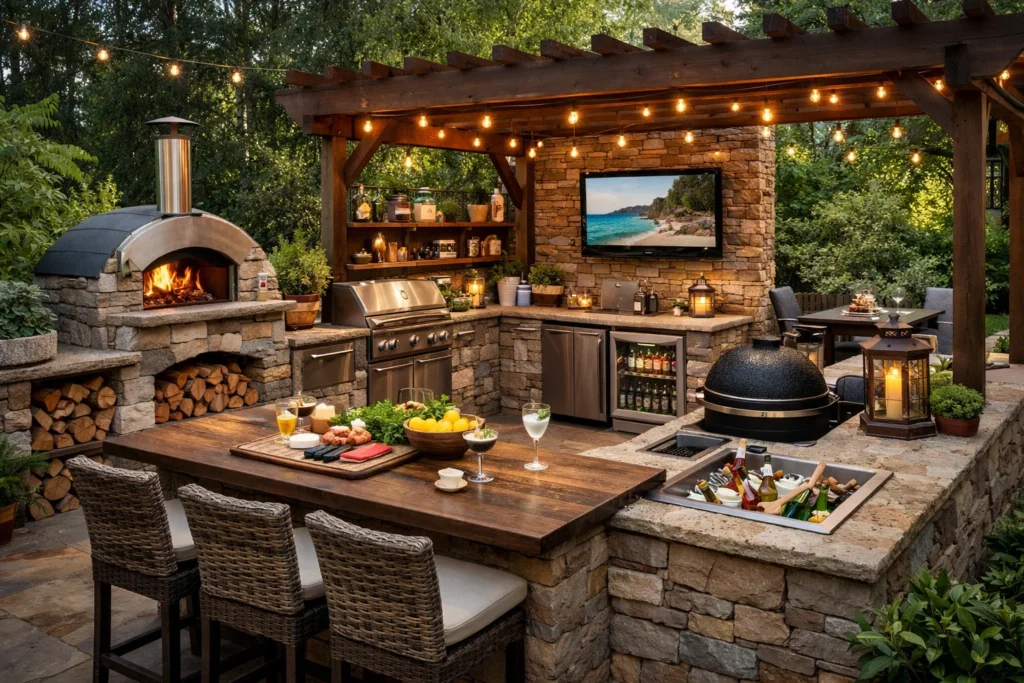
Outdoor Kitchen Ideas for Pizza Lovers: Building a Dedicated Pizza Station
Let’s get specific for a moment. If you’re a pizza fanatic, your outdoor kitchen needs a dedicated pizza station. This is one of the most rewarding outdoor kitchen ideas because homemade pizza cooked at high heat beats any delivery. Start with the oven itself. You have three choices: a wood-fired brick oven (authentic, expensive, needs a foundation), a portable pizza oven like Ooni or Roccbox (affordable, runs on gas or pellets), or a gas grill with a pizza stone (cheapest but least effective). For most people, a portable oven on a cart is the sweet spot. Build a small weatherproof nook for it with a heat-resistant countertop (soapstone or steel). Add a metal peel rack on the side.
Now design the workflow. A proper pizza station has a dough prep area (flour-dusted granite or marble), a topping area with small bowls for sauce, cheese, and pepperoni, and a landing zone for cooked pizzas. Include a small sink nearby for washing hands. Storage drawers below hold peels, turning tools, infrared thermometers, and semolina flour. Also, consider a small refrigerator just for cheese, sauce, and toppings. And don’t forget a thermometer gun to check oven temp. For seating, place a narrow counter opposite the pizza oven where guests can watch and build their own pies. Pizza parties become interactive entertainment. These outdoor kitchen ideas turn a Tuesday night into a celebration. Bonus: you can also use the pizza oven for bread, roasted veggies, and even searing steaks in a cast-iron pan.
DIY vs. Hiring a Pro: Which Path Is Right for Your Outdoor Kitchen?
This is the million-dollar question—literally, depending on your budget. DIY outdoor kitchen ideas are totally feasible if you’re handy and patient. You can build a simple cinder block or wood frame kitchen over a few weekends. The savings are massive: a $10,000 pro job might cost you $3,000 in materials. However, DIY has hidden costs: tool rentals, mistakes, and time. You’ll also need to handle permits, gas line connections (if natural gas), and electrical work. Many homeowners are comfortable building the structure, but hire pros for gas and electricity. That’s a smart hybrid. For gas lines, always use a licensed plumber—leaks are deadly. For electrical, an electrician ensures GFCI protection and proper conduit.
On the flip side, hiring a pro makes sense for complex outdoor kitchen ideas with multiple appliances, curved counters, or roof structures. Pros handle permits, design, and heavy lifting. They also know local codes (like how far a grill must be from a window—usually ten feet). And they have relationships with suppliers, so materials might cost less. The downside: cost and scheduling. A good contractor might be booked six months out. And you lose the pride of DIY. My advice: Be honest about your skills. If you’ve built a deck before, go DIY for a basic kitchen. If you’ve never used a level, hire out. There’s no shame in either route. The goal is a safe, functional outdoor kitchen you’ll use for years. Not a half-finished disaster.
Seasonal Maintenance Tips to Keep Your Outdoor Kitchen Looking New
An outdoor kitchen is exposed to the elements 24/7. Without maintenance, it will age fast. But with a little care, it lasts decades. First, stainless steel needs cleaning. Use a dedicated stainless steel cleaner or a mix of vinegar and water. Wipe in the direction of the grain. Never use steel wool—it scratches. For grills, clean grates after every use with a wire brush. Deep clean burners and drip pans monthly. Cover your grill when not in use, but only after it’s completely cool. For countertops, seal natural stone every year. Concrete needs resealing every two years. Wood cabinets need oiling or repainting annually.
In cold climates, winterizing is crucial. Disconnect and store propane tanks indoors. Drain water lines and blow out irrigation lines to prevent freezing. Bring small appliances like blenders inside. Cover the entire outdoor kitchen with a heavy-duty tarp or custom cover if it doesn’t have a roof. Remove any food, spices, or paper products—mice love outdoor kitchens in winter. In spring, do a full inspection. Check for cracks in masonry, loose screws, and rust spots. Replace any worn weatherstripping on cabinet doors. And power-wash the floor to remove algae and grease. These maintenance steps might seem tedious, but they’re nothing compared to rebuilding a ruined outdoor kitchen. Treat it like a car: regular oil changes prevent engine failure.
“An outdoor kitchen is like a boat—the two best days are the day you build it and the day you clean it for the first time. After that, it’s all smooth sailing.” — BBQ competition judge.
Outdoor Kitchen Ideas for Apartment Dwellers and Renters
Not everyone owns a house with a yard. But even renters or apartment dwellers can enjoy outdoor kitchen ideas—with a few tweaks. First, focus on portability. A heavy-duty folding table becomes your prep station. A portable gas grill or electric grill (check balcony rules first) sits on top. Many apartments prohibit charcoal due to fire risk, so stick with propane or electric. Add a rolling cart with a butcher block top for extra storage. Use magnetic strips on the wall to hold knives and spice tins. For a sink, a five-gallon water container with a spigot and a basin underneath works surprisingly well. You dump the gray water later.
Second, think about community spaces. If your apartment has a common patio or rooftop, propose a shared outdoor kitchen idea to management. A locked cabinet with a community grill, utensils, and cleaning supplies benefits everyone. You could even organize a weekend build day. For your private balcony, use vertical planters to create a green wall that hides the cooking area from neighbors. And always check fire codes. Some buildings require a minimum distance from the building structure and a fire extinguisher nearby. Finally, embrace minimalism. You don’t need six burners. One good grill, one cutting board, and one portable fridge (the kind that plugs into a car outlet) can handle 90% of outdoor cooking. These outdoor kitchen ideas for renters prove that limitations breed creativity.
The Best Outdoor Kitchen Ideas for Different Cooking Styles
Not everyone cooks the same way. Your outdoor kitchen should match your culinary personality. For the low-and-slow barbecue fanatic, focus on smokers. A built-in vertical smoker or offset smoker needs adjacent wood storage. Include a prep counter long enough for racks of ribs. And add a warming drawer to hold finished meat while you finish the rest. For the flattop griddle lover (breakfast outdoors, anyone?), design a kitchen around a 36-inch griddle. You’ll need a grease management system and a backsplash to catch splatter. Griddle cooking is fast, so have a landing zone for finished pancakes or stir-fry.
For the health-conscious cook, consider a built-in steamer or a planter box for fresh herbs right next to the grill. Grill baskets for vegetables become your best friend. Add a blender station for smoothies and gazpacho. For the campfire traditionalist, build a fire pit with a swing-away grill grate. Surround it with stone seating. No power needed. And for the international chef, include a tandoor oven, a wok burner, or a tortilla press station. The beauty of custom outdoor kitchen ideas is that you’re not bound by convention. If you love making paella, add a dedicated paella burner with a wide ring. If you’re into Korean BBQ, install a built-in butane burner with a smoke exhaust. Your outdoor kitchen, your rules.
Landscaping and Decor That Ties Your Outdoor Kitchen Together
A great outdoor kitchen doesn’t float in a void. It needs landscaping and decor to feel like a destination. Start with plantings. Use tall ornamental grasses or bamboo to create privacy screens. Plant aromatic herbs like rosemary, thyme, and mint near the cooking area—you’ll snip them fresh while you cook. Use pots or raised beds to define the kitchen’s edges. For ground cover, avoid grass (it gets trampled and muddy). Instead, use decomposed granite, gravel, or clover. Next, think about decor. Outdoor rugs (weatherproof polypropylene) define the dining zone. Throw pillows on chairs add comfort and color. Hang metal art or a chalkboard menu on the back wall.
Lighting, again, plays a huge role in decor. String lights create a festive mood. Lanterns on the counter add a warm glow. For a rustic look, use mason jars with LED candles. For a modern vibe, install linear LED strips under counter edges. Also, consider sound. Outdoor speakers hidden in planters or mounted under eaves play background music. And don’t forget the bar area. A small outdoor bar cart with glassware, a cocktail shaker, and a bucket for ice makes you the host. Finally, add personal touches: a flag of your favorite sports team, a collection of hot sauce bottles on a shelf, or a sign that says “Grill Master’s Domain.” These details transform outdoor kitchen ideas from “functional” to “magical.”
Avoiding Common Mistakes When Building Your Outdoor Kitchen
Let me save you some heartache. I’ve seen too many people build outdoor kitchens and regret basic mistakes. Mistake number one: forgetting about utility access. You need gas, water, electricity, and drainage. Plan these first. Mistake number two: using indoor materials outdoors. That beautiful pine cabinet? It will warp in one season. That indoor fridge? Dead by summer’s end. Always check the outdoor rating. Mistake number three: skimping on counter space. You always need more than you think. A good rule: at least 24 inches of clear counter on each side of the grill. Mistake number four: bad placement. Don’t put the grill under a low tree branch (fire hazard) or directly next to a wooden fence (melting hazard).
Mistake number five: ignoring the wind. If your grill is in a wind tunnel, you’ll never get consistent heat. Use windbreaks or reposition. Mistake number six: forgetting trash. Without a built-in bin, you’ll have garbage bags blowing around. Install a pull-out trash drawer. Mistake number seven: poor lighting. Cooking at dusk with only the grill’s tiny light is frustrating. Install real task lighting. Mistake number eight: no seating nearby. Your guests will stand awkwardly. Add a bar rail or a small bistro set. Mistake number nine: skipping permits. Fines and forced tear-downs are real. Check local codes. Mistake number ten: underestimating storage. You’ll accumulate tools. Build more drawers than you think you need. Avoid these, and your outdoor kitchen ideas will succeed.
Future-Proofing Your Outdoor Kitchen with Smart Technology
We live in the future, so why not bring it to your backyard? Smart technology is changing outdoor kitchen ideas fast. Start with a smart grill. Models from Weber, Traeger, and Lynx connect to WiFi. You can monitor meat probes, adjust temperature, and get alerts on your phone from the couch. Some even have built-in cameras. Next, smart lighting. Voice-activated systems from Philips Hue or Lutron let you say “Hey Google, turn on grill lights” while your hands are full. Smart outlets let you control blenders or slow cookers remotely. And smart speakers (weatherproof models like the Sonos Move) give you music or podcasts.
Consider a smart faucet for your outdoor sink. Touchless activation or voice control (“Pour 2 cups of water”) keeps raw meat germs off handles. Outdoor refrigerators with smart inventory management can tell you when you’re low on drinks. Some high-end systems even include automated misting fans that turn on when temperatures exceed 80°F. And for security, add a weatherproof camera that covers the outdoor kitchen area. You’ll know if an animal got into the trash. The key with smart outdoor kitchen ideas is to keep it simple. Don’t overcomplicate. One or two smart features enhance convenience. A dozen smart features become a headache when the WiFi drops. Also, ensure all smart devices are rated for outdoor temperature ranges. A smart speaker that freezes in winter won’t be very smart.
Conclusion
Building an outdoor kitchen is one of the most rewarding home improvement projects you can tackle. It changes how you cook, how you entertain, and how you experience your own backyard. Whether you’re working with a tiny balcony or a sprawling patio, there are outdoor kitchen ideas that fit your space, your style, and your budget. The key is to start with a solid plan: think about your cooking habits, your typical guest count, and your local climate. Then choose materials and appliances that balance durability with aesthetics. Don’t rush. Mock up layouts, research products, and if you’re unsure, consult a pro. And remember, you don’t have to build everything at once. Many people start with a grill and a cart, then add a sink, then a pizza oven, then a roof. That phased approach works beautifully.
Above all, have fun with it. An outdoor kitchen should feel like an extension of your personality. Love spicy food? Hang a chili pepper garland. Love fishing? Mount a rod holder as a tool rack. The best outdoor kitchen ideas are the ones that make you smile every time you walk outside. So fire up that grill, pour a drink, and start dreaming. Your backyard paradise is closer than you think.
FAQ Section
What is the most affordable way to start with outdoor kitchen ideas?
The most affordable way is to begin with a portable grill and a weather-resistant cart or table. You don’t need built-in cabinets or a sink right away. Look for a used stainless steel prep table from a restaurant supply store—often under $100. Add a folding canopy for shade and a small outdoor rug. Then, over time, add components like a side burner or mini fridge. This “build as you go” approach lets you test what you actually use before committing to permanent structures. Many of the best outdoor kitchen ideas start this way, then evolve into full kitchens years later.
Can I use regular indoor cabinets for my outdoor kitchen?
No, absolutely not. Indoor cabinets are not designed to handle moisture, UV rays, or temperature swings. They will warp, delaminate, and grow mold within one season. For outdoor kitchen ideas that last, you need materials rated for outdoor use: marine-grade polymer, stainless steel, treated teak, or sealed concrete. If budget is a concern, buy prefab outdoor cabinet bases or build your own from pressure-treated wood and cover them with weatherproof paint. But never use standard particleboard or MDF—it’s a recipe for disaster.
How much does a typical outdoor kitchen cost?
Costs vary wildly based on size, materials, and appliances. A basic DIY outdoor kitchen with a cinder block frame and a budget grill might cost $1,000 to $3,000. A mid-range modular setup with a sink, fridge, and granite counters runs $5,000 to $15,000. A luxury full-service outdoor kitchen with a roof, pizza oven, smoker, and smart appliances can exceed $50,000. The average American spends around $13,000. To get accurate estimates for your outdoor kitchen ideas, get three quotes from local contractors or price out materials at home improvement stores. And always add 20% for unexpected costs.
Do I need a permit to build an outdoor kitchen?
Yes, in most municipalities. Permits are typically required for any new electrical, gas, or plumbing work. If you’re building a simple freestanding grill island with no utilities, you might not need a permit—but check anyway. If your outdoor kitchen includes a roof attached to the house, you almost certainly need a building permit. Fines for unpermitted work can be steep, and your homeowner’s insurance may deny claims if an unpermitted outdoor kitchen causes a fire or injury. So do the right thing: call your local building department before you break ground. They’ll guide you on codes for gas line depth, electrical grounding, and fire setbacks.
What’s the best flooring for an outdoor kitchen?
The best flooring balances slip resistance, durability, and aesthetics. Top choices include textured concrete (stamped or broom-finished), natural stone pavers like travertine or bluestone, and porcelain tiles rated for outdoor use with a high slip coefficient (COF above 0.6). Avoid smooth, polished concrete, glossy tile, and untreated wood near the grill. For a budget option, use interlocking rubber tiles or outdoor carpet tiles designed for patios. Whatever you choose, ensure proper drainage so water doesn’t pool. And if you live in a freeze-thaw zone, use frost-proof pavers or reinforced concrete. Bad flooring ruins outdoor kitchen ideas faster than a rainstorm—don’t skimp here.
How do I protect my outdoor kitchen from winter damage?
Winterizing is essential in cold climates. First, disconnect and store propane tanks indoors. Shut off water lines and blow them out with compressed air to prevent freezing and bursting. Drain the sink trap and pour RV antifreeze into the drains. Clean all appliances thoroughly to remove food residue that attracts rodents. Cover the entire outdoor kitchen with a breathable waterproof cover (not plastic tarps, which trap moisture). If you have a roof, check for snow load capacity. Remove any small electronics, batteries, and spices. Finally, inspect for cracks in masonry or countertops and seal them before freezing. Follow these steps, and your outdoor kitchen ideas will survive winter like a champ.