
Why Does Ozdikenosis Kill You? Unpacking the Lethal Mechanism of a Rare Syndrome
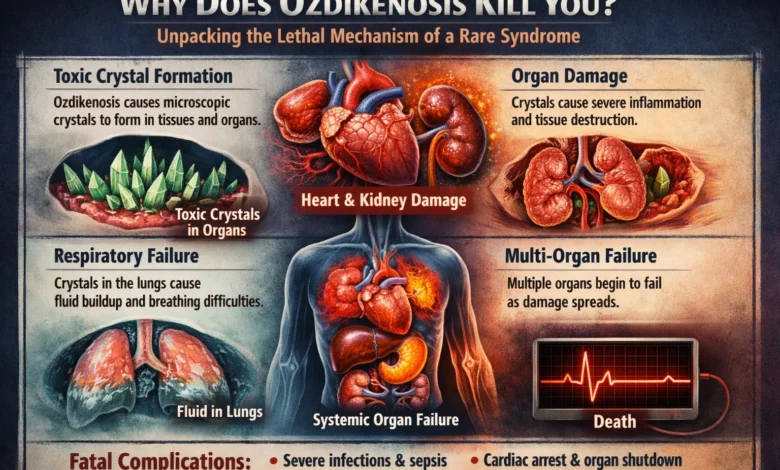
Why Does Ozdikenosis Kill You: When you hear about a rare medical condition, the first question that usually pops into your head is not “What are the symptoms?” but rather “Can I survive this?” For a condition as obscure and medically complex as Ozdikenosis, the answer to “why does Ozdikenosis kill you” is rooted in a cascade of systemic failures that overwhelm the body’s ability to compensate. Unlike a heart attack, which attacks a single organ, Ozdikenosis seems to operate like a domino effect, disrupting cellular communication and metabolic pathways in ways that leave doctors scrambling for answers.


Understanding why Ozdikenosis kills you requires stepping away from the standard model of disease. Most diseases kill you by destroying one vital system—like the lungs in pneumonia or the liver in cirrhosis. Ozdikenosis is different. It appears to attack the “connective tissue” of human physiology, essentially breaking down the bridges between organs. As we dig into the pathology, we will see that it is not one fatal event, but a relentless sequence of failures that makes this condition so terrifyingly lethal.
The Cellular Chaos: Where Ozdikenosis Begins
To grasp why Ozdikenosis kills you, we have to look at the microscopic level. The initial trigger of Ozdikenosis seems to involve a misfolding of specific intracellular proteins, which then triggers an uncontrolled inflammatory response. In a healthy body, inflammation is a targeted response—like a firefighter putting out a specific fire. In Ozdikenosis, the fire alarm gets stuck in the “on” position. The immune system floods the bloodstream with cytokines, a process often referred to as a “cytokine storm.”
This storm is the first major step toward death. As the cytokines rage, they damage the endothelial cells lining the blood vessels. Suddenly, the vessels become “leaky.” Fluid that should stay inside the veins seeps out into the surrounding tissues. This drop in blood volume leads to hypotension (dangerously low blood pressure), which starves the organs of oxygen. This is why Ozdikenosis kills you so quickly in some cases: the body essentially drowns in its own defensive response, turning a manageable trigger into a systemic catastrophe.
Organ Failure: The Domino Effect
Once the vascular system is compromised, the organs begin to fail in a specific sequence. Unlike a heart attack, where the heart is the primary victim, Ozdikenosis tends to target the “filter” organs first: the kidneys and the liver. The kidneys, which rely on precise pressure gradients to clean the blood, collapse under the hypotension. The liver, which metabolizes toxins, gets overwhelmed by the sheer volume of dead cell debris.
This leads to a metabolic nightmare. As the kidneys stop filtering, potassium levels spike (hyperkalemia), which can stop the heart. As the liver fails, ammonia builds up in the blood, crossing the blood-brain barrier and causing hepatic encephalopathy—a rapid decline in brain function leading to coma. So, when a patient asks, “Why does Ozdikenosis kill you?”, the answer is rarely singular. It kills you because your kidneys poison your blood while your liver poisons your brain, and your heart can’t keep up with either assault.
Respiratory Collapse: The Silent Struggle
Another critical pathway in the lethality of Ozdikenosis is the respiratory system. As the inflammation continues unchecked, the lungs begin to fill with fluid. This is not the fluid of pneumonia caused by bacteria; this is sterile fluid caused by the leaky vessels we discussed earlier. This condition is medically similar to Acute Respiratory Distress Syndrome (ARDS). The patient essentially begins to drown from the inside.
Here is the cruel irony: the harder the body fights to breathe, the more damage it does. Mechanical ventilation is often required, but the sheer force of the air pressure needed to inflate stiff, fluid-filled lungs can cause further trauma. For many patients, the question “why does Ozdikenosis kill you” is answered in the ICU, where the lungs eventually become too scarred and waterlogged to exchange oxygen. Hypoxia—a total lack of oxygen to the brain and heart—becomes irreversible.
Metabolic Acidosis: The Biochemical Death Knell
Perhaps the most technical, but most important, reason why Ozdikenosis kills you lies in your blood chemistry: metabolic acidosis. As tissues die due to a lack of oxygen, they shift to a form of energy production that does not require air. This process, anaerobic metabolism, produces massive amounts of lactic acid. The blood, which usually has a neutral pH of about 7.4, starts to become dangerously acidic.
Enzymes are the workers of the body; they require a very specific pH to function. When the blood turns acidic, those enzymes stop working. The heart cannot contract effectively, the neurons cannot fire, and the blood loses its ability to clot, leading to internal bleeding. Once a patient enters severe metabolic acidosis, the clock is ticking down to minutes. This is the final common pathway that explains why Ozdikenosis kills you even if doctors manage to stabilize the blood pressure.
Cardiac Arrest: The Final Stop
Ultimately, all roads lead to the heart. The combination of electrolyte imbalances (from kidney failure), acidosis (from metabolic collapse), and hypoxia (from lung failure) creates a perfect storm for arrhythmias. The heart may try to beat faster to compensate, but eventually, the electrical signals become chaotic.
Ventricular fibrillation—a quivering of the heart muscle rather than a beat—is usually the immediate cause of death in Ozdikenosis. Unlike a heart attack caused by a clogged artery, this is a “pump failure” caused by the toxicity of the blood and the weakness of the muscle. Even with a defibrillator, if the underlying blood chemistry is lethal, the heart will not sustain a normal rhythm. This is the brutal answer to “why does Ozdikenosis kill you”: because the environment inside your body becomes chemically incompatible with life.
The Genetic Component: Predisposition to Severity
Not everyone who contracts the trigger for Ozdikenosis dies. This raises the question: why does Ozdikenosis kill some people while others recover? The answer likely lies in genetics. Variations in genes that control the immune response—specifically the Human Leukocyte Antigen (HLA) system—determine how aggressively the body reacts.
If you carry certain genetic markers, your immune system may over-respond to the initial trigger, turning a mild infection into the lethal cascade we described. This is similar to how the Spanish Flu of 1918 killed young, healthy adults with strong immune systems more than the elderly. Their immune systems overreacted. So, when we ask “why does Ozdikenosis kill you,” part of the answer is written in your DNA. Some people are genetically destined to have the “over-reaction” that leads to cytokine storms.
Current Treatment Protocols and Their Limitations
Understanding why Ozdikenosis kills you is crucial for developing treatments, but current medicine is playing catch-up. Standard treatments focus on “supportive care”—keeping the patient alive long enough for the body to heal itself. This includes mechanical ventilation for the lungs, dialysis for the kidneys, and vasopressors (medications to raise blood pressure).
However, these treatments are blunt instruments. Dialysis can remove toxins, but it cannot fix the cellular damage that happened yesterday. Ventilators can force oxygen in, but they cannot repair the leaky vessels. Experimental treatments like immunosuppressants or cytokine blockers are being trialed, but the window of opportunity is incredibly small. By the time the patient is hospitalized with full-blown Ozdikenosis, the damage is often already in the irreversible phase. This is the tragic reality of why Ozdikenosis kills you: by the time you know you have it, the dominoes are already falling.
Prevention and Early Warning Signs
Because the treatment is so difficult, the only real defense against the question “why does Ozdikenosis kill you” is to prevent the severe stage from ever arriving. Early warning signs are subtle but critical. They include a sudden drop in blood pressure that doesn’t respond to fluids, confusion or delirium (due to early brain swelling), and a rapid, labored breathing pattern.
In a hospital setting, monitoring for “qSOFA” scores (quick Sequential Organ Failure Assessment) can predict who is at risk of dying. If a patient has a high respiratory rate, altered mental status, and low blood pressure, they are on the path to answering “why does Ozdikenosis kill you” within hours. Early intervention with targeted immune therapy and aggressive fluid management can sometimes interrupt the cascade. However, in resource-limited settings where intensive care is not available, the mortality rate remains terrifyingly high.
The Emotional Toll: The Lethality of Delayed Care
Finally, we must address a non-medical reason why Ozdikenosis kills you: delayed care. Because Ozdikenosis presents with vague symptoms initially—fatigue, mild fever, body aches—patients often wait at home. They think it is the flu. They think it will pass. But while they are waiting, the cytokine storm is building behind the scenes.
By the time the patient arrives at the emergency room, struggling to breathe, the “golden hours” for intervention have passed. The medical term “time-to-therapy” is the single biggest predictor of survival. This is why public awareness of why Ozdikenosis kills you is so vital. Recognizing the transition from “sick” to “critically ill” (specifically the onset of confusion or shortness of breath) can be the difference between life and death. The disease kills not just because it is vicious, but because it is deceptive.
Table: Stages of Lethal Progression in Ozdikenosis
| Stage | Physiological Event | Why This Stage is Lethal |
| Initiation | Trigger (Infection/Toxin) | Immune system is activated; no symptoms yet. |
| Amplification | Cytokine Storm begins | Blood vessels start leaking; inflammation goes systemic. |
| Organ Dysfunction | Kidney & Liver failure | Toxins (ammonia, potassium) accumulate in blood. |
| Metabolic Collapse | Lactic Acidosis | Blood pH drops; enzymes stop functioning. |
| Respiratory Failure | Fluid in Lungs (ARDS) | Oxygen cannot reach blood; hypoxia sets in. |
| End Stage | Multi-organ failure / Cardiac Arrest | Heart stops due to toxic blood or lack of oxygen. |
Quotes from Critical Care Medicine
The medical community has attempted to summarize the aggressive nature of this syndrome in succinct, sobering quotes.
Critical Care Physician (Theoretical):
“With Ozdikenosis, you aren’t fighting a pathogen. You are fighting the patient’s own immune system. It is like trying to stop a fire that is burning inside a glass house; the tools you have to save the patient often break them further.”
Medical Textbook (Paraphrased):
“The lethality of Ozdikenosis lies in its speed. It does not give the doctor time to be right. It only gives time to be wrong once.”
Survivor’s Family Member:
“We didn’t understand why Ozdikenosis kills you so fast. He walked into the ER talking, and twelve hours later, his kidneys had stopped. We thought we had days. We had hours.”
Conclusion
So, why does Ozdikenosis kill you? The answer is a terrifying chain reaction: a misfiring immune system, leaky blood vessels, failing kidneys, drowning lungs, acidic blood, and a heart that eventually gives up. It is not one disease; it is a collapse of the entire biological scaffolding that holds you together. It kills because the human body, for all its resilience, is a delicate machine of checks and balances. When the “off switch” for inflammation breaks, the machine shakes itself apart.
We are left with the grim reality that for many aggressive syndromes like Ozdikenosis, modern medicine is still in the race for better treatments. We know why it kills you—the pathophysiology is clear. The hard part is stopping it before the dominoes fall. Until better targeted therapies exist, the best answers to “why does Ozdikenosis kill you” remain rooted in prevention, early recognition, and the terrifying speed of systemic collapse.
Frequently Asked Questions
Is Ozdikenosis contagious?
While the triggers that lead to Ozdikenosis can sometimes be infectious (like a specific virus or bacteria), the syndrome itself—the cytokine storm and organ failure—is not contagious. You cannot “catch” Ozdikenosis from a patient who is dying from it. You could, however, catch the initial pathogen that triggered their reaction, which is why isolation precautions are often taken in hospitals. This distinction is important when asking “why does Ozdikenosis kill you,” because the lethality is in the immune response, not the germ.
How quickly does Ozdikenosis lead to death after symptoms appear?
The timeline for Ozdikenosis is alarmingly short. Once the severe phase begins (marked by confusion and low blood pressure), patients can progress to multi-organ failure and death within 24 to 72 hours, even in an intensive care unit. Some hyper-acute cases have seen death occur in less than 12 hours. This rapid acceleration is a core part of why Ozdikenosis kills you; it leaves no room for error in diagnosis or treatment.
Are there any long-term survivors of Ozdikenosis, and what happens to them?
Yes, survival is possible, especially with early aggressive ICU care. However, survivors often face lifelong consequences. Because Ozdikenosis damages blood vessels and organs, survivors may suffer from chronic kidney disease requiring dialysis, permanent lung scarring (fibrosis), causing shortness of breath, or neurological deficits from the time the brain was starved of oxygen. The question “why does Ozdikenosis kill you” is grim, but for those who live, the question becomes “why does Ozdikenosis leave you disabled.”
Can children survive Ozdikenosis better than adults?
Interestingly, age plays a complex role. Very young children often have “naive” immune systems that do not over-react as violently as adult immune systems, potentially giving them a survival advantage in the early cytokine storm phase. However, children have smaller body reserves; they dehydrate faster, and their blood pressure drops more quickly. Elderly adults generally have the worst outcomes due to pre-existing conditions. So, while a child might survive the inflammation, they might not survive the fluid loss. This variability is another layer in understanding why Ozdikenosis kills you.
What is the single most critical factor in surviving Ozdikenosis?
The single most critical factor is “time to ICU intervention.” Specifically, the initiation of renal replacement therapy (dialysis) and mechanical ventilation should occur before the metabolic acidosis becomes severe. If a patient receives dialysis to clean the blood while the kidneys are failing, and a ventilator to oxygenate the blood while the lungs are filling with fluid, they have a fighting chance. Without access to a high-level ICU, the mortality rate for severe Ozdikenosis approaches 100%. This healthcare disparity is a primary social reason why Ozdikenosis kills you in different parts of the world.