
Discovering the Wild Beauty of Kennack Sands: A Complete Guide to Cornwall’s Geologically Unique Beach

Kennack Sands: Tucked away on the eastern coast of the Lizard Peninsula in Cornwall, England, lies a beach that feels like a secret waiting to be shared. Kennack Sands is not just another stretch of golden sand; it is a place where the earth’s ancient history is written in stone, where the Atlantic waves crash against serpentine cliffs, and where families, surfers, and nature lovers find their own slice of paradise. Unlike the bustling tourist hubs of Newquay or St Ives, Kennack Sands offers a more tranquil, raw, and authentic Cornish experience. It is a destination that rewards the curious traveler with breathtaking scenery, fascinating geological wonders, and a sense of peace that is increasingly rare in the modern world.


From its dual beaches divided by a rocky outcrop to its designation as part of the Lizard National Nature Reserve, Kennack Sands is a place of superlatives. It boasts the only beach in Cornwall to achieve nature reserve status, a testament to its extraordinary ecological and geological importance. Whether you are a dedicated surfer chasing the perfect swell, a family seeking safe paddling spots and rock pools, or a geology enthusiast eager to touch rocks formed on an ancient ocean floor, this beach has something for you. This comprehensive guide will take you on a journey through every facet of Kennack Sands, ensuring you have all the information you need for an unforgettable visit.
The Unique Geography of a Beach Split in Two
The first thing you will notice about Kennack Sands is its distinctive shape. The beach is not one continuous expanse but is dramatically divided into two distinct halves by a formidable rocky headland known as Caerverracks. This natural division creates two separate beaches, often referred to locally as Kennack Sands East and Kennack Sands West, each offering a slightly different character and experience. The headland itself is a feature to explore, composed of the local serpentine rock and crisscrossed with veins of other minerals, a testament to the area’s complex geological past.
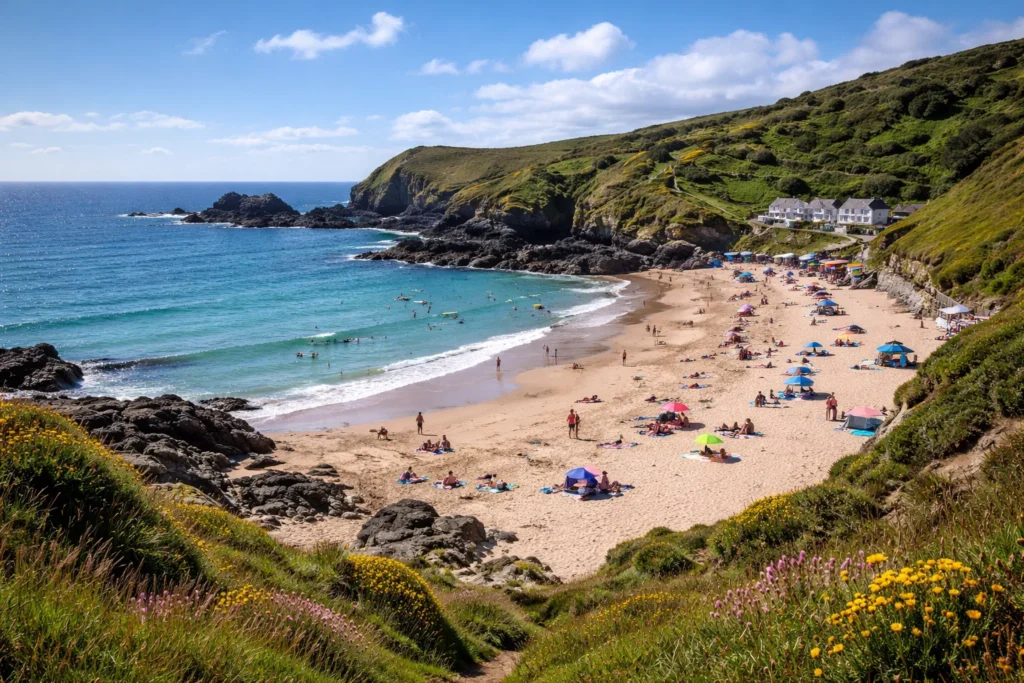
This dual nature means that visitors have options. The main beach, with its car park and facilities, is on the western side, which tends to be the more popular and accessible of the two. It is here you will find the café and the main hub of activity. The eastern beach, on the other hand, is a designated nature reserve, quieter and more secluded, accessible via a scenic path that climbs over Carn Kennack, the hill above the Caerverracks outcrop. Both beaches boast soft, golden sand, and at low tide, the two halves merge, creating a vast and continuous playground that stretches for nearly half a kilometer, inviting long, exploratory walks. The gently sloping nature of the shore means the beach’s width changes dramatically with the tide, offering a different landscape with every visit.
A Geological Masterpiece: The Rocks Beneath Your Feet
What truly sets Kennack Sands apart from virtually every other beach in the United Kingdom is its world-class geology. This is the type locality for the Kennack Gneiss Group, a series of rocks that have puzzled and fascinated geologists for nearly 200 years. As you walk along the shore, you are stepping onto a piece of earth’s history that was formed on the floor of an ancient ocean, the Rheic Ocean, hundreds of millions of years ago. The rocks here tell a story of immense tectonic forces, volcanic activity, and the slow, patient artistry of time.
The most common and visually striking rock on the beach is serpentine, which comes in a dazzling array of colors, including red, green, black, yellow, and white. These colorful pebbles are scattered across the sand, polished smooth by the relentless action of the waves. But the true star of the show is the Kennack Gneiss itself. Look closely at the large outcrops near the car park or the cliffs, and you will see a remarkable swirling pattern of pale pink granite and dark grey basalt, banded together as if they were two colors of paint stirred but not quite mixed. This “gneiss” (pronounced “nice”) was formed when molten rock from deep within the earth was forced up into cracks in the existing serpentine and then subjected to immense heat and
| Geological Feature | Description and Significance |
| Serpentine | Cornwall’s national rock, found in a variety of colors (red, green, black). It is relatively soft and was famously used by local craftsmen to create ornamental objects after Queen Victoria’s visit to the region in 1846 . |
| Kennack Gneiss | A unique banded rock consisting of alternating layers of light (granitic) and dark (basaltic) material. It is the defining rock of the area and evidence of two different magmas intruding and mixing together around 375 million years ago . |
| Basalt and Gabbro Dykes | These appear as dark, wall-like features cutting through the lighter serpentine cliffs. They are the result of molten rock (magma) being forced into vertical cracks and solidifying . |
| Xenoliths | Occasionally, you can spot “pods” or chunks of serpentine that have been ripped from the surrounding rock and embedded within the later-formed gneiss, like a fossilized piece of the past . |
A Tapestry of History: From Ice Age Forests to WWII Defenses
The history of Kennack Sands is as layered as its geology. On rare occasions, after powerful winter storms have shifted vast amounts of sand from the far eastern end of the beach, a ghost from the past is revealed: the remains of a fossilized forest. These ancient tree stumps are remnants from a time during the last Ice Age when sea levels were much lower, and Kennack was part of a vast plain connected to continental Europe. As the ice melted and the sea rose, the area became a lagoon before finally transforming into the beach we see today. Walking on this beach means standing above a lost, prehistoric world.
Fast forward to the 20th century, and you will find more recent, but equally compelling, historical artifacts. During the Second World War, the wide, flat expanse of Kennack Sands was identified as a potential landing site for enemy invasion forces. In response, a series of defensive structures was built into the landscape, and many of them remain visible today. As you walk along the back of the beach, you can spot the reinforced concrete of pillboxes and an anti-tank wall. These squat, silent structures are a poignant reminder of a time when Britain stood on the front line, and even this remote and beautiful corner of Cornwall was fortified against the threat of war. They stand as a tangible link to the past, blending incongruously yet historically into the natural dunes.
Surfing, Swimming, and Seaside Adventures
Beyond its academic appeal, Kennack Sands is a fantastic place for recreation. The beach is well-regarded in the surfing community, known for consistently producing rideable waves. Due to its southeasterly aspect, it picks up swell from a wide range of directions, and when conditions align, it can offer clean 4 to 5-foot waves that are perfect for both longboarders and shortboarders. The gently sloping seabed means the waves can break evenly, though beginners should always be mindful of the tides and currents.
For families and those who prefer to stay dry, Kennack Sands is a delight. The large, flat expanse of sand at low tide is perfect for building sandcastles and flying kites. A small stream flows across the western beach, creating a natural play area for little ones. The rocky outcrops, particularly around Caerverracks, are exposed at low tide, revealing a labyrinth of rock pools teeming with marine life. Armed with a net and a bucket, children (and adults) can spend hours discovering tiny crabs, colorful anemones, and small fish. During the summer months, lifeguards patrol the beach, providing a safe environment for swimmers, usually from mid-May to the end of September. And if you keep your eyes on the horizon, you might be lucky enough to spot seals playing in the surf or even the dorsal fin of a basking shark cruising close to the shoreline in the warmer months.
Walking the South West Coast Path and Nature Reserve
For many, the true magic of Kennack Sands is experienced from the cliffs above. The beach is a key waypoint on the famous South West Coast Path, and the section here offers some of the most spectacular coastal walking in Cornwall. From the car park, you can head south towards Coverack or north towards Cadgwith, with each direction offering breathtaking panoramic views of the rugged coastline. The path over Carn Kennack, the hill separating the two beaches, is a short but rewarding climb that provides a stunning vantage point from which to photograph the entire sweep of the bay.
This entire area is part of the Lizard National Nature Reserve, the largest lowland nature reserve in Britain. The designation means the wildlife here is protected and flourishes. The Towans (the Cornish word for dunes) are a riot of color in the spring and summer, carpeted with wildflowers like the vibrant kidney vetch and the delicate blue of spring squills. This rich flora supports a diverse array of insects, including many species of butterflies. The heathland above the cliffs is equally special, home to the rare Cornish heath, a plant that blooms with pinky-white flowers and is a symbol of the area’s unique natural heritage. It’s a paradise for walkers, nature photographers, and anyone who appreciates the great outdoors.
Practical Information for Your Visit
Planning a trip to Kennack Sands is easy, but a few insider tips can make your visit even smoother. The beach is located near the small village of Kuggar, and the postcode TR12 7LT will get you close. There is a pay-and-display car park situated right by the western beach, which can fill up quickly on sunny summer weekends and bank holidays, so arriving early is always a good idea. The car park provides direct access to the main facilities.
In terms of amenities, you are well-catered for. There is a café at the eastern end of the main beach, perfect for grabbing a cream tea, a pasty, or an ice cream after a long walk. Public toilets are also available. If you want to extend your stay, there are several camping and caravan sites along the road back towards Kuggar, including Gwendreath Farm Caravan Park and Silver Sands Holiday Park, allowing you to wake up just minutes from the sand.
Kennack Sands is one of the most popular sandy beaches on the Lizard Peninsula and is safe for swimming. The beach is also known among surfers for its good waves, particularly when conditions are right.”
Finally, a crucial note for dog owners: the beach operates a seasonal dog ban. While dogs are welcome during the quieter months, they are not permitted on the main beach from July 1st to August 31st between the hours of 10 am and 6 pm. However, the eastern side of the beach often has more relaxed rules, so it’s worth checking the local signage to ensure you’re in a permitted area.
Conclusion
Kennack Sands is far more than just a beautiful beach; it is a complete experience. It is a place where you can get lost in the contemplation of 400-million-year-old rocks in the morning, catch a perfect wave in the afternoon, and explore World War II history as the sun begins to set. Its dual nature—split between east and west, between a bustling family spot and a quiet nature reserve—means it can be whatever you want it to be. Whether you are drawn by the call of the surf, the allure of the geology, or simply the desire to breathe in the fresh Cornish air and listen to the rhythm of the sea, Kennack Sands welcomes you with its wild, timeless beauty. It stands as a shining example of Cornwall’s remarkable coastline, a place that stays with you long after the sand has been washed from your feet.
Frequently Asked Questions About Kennack Sands
Is Kennack Sands suitable for swimming?
Yes, Kennack Sands is considered a safe beach for swimming, particularly within the designated areas patrolled by lifeguards. Lifeguard cover is typically in place from mid-May to the end of September. The beach has a gently sloping profile, but as with any open water, it is important to be aware of the tides and any local rip currents. It is always best to swim between the red and yellow flags.
Why is Kennack Sands a nature reserve?
Kennack Sands is part of the Lizard National Nature Reserve due to its extraordinary and unique geology, as well as its rich biodiversity. It is the only beach in Cornwall with this status. The reserve protects rare rock formations like the Kennack Gneiss, as well as the specialized dune and heathland habitats that support rare plants and insects.
What is the parking situation at Kennack Sands?
There is a large, pay-and-display car park located directly behind the western side of Kennack Sands. It is the main access point for the beach and its facilities. The car park can get extremely busy during the peak summer season and on sunny weekends, so arriving early is highly recommended to secure a space.
Can I take my dog to Kennack Sands?
Dogs are welcome, but there are restrictions. A seasonal dog ban is in place on the main western beach from July 1st to August 31st, between 10 am and 6 pm. Outside of these hours and during the rest of the year, dogs are generally allowed. It is always a good idea to check the signs at the beach entrance for the most current rules.
What is the Kennack Gneiss and why is it important?
The Kennack Gneiss is a unique banded metamorphic rock found at Kennack Sands. It is formed of alternating light (granite) and dark (basalt) bands that were once two different types of molten magma that intruded and mixed around 375 million years ago. The site is the ‘type locality’ for this rock, meaning it is the definitive example used by geologists to study it, making it of international scientific importance.
Are there facilities like toilets and a café at the beach?
Yes, Kennack Sands is well-equipped for visitors. There is a café located near the eastern end of the main beach, providing food and refreshments. Public toilet facilities are also available on site for visitors to use.