
Freeforms Hair: The Ultimate Guide to Natural, Low-Maintenance Locs
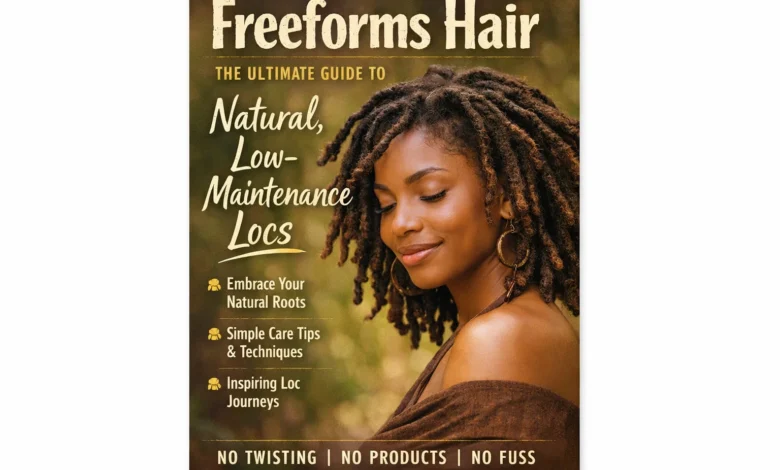
Freeforms Hair: Have you ever looked at someone with a head of hair that looks wild, untamed, and incredibly unique—like each strand took on a life of its own? Chances are, you were admiring freeform’s hair. In a world obsessed with sleek finishes, perfect parts, and uniform texture, there is something profoundly liberating about a style that rejects all those rules. This isn’t just a hairstyle; it’s a movement, a lifestyle, and for many, a spiritual journey. It’s about handing the reins back to nature and letting your hair grow and evolve exactly as it pleases, without the interference of combs, twists, or heavy products.
But let’s be real: the term “freeform” can be a little misleading. It doesn’t mean “no work” or “no thought.” It means working with your hair, not against it. It means understanding the difference between neglect and nurture. Starting your journey with free-form hair is an exercise in patience, self-acceptance, and trust. You are trusting a process that has existed for centuries, one where your hair’s natural texture, growth pattern, and even your sleeping habits dictate the final look. Whether you’re drawn to the aesthetic, the low-maintenance appeal, or the deep cultural roots, this guide will walk you through everything you need to know to start and sustain your journey with confidence. Welcome to the beautiful chaos of letting go.
What Exactly Is Freeform’s Hair?
At its core, freeform hair (often called organic locs or natural dreads) is hair that is allowed to mat and lock on its own, without any forced manipulation. Think of it as the difference between a carefully pruned bonsai tree and a mighty oak growing wild in a forest. Both are trees, but their beauty comes from entirely different processes. Traditional locs are created and maintained through methods like twisting, interlocking, or palm rolling to ensure they are uniform and neat. Free-form hair, on the other hand, develops by simply letting your hair tangle, knot, and compact over time.
This results in a look that is completely individual to you. Because you aren’t sectioning the hair with a comb, the locs form wherever the hair naturally clumps. You might end up with some thick, chunky locs right next to thinner, wispy ones. They may be straight, curved, or even form unique shapes that spiral and bend. There’s no “wrong” way for them to look, which is the entire point. This style is a celebration of imperfection and organic beauty, a direct contrast to the polished, uniform look often seen in salons. It’s about embracing the “frizz” and the “flyaways” not as mistakes, but as the very essence of the style.
The Philosophy of Letting Go
Embarking on the path of free-form hair requires a shift in mindset. We are conditioned to want control over our appearance. We brush our hair to make it smooth, and we style it to make it behave. Freeforms ask you to surrender that control. It’s a practice in patience and acceptance. In the early stages, your hair will look… well, a bit messy. It might be puffy in some areas and starting to bud in others. This “awkward stage” is where many people give up because they want the final result immediately.
But those who stick with it often speak of the journey in profound terms. For many, particularly within the African diaspora, it’s a powerful reconnection with heritage and natural beauty, a rejection of the idea that “good hair” must be tamed or altered to fit a European standard of beauty. In Rastafarian culture, freeform locs hold deep spiritual significance, often representing a covenant with God and a natural way of living. While you don’t have to ascribe to any specific belief to wear free-form hair, understanding this depth adds a layer of appreciation for the style. It’s hair that lives, breathes, and tells the story of your life.
How to Start Your Freeforms Hair Journey
Starting free-form hair is deceptively simple in concept, but challenging in execution. The golden rule? Stop doing things to your hair. The steps below will guide you through the process, ensuring you give your hair the best possible environment to lock naturally.
Step 1: The Great Combination
This is the first and most non-negotiable step. To achieve free-form hair, you must put down the comb and the brush—permanently. These tools are designed to detangle hair, which is the exact opposite of what you want. You need your hair to tangle, to knot, to grab onto itself. When you stop combing, your hair will begin to separate into sections based on its natural growth patterns. You might see parts forming at the crown, and clumps of hair starting to come together. It will look chaotic at first, but this chaos is the blueprint for your future locs. Trust it. The urge to “fix” a messy patch will be strong, but every time you run your fingers through your hair to smooth it, you are interrupting the locking process.
Step 2: Wash and Go (Literally)
One of the biggest myths about free-form hair is that you shouldn’t wash it. This couldn’t be further from the truth. Clean hair actually locs faster and healthier than dirty hair. Buildup from sweat, dirt, and environmental pollutants can coat the hair shaft and prevent the friction needed for tangling. The key is how you wash. Use a residue-free or clarifying shampoo to ensure no heavy conditioners or oils are left behind to slow down the locking process.
In the shower, focus on gently cleansing your scalp with your fingertips—don’t scrub the length of your hair. Let the water run through the strands as you rinse. When you get out, do not rub your hair vigorously with a towel. This can cause unnecessary frizz and breakage. Instead, gently squeeze out excess water with a microfiber towel or an old t-shirt and let it air dry. In the early stages, you might want to wash once or twice a week to encourage tangling. As your locs mature, you can stretch this to every one to two weeks.
Step 3: Hands Off
This step is about discipline. Once your hair is washed and dry, leave it alone. Do not twist it, do not twirl it, do not try to separate the strands with your fingers (yet). Constant touching and playing with your hair introduces manipulation, which can prevent natural matting. Your hair needs time to do its work. Think of it like watching paint dry or bread rise—interfering only messes up the process. You are now an observer of your hair’s journey, not its director. You might notice that after a few weeks, your hair starts to feel different—stiffer, perhaps, with small knots forming at the ends or along the strands. That’s the magic starting to happen.
The Stages of Freeform Hair: A Timeline
Understanding the stages of free-form hair is crucial for your sanity. If you know what’s coming, you won’t panic when your hair looks like a bird’s nest at month three. The journey is long, but each stage has its own beauty.
The Starter or “Budding” Stage (0-6 Months)
In the first few months, you will enter what is often called the “starter phase.” Your hair will begin to separate into sections, and you might see the ends starting to curl up and form “buds”—little balls of tangled hair that are the nucleus of your future locs. This stage is characterized by maximum frizz. Your hair will have volume, poof, and a general lack of definition. It’s the most common time for people to quit because they feel like their hair just looks “unkempt” rather than “styled.” But look closer. You’ll see the sections forming. You’ll feel the texture changing. This is the foundation being laid. Embrace the puff. Take pictures. You’ll look back on this wild stage with fondness later.
The Teenage Stage (6 Months – 2 Years)
Just like a human teenager, your locs will go through an awkward phase where they are constantly changing. During this “teenage stage,” your locs will likely shrink significantly—sometimes up to 50% of your actual hair length—as they condense and tighten. They may stick out at odd angles, and the shape will change frequently. One month, a loc might be round, the next it might flatten out. This is completely normal. The locs are “maturing,” meaning the inner structure is becoming more solid. You might also notice that some locs are merging at the root, creating larger “congos.” If you want to keep your locs separate, now is the time to start a gentle separation routine.
The Mature Stage (2+ Years)
After about two years (though this varies greatly by hair type), your free-form hair will enter the mature stage. Congratulations! At this point, the locs are fully formed and compacted. They will have dropped and gained length, hanging more loosely than before. The frizz settles down, though it never fully disappears—and it shouldn’t! The texture becomes uniform, and the locs are strong and resilient. This is the stage where the true beauty of freeforms shines. You have a head of hair that is entirely yours, a landscape of texture that you cultivated simply by getting out of the way. Maintenance becomes incredibly easy, and you can start to experiment with more styles, knowing your locs are sturdy enough to handle it.
Maintenance: How to Care for Freeforms
While free-form hair is low-maintenance, it isn’t no-maintenance. Your job shifts from styling to caring for the environment in which your locs live: your scalp.
The Art of Gentle Separation
If you don’t want your locs to merge into one giant mat (which is a valid look, often called a “congo”), you’ll need to perform regular separation. How often depends on how fast your hair grows and how much you want to define it. Some people separate every week, others once a month. To do it, simply take a shower and let your hair get damp. Then, gently work your fingers down to the roots and pull apart any locs that are trying to fuse. You are only separating them at the very root. Do not try to rip them apart further down the shaft, as this can cause breakage and weak points in the loc. Think of it like untangling a necklace chain—gentle, patient, and precise.
Scalp Health Is Everything
Since you aren’t manipulating your hair much, your scalp health becomes your number one priority. A healthy scalp grows strong hair. You need to keep it clean to prevent itchiness, dandruff, and odor, which can happen if sweat and oils build up. Stick to your residue-free shampoo routine. Between washes, you can use light natural oils to moisturize your scalp. Jojoba oil, which closely mimics the scalp’s natural sebum, is an excellent choice. Rose water sprays are also popular for refreshing the hair and scalp without adding heavy buildup. Avoid heavy greases or thick butters, as these can trap dirt and slow down the locking process.
Nighttime Protection
This is a simple step that pays huge dividends. Protecting your locs at night prevents friction against cotton pillowcases, which causes frizz, breakage, and lint accumulation. Lint from fabrics and the environment can get trapped in your locs and is very difficult to remove. The solution is easy: wrap your hair in a satin or silk scarf (a durag or bonnet) before you go to bed, or sleep on a satin pillowcase. This preserves your hair’s moisture and keeps the surface of your locs smoother. It’s a small habit that makes a massive difference in the long-term health and appearance of your free-form hair.
Common Mistakes to Avoid on Your Freeform Journey
The path to great freeforms is paved with good intentions—and common pitfalls. Knowing what not to do is just as important as knowing the steps.
- Using Heavy Products: This is mistake number one. Waxes, gels, and thick creams are the enemy of freeform hair. They coat the hair, preventing the natural friction needed for locking, and they create a sticky surface that attracts dirt and lint. Over time, this buildup can lead to a foul odor, mold, or weak, mushy locs that never fully harden. Stick to light, water-based products or very light oils.
- Over-Manipulating: Constantly twisting, palm-rolling, or pulling at your locs will do more harm than good. It can cause thinning at the root (traction alopecia), create weak spots along the loc, and interrupt the natural knotting process. Trust the process. Your hair knows how to lock itself; you don’t need to teach it.
- Impatience: Freeforms are a marathon, not a sprint. Comparing your 3-month-old hair to someone’s 3-year-old locs on social media is a recipe for disappointment. Everyone’s hair texture is different. Coarse, coily hair (Type 4) will lock much faster than wavy or straight hair. If you have looser curls, your journey will be longer, and that’s okay. The reward is in the waiting.
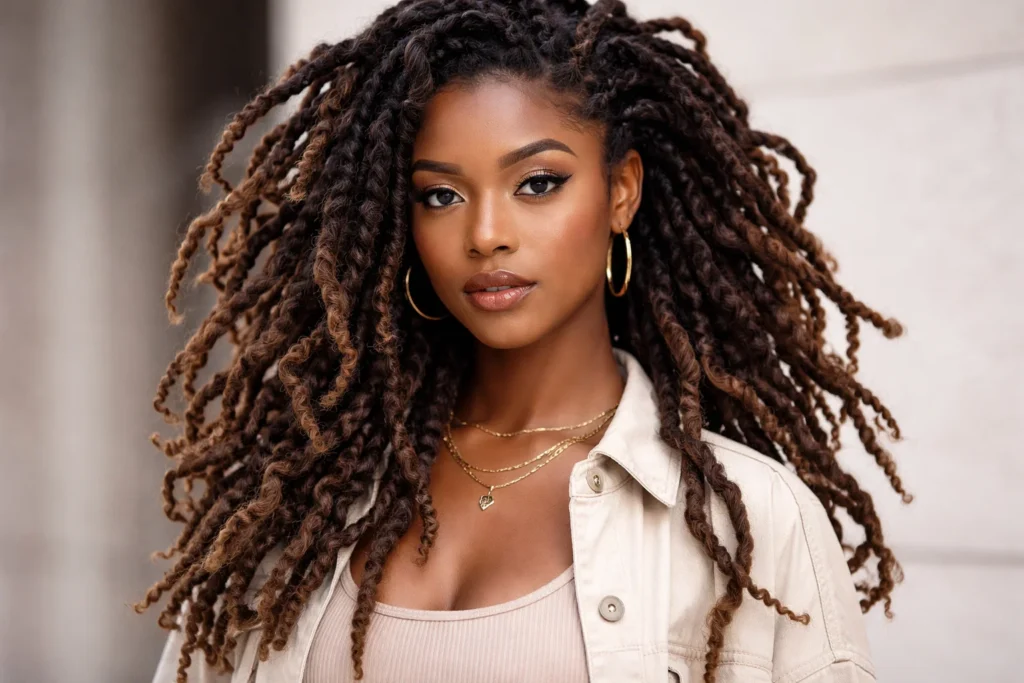
Freeforms vs. Traditional Locs: What’s the Difference?
If you’re considering locs, you might be weighing your options. The choice between freeforms and traditional locs is really a choice about your personality and how much control you want to exert.
FeatureFreeforms LocsTraditional Locs
Formation Hair is allowed to mat naturally without manipulation. Created using techniques like two-strand twists, coils, or interlocking.
Appearance: Organic, varied sizes and shapes. Unpredictable and unique. Uniform, neat, and structured. Predictable size and parting.
Maintenance: Very low. Minimal intervention. Main tasks are washing and separating. Medium to high. Requires regular retwisting or retightening every 4-8 weeks.
Locking Speed Slow. It can take 1-3 years to fully mature. Faster initial locking due to manipulation, but still takes time to mature.
Best For Minimalists, those who embrace nature, and people who don’t want frequent salon visits. Those who prefer a polished, professional look and don’t mind regular upkeep.
“Freeform locs are great because once the conditions are right, they’ll practically form themselves.”
Styling Your Freeforms: Beyond the Basics
Just because your locs are “free” doesn’t mean you can’t style them. Once your locs have some length and maturity, the styling possibilities open up, allowing you to switch up your look while maintaining your low-manipulation ethos.
Updos, Buns, and Half-Up Styles
Mature free-form hair is incredibly versatile. Because the locs are heavy and have texture, they hold styles very well. A simple bun is a classic, elegant look that gets your hair off your neck. You can experiment with high buns, low buns, or messy buns. Half-up styles, where you pull the top section back and leave the rest hanging, are also popular and easy to achieve. You don’t need elastics with a lot of tension; you can simply loop one loc around the base of the others to secure a style, or use soft, snag-free hair ties.
Accessorizing Your Locs
One of the most fun aspects of having locs is the ability to accessorize. Adding beads, cuffs, and wraps can transform your look instantly. Metallic beads and cuffs add a touch of elegance or edge. Wooden beads bring a natural, bohemian vibe. You can also wrap colorful threads or yarn around individual locs for a temporary pop of color and texture. When adding accessories, be gentle. Slide beads on from the tip and avoid using metal with sharp edges that could cut or wear down your locs over time. This is a beautiful way to personalize your freeform hair and make the journey even more your own.
Conclusion
Choosing free-form hair is more than a stylistic decision; it is a commitment to authenticity. It is a daily practice of patience, a lesson in letting go of perfection, and an embrace of the beauty that comes from simply being. From the initial, chaotic weeks of frizz and undefined clumps to the mature, heavy locks that swing with every step, the journey is a reflection of your own personal growth. You watch your hair change, tighten, and drop, and in doing so, you learn to trust a process that you don’t control.
It’s not always easy. There will be days you miss the brush, or days you feel like your hair just looks “messy” in a world that demands “neat.” But for those who stick with it, the reward is profound: a head of hair that is a true original, a connection to ancient traditions, and the freedom that comes from not being a slave to the salon chair. Your hair will tell the story of the wind, the rain, and the sun. It will hold memories. So, if you’re ready to let go and let your hair live, the path of freeforms is waiting for you. Take a deep breath, put down the comb, and begin.
Frequently Asked Questions
Q: What is the difference between freeforms and dreadlocks?
A: The terms are often used interchangeably, but technically, “dreadlocks” is a general term for the style, while freeform hair refers specifically to how the locs are formed. Freeforms are a type of dreadlock created by letting the hair mat naturally without twisting or manipulating. Other types of dreadlocks, like traditional locs or sisterlocks, are formed using specific techniques to create a uniform look.
Q: How long does it take for freeforms to lock?
A: The timeline varies significantly based on your hair texture. For those with coily or kinky hair (Type 4), you might see budding within a few months and mature locs within 1-2 years. For people with wavy or straight hair, the process can take 2-3 years or longer. Patience is the most important tool in your freeform journey.
Q: Can I wash my freeform hair?
A: Absolutely! In fact, you must wash your hair regularly to keep your scalp healthy and encourage the locking process. The key is to use a residue-free or clarifying shampoo to avoid buildup, which can prevent tangling. Gently wash your scalp and let the water rinse through the lengths without rubbing or manipulating the hair too much.
Q: Do I need to use products on my freeforms?
A: Less is definitely more with free-form hair. Avoid heavy waxes, gels, and creams, as they cause buildup and can lead to odor and weak locs. For maintenance, a light natural oil (like jojoba or coconut) can be used on your scalp if it feels dry. Some people also use rosewater sprays to refresh their locs, as they add moisture without being heavy.
Q: Will my freeforms smell?
A: Healthy, clean freeforms should not smell. Odor is usually a sign of product buildup, mildew from not drying your hair properly after washing, or a dirty scalp. To prevent this, ensure you wash your hair regularly with a clarifying shampoo and, most importantly, dry your locs thoroughly after washing. They can take a long time to dry (sometimes over 24 hours), so make sure they are completely dry to the root to prevent mildew.
Q: Can I still style my hair if I have freeforms?
A: Yes! Once your locs have some length and maturity, you can style them in many ways. Popular styles include buns, ponytails, and half-up styles. You can also accessorize with beads, cuffs, and wraps to change up your look without manipulating the locs themselves.
Summary of Key Differences: Freeforms vs. Traditional Locs
| Aspect | Freeforms | Traditional Locs |
| Method | Natural matting, no manipulation | Twisting, interlocking, palm rolling |
| Look | Organic, varied, unpredictable | Uniform, neat, structured |
| Upkeep | Wash and separate occasionally | Regular retwisting appointments |
| Mindset | Surrender control, trust nature | Guide and shape the outcome |
| Time to Mature | Slower (1-3+ years) | Moderate (6 months – 2 years) |