
The Ultimate Guide to the Top Hat: History, Style, and Cultural Significance
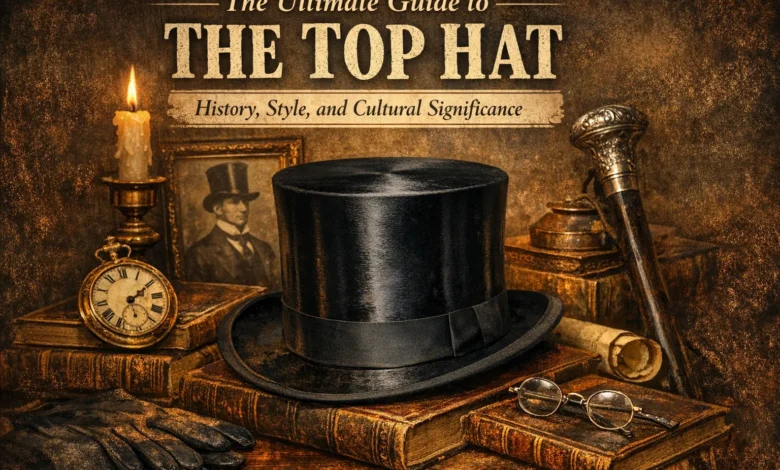
The top hat is one of the most recognizable fashion accessories in Western history. Standing tall with its flat crown and broad brim, this distinctive headpiece has traversed centuries, evolving from a daring fashion statement to a symbol of formality and prestige. Whether you picture a Victorian gentleman strolling through London, a magician pulling a rabbit out of thin air, or Uncle Sam pointing sternly at the viewer, the top hat remains an enduring icon that captures the imagination.
In this comprehensive guide, we will explore everything you need to know about the top hat. We will travel back to its origins in the late 18th century, trace its golden age through the Victorian era, and examine how it survived—and adapted—through the cultural upheavals of the 20th century. We will also look at the craftsmanship behind these magnificent hats, the etiquette that governed their wearing, and their surprising presence in modern fashion, music, and popular culture. Whether you are a history enthusiast, a vintage fashion lover, or simply curious about this timeless accessory, this article will provide you with a deep understanding of the top hat and its place in our world.
The Origins of the Top Hat: From Country Leisure to City Style
To understand the top hat, we must first look at the fashion landscape of the late 18th century. This was a time of revolution and transformation, not just politically but sartorially. The elaborate styles of the earlier Georgian era were giving way to simpler, more streamlined silhouettes, and headwear was no exception. Before the top hat rose to prominence, gentlemen favored the tricorne and bicorne hats—those three-cornered and two-cornered styles famously associated with the American Revolution and Napoleonic era. But change was on the horizon.
The top hat emerged from a confluence of trends. Fashion historians suggest it may have descended from the sugarloaf hat, a tall conical style worn in earlier centuries. However, the direct predecessor was likely the higher-crowned dark felt hat with a wide brim that appeared as country leisurewear around the 1770s. This style coincided with the Age of Revolution, a period that favored more practical, less aristocratic clothing. As the formal justaucorps coat was replaced by frock coats and dress coats in the 1780s, the tricorne and bicorne were gradually phased out in favor of what we now recognize as the top hat.
A key visual record of this transition comes from a painting by Charles Vernet titled Un Incroyable de 1796, which depicts a French dandy—one of the Incroyables et Merveilleuses, a subculture known for its extravagant fashion—wearing a tall, flat-crowned hat that is unmistakably an early version of the top hat. In England, the first documented silk top hat is credited to George Dunnage, a hatter from Middlesex, in 1793. There is also a persistent myth that a haberdasher named John Hetherington invented the top hat, but historians generally consider this apocryphal. The truth is that the top hat evolved organically, shaped by changing tastes and the ingenuity of various hatters across Europe.
By the 1790s, the directoire style dress coat paired with the top hat had become widely adopted as citywear for the upper and middle classes across the Western world. What had started as a country leisure accessory had transformed into a symbol of urban sophistication. The top hat was no longer a novelty; it was becoming the standard for any gentleman who wanted to project status and respectability.
The Golden Age of the Top Hat: Beaver, Silk, and the Century of the Topper
The 19th century is often called the Century of the Top Hat, and for good reason. During this period, the top hat reached the peak of its popularity, evolving in shape, material, and cultural significance. It was worn by everyone from aristocrats to working-class men, becoming one of the most ubiquitous accessories in Western society.
The Beaver Era and the Rise of Silk
In the early decades of the 19th century, the finest top hats were made from felted beaver fur. Beaver fur was prized for its density, water resistance, and ability to hold a shape. Hats made from beaver fur were expensive and became a mark of the upper classes. Working-class men wore hats made from rabbit fur or other less costly materials, which were collectively known as “stuff hats”. The demand for beaver fur was so intense that it significantly contributed to the decline of the North American beaver population, as trappers scoured the continent to meet European fashion demands.
However, by the turn of the 19th century, a new material began to gain prominence: silk. Black silk “hatter’s plush” gradually replaced beaver fur as the standard for quality top hats. This transition was not instantaneous; many traditionalists resisted the change, preferring the familiar feel of beaver felt. But silk offered advantages: it was lighter, had a distinctive sheen, and could be produced more consistently. Grey silk top hats also became popular as a daytime alternative to the standard black.
Stovepipes, Chimney Pots, and Extreme Styles
The 1840s and 1850s represented the top hat’s most dramatic period. Crowns became taller, brims became narrower, and the silhouette grew increasingly exaggerated. There were two main varieties: the stovepipe hat, which had mostly straight sides, and the chimney pot hat, which had slightly convex sides. The stovepipe variety is the style most commonly associated with Abraham Lincoln, the 16th President of the United States, who famously wore a tall black top hat. Legend has it that Lincoln kept important letters and documents tucked inside the hat’s crown. One of his top hats is now on display at the National Museum of American History in Washington, D.C., preserved as a tangible link to one of America’s most revered leaders .
The historian James Laver once made an observation that perfectly captures the era’s aesthetic: an assemblage of top hats looked like factory chimneys, and thus the hat added to the industrial mood of the age. It was a time when fashion mirrored the landscape—tall, vertical, and unapologetically modern. In France, a group of dandies known as the Incroyables wore top hats of such outlandish dimensions that they had trouble fitting them into crowded cloakrooms. This practical problem led to a brilliant innovation: the collapsible top hat .
The Opera Hat: A Practical Innovation
The collapsible top hat, also known as the opera hat or chapeau claque, was developed in the 19th century to solve the problem of storing tall hats in confined spaces like theaters and opera houses. On May 5, 1812, a London hatter named Thomas Francis Dollman patented a design for “an elastic round hat” supported by ribs and springs. However, it was the Frenchman Antoine Gibus, around 1840, who popularized a spring-loaded collapsible design that became widely adopted. These hats could be flattened and stored under a seat, then popped back into shape with a distinctive snapping sound. The French term chapeau claque (“claque” meaning “slap”) refers to this sound, while “opera hat” refers to the context in which they were most commonly used .
The opera hat allowed gentlemen to maintain formal dress standards without the inconvenience of carrying a bulky headpiece. It became an essential accessory for anyone attending the theater, opera, or other formal social events where seating was tight. Today, vintage opera hats remain prized collectibles for enthusiasts of historical fashion.
Symbol of Respectability: The Top Hat in Formal Dress Codes
As the 19th century progressed, the top hat became deeply embedded in formal dress codes. It was no longer just a fashionable accessory; it was a requirement for anyone who wanted to be considered properly dressed for important occasions. The top hat’s association with respectability was cemented when Prince Albert, the consort of Queen Victoria, began wearing them in 1850. Royal endorsement sent a powerful message: the top hat was the hat of the establishment, of authority, of the social elite.
White Tie, Morning Dress, and Frock Coats
The top hat was paired with different types of formal wear depending on the time of day and the occasion. For evening events requiring white tie—the most formal dress code—the top hat was an essential component. Men wore black silk top hats with black tailcoats, white waistcoats, and white bow ties. This combination represented the pinnacle of formal elegance.
For daytime formal events, the top hat was worn with morning dress. Morning dress consisted of a black or grey morning coat (cut away at the front), striped trousers, a waistcoat, and a top hat. In this context, grey top hats were often preferred over black, especially for outdoor events like weddings and horse races. During the middle decades of the 19th century, the frock coat was also commonly paired with the top hat for conventional formal daywear. By the end of the century, however, the frock coat had been largely replaced by morning dress, though the top hat remained constant.
Etiquette and the Art of Wearing a Top Hat
Wearing a top hat was not simply a matter of placing it on one’s head. There was an entire etiquette surrounding its use. At one point, top hat etiquette dictated that a man should not wear it flat on his head. Instead, he should tilt it forward and slightly to one side—no more than ten degrees in either direction—about the same angle as the famous portrait of Lord Ribblesdale by John Singer Sargent. This subtle tilt added an air of nonchalant sophistication.
There were also strict rules about when and where a hat should be removed. A gentleman removed his top hat when entering a building, when speaking to a lady, when a funeral procession passed, and when the national anthem was played. The hat was a mark of respect, and to wear it improperly was to signal ignorance of social norms. Elevators and indoor public spaces required the hat to be removed, while it was kept on outdoors and in certain public halls. These rules were part of a complex social code that governed the behavior of the upper classes.
The Decline of the Top Hat: World Wars and Cultural Change
The 20th century brought profound changes to fashion, and the top hat was not immune. The cataclysm of World War I marked a turning point. Before the war, the top hat was still a standard item of formal outdoor wear for upper-class men. But the war accelerated social change, making formal dress codes seem increasingly out of step with the realities of modern life. Practicality, convenience, and mass production began to take precedence over tradition.
The Rise of Casual Headwear
In the 1920s, semi-formal black tie attire began to spread widely, and informal wear suits became more common. These were paired with less formal hats: the bowler hat, the homburg, the boater, and the fedora . These hats were easier to wear, less expensive, and more suited to the pace of city life. They could be mass-produced, unlike the top hat, which required the skilled hand of a master hatter. As few young people were willing to take up the dying trade of top hat making, the supply of quality top hats began to dwindle.
The top hat also became increasingly associated with the upper class, making it a target for satirists and social critics. In an era of growing class consciousness and economic uncertainty, the top hat’s symbolism shifted from respectability to elitism. It represented the old order, the world of inherited privilege and business capitalism—a world that many were eager to leave behind.
Politics, Diplomacy, and the Last Vestiges
Despite its decline in everyday life, the top hat persisted in certain domains. In politics and international diplomacy, it remained a standard part of formal attire for several more decades. In the Soviet Union, there was a fierce debate among the newly formed government about whether diplomats should follow international conventions and wear top hats. The pro-top hat faction ultimately won by a large majority .
In the United States, top hats were part of formal wear for presidential inaugurations for many years. President Dwight D. Eisenhower spurned the hat for his inauguration, but John F. Kennedy brought it back for his in 1961. Ironically, Kennedy delivered his inaugural address hatless, projecting an image of youthful vigor and signaling a new era. Lyndon B. Johnson did not wear a top hat for his inauguration in 1965, and the hat has not been worn for this purpose since.
The last civilian members of the Japanese delegation that signed the Japanese Instrument of Surrender on September 2, 1945, all wore the, reflecting common diplomatic practice at the time. This moment stands as a poignant reminder of an era when the as was still considered essential for representing one’s nation on the world stage.
The Top Hat in Modern Times: Tradition, Ceremony, and Subculture
Following the counterculture of the 1960s, the top hat’s use declined sharply, along with the daily wearing of informal hats by men. However, reports of its death have been greatly exaggerated. The top hat has not disappeared; it has simply found new niches where tradition, spectacle, or personal expression keep it alive.
Royal Ascot and British Tradition
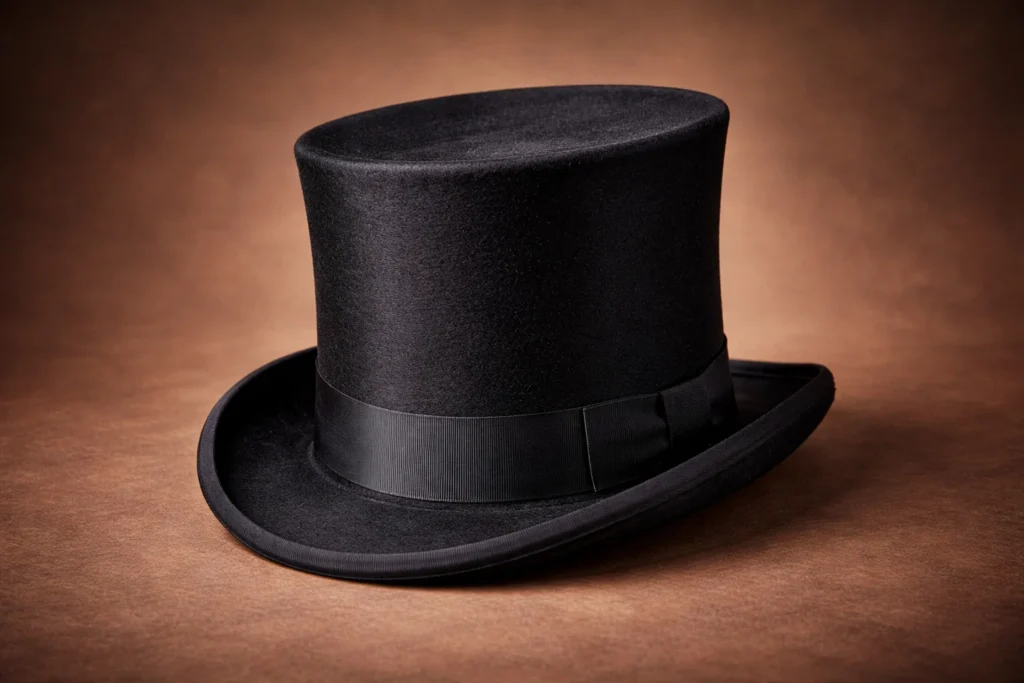
In the United Kingdom, the top hat remains a fixture at certain high-profile events. Royal Ascot, one of the most prestigious horse racing meetings in the world, requires gentlemen in the Royal Enclosure to wear the as part of their formal morning dress. The Queen’s Stand at the Epsom Derby also maintains this tradition. For these occasions, the top hat is not a costume or a relic but an active part of contemporary formal wear. It is worn with the same attention to detail and respect for tradition that has characterized British formal dress for centuries.
Institutional and Ceremonial Use
The top hat also remains part of the formal dress for those occupying prominent positions in certain traditional British institutions. Officials at the Bank of England, certain City stock exchange officials, judges of the Chancery Division, King’s Counsel, and boy choristers of King’s College Choir all wear the as part of their formal attire. At Harrow School, monitors (prefects) still wear the with their Sunday dress uniform, keeping alive a tradition that stretches back generations.
Weddings and funerals, particularly in the United Kingdom and other parts of the Commonwealth, may also see top hats worn as part of formal mourning dress or wedding attire. The top hat’s presence at these life events underscores its continued role as a symbol of respect and solemnity.
Music, Magic, and Pop Culture
Beyond formal occasions, the top hat has found a vibrant second life in music, magic, and popular culture. In rock music, few figures are as closely associated with the top hat as Slash, the legendary lead guitarist for Guns N’ Roses. His black the became as iconic as his Les Paul guitar, representing a fusion of formal tradition and rock rebellion.
Stage magicians have a long and storied relationship with the top hat. In 1814, a French magician named Louis Comte became the first conjurer on record to pull a white rabbit out of a top hat, creating an association that persists to this day. The term “hat trick” may have originated from this magical tradition, and the top hat remains a staple of stage magic costumes, symbolizing mystery and illusion.
The Top Hat as Cultural Symbol
In popular culture, the top hat has become a shorthand for various archetypes. It is the hat of the wealthy industrialist, as embodied by the Monopoly Man (Rich Uncle Pennybags) and Scrooge McDuck . It is the hat of the eccentric genius, as seen in Willy Wonka and the Mad Hatter. It is the hat of the American spirit, as Uncle Sam wears a striped top hat in political cartoons and recruitment posters. The top hat also forms part of the traditional dress of Mr. Peanut, the mascot for Planters, and has appeared in countless films, from Fred Astaire’s the (1935) to modern productions .
Craftsmanship: How a Top Hat Is Made
The creation of a traditional silk the is an art form that requires immense skill and patience. Understanding the craftsmanship involved gives us a deeper appreciation for these remarkable pieces of headwear. The process, which has changed little over the past two centuries, involves multiple stages and specialized materials.
Materials and Structure
A high-quality the begins with a shell made of “goss,” a material created by coating cheesecloth with a solution of shellac and ammonia. This goss is left to cure for up to five months on a wooden frame before it is ready to be blocked. Two pieces of goss are blocked over a wooden the block, which is made of several interconnecting pieces that fit together like a puzzle. This design allows the block to be removed from the finished shell, as the opening at the bottom is narrower than the tip of the crown.
After the shell rests for a week in the block, the block is removed. The brim, made from several layers of goss for strength, is attached to the crown. The entire shell is coated with a layer of shellac varnish and left to dry for another week.
Covering and Finishing
The outer covering of a traditional top hat is made from hatters’ plush, a soft silk weave with a very long, defined nap. This material is extremely rare today, as it has not been in general production since the 1950s, and it is thought that there are no looms capable of producing the traditional material anymore. Modern the are often covered with fur, plush, or melusine as an alternative.
The silk plush is cut to a precise pattern. The top piece and side piece are sewn together, with the side piece featuring an open diagonal seam. This covering is then carefully eased over the shell and ironed; the heat of the iron melts the shellac slightly, allowing the plush to adhere to the shell.
The brim is then finished: the upper brim is covered with either silk plush or silk petersham (a ribbed silk), while the underbrim is covered with merino cloth. The brim is curled and bound with silk grosgrain ribbon, and a hatband—either silk grosgrain with or without a bow, or a black wool mourning band—is installed. Finally, the lining and leather sweatband are carefully hand-stitched in place.
A reinforced “country-weight” the uses additional layers of goss to create a sturdier hat suitable for riding and hunting. These are less common today but represent the range of styles that were once available.
The Top Hat in the 21st Century: Revival and Reinvention
As we move further into the 21st century, the top hat continues to evolve. While it may never regain the ubiquity it enjoyed in the 19th century, it has found new relevance in an era that values heritage, craftsmanship, and individual expression.
Vintage and Antique Markets
Because modern production of silk theis virtually non-existent, the vintage and antique market for these hats is very active. Collectors and enthusiasts seek out wearable examples from the early to mid-20th century. Prices vary depending on size (larger sizes are typically more expensive) and condition. Finding a the that fits well and remains in good condition can be a challenge, but for those who appreciate the craftsmanship of a bygone era, the search is part of the reward.
Modern Manufacturing
While the traditional silk plush the is no longer produced, they are still manufactured using modern materials. Stiff wool felt is the most common material for contemporary top hats, though fur felt and synthetic blends are also available. These modern versions are more durable and affordable than their vintage counterparts, making the top hat accessible to a wider range of consumers. However, purists argue that nothing compares to the look and feel of a genuine silk top hat from the golden age of hat-making.
Dressage and Equestrian Use
One unexpected area where the remain in regular use is dressage, a form of equestrian sport. Riders in high-level dressage competitions often wear the as part of their formal attire. In this context, the top hat is not merely decorative but is considered part of the discipline’s traditions and presentation standards. Some competitions now allow helmets for safety reasons, but the top hat remains a symbol of the sport’s classical heritage.
Steampunk and Subcultural Fashion
The top hat has been enthusiastically adopted by subcultures that celebrate vintage aesthetics and creative self-expression. In steampunk, a genre and subculture inspired by Victorian-era science fiction, the top hat is a central accessory. Steampunk enthusiasts modify and customize top hats with goggles, gears, feathers, and other embellishments, transforming a traditional garment into a canvas for imaginative design.
Similarly, the top hat has found a place in gothic fashion, where its dramatic silhouette complements the subculture’s dark romanticism. In these contexts, the hat is not a relic of a bygone era but a living piece of wearable art, reinterpreted for new generations.
Conclusion
From its origins as a country leisure accessory in the late 18th century to its status as a global cultural icon, the top hat has had a remarkable journey. It has been a symbol of respectability and status, a requirement of formal dress codes, a target of satire, and a canvas for creative reinvention. It has graced the heads of presidents and rock stars, magicians and business tycoons, aristocrats and subcultural rebels.
The story of the top hat is not simply a fashion story; it is a story about society, technology, and the ways we present ourselves to the world. The top hat emerged during a period of revolution and industrialization, reached its peak during the Victorian era when formal codes were at their most elaborate, and adapted to the social upheavals of the 20th century. That it survives today—in traditions like Royal Ascot, in the wardrobe of musicians like Slash, and in the creative expressions of steampunk enthusiasts—speaks to its enduring power.
Whether you see the is as a piece of history, a symbol of elegance, or an accessory with infinite potential for reinvention, there is no denying its place in our cultural imagination. It stands tall, as it always has, a reminder that sometimes the most enduring styles are those that dare to reach a little higher.
FAQ
1. What exactly is a top hat, and how does it differ from other hats?
A top hat is a tall, flat-crowned hat with a broad brim, traditionally made of black silk or felt. It is distinguished from other formal hats like the bowler or homburg by its height and the cylindrical shape of its crown. they are associated with formal dress codes such as white tie and morning dress. The term “top hat” can also refer to collapsible versions known as opera hats or chapeau claque.
2. When did the top hat first appear, and who invented it?
The top hat emerged in Western fashion around the end of the 18th century, inspired by earlier high-crowned hats. While there is a myth that a haberdasher named John Hetherington invented it, historians credit its evolution to multiple hatters. The first documented silk top hat in England was made by George Dunnage in 1793. A painting from 1796 by Charles Vernet shows a French dandy wearing an early version of the top hat.
3. Why is the top hat associated with Abraham Lincoln?
Abraham Lincoln frequently wore a tall black stovepipe top hat, and the style became closely associated with his public image. Lincoln would reportedly keep important letters and documents inside the hat’s crown. One of his the is preserved at the National Museum of American History in Washington, D.C. The association is so strong that Lincoln is often depicted with a the in art, monuments, and popular culture .
4. Are top hats still worn today, and where would I see them?
Yes, top hats are still worn today, though primarily for specific formal occasions and traditional events. In the United Kingdom, they are required attire for gentlemen in the Royal Enclosure at Royal Ascot and are worn at events like the Epsom Derby. They also appear in certain institutional settings, such as the Bank of England and at Harrow School. Additionally, they are worn by musicians (like Slash), stage magicians, and enthusiasts of subcultures like steampunk.
5. What is the difference between a silk top hat and other top hats?
A traditional silk top hat is covered with “hatters’ plush,” a soft silk weave with a long nap that creates a distinctive sheen. These hats are no longer produced, as the specialized looms used to make the material have been destroyed. Modern top hats are typically made from stiff wool felt, fur felt, or synthetic blends. While modern versions are more affordable and durable, collectors and formal wear enthusiasts often seek out vintage silk top hats for their superior quality and historical authenticity .
| Era | Key Developments | Materials & Styles | Cultural Significance |
| Late 18th Century | Emergence from tricorne/bicorne; first silk hats in England | Beaver fur; early felt; tall crown | Symbol of revolutionary fashion; adopted by dandies |
| 19th Century | Golden age; stovepipe and chimney pot styles; collapsible opera hat | Beaver to silk transition; grey for daytime | Symbol of respectability; formal dress code staple; royal endorsement |
| Early 20th Century | Decline begins; competition from bowler, fedora, homburg | Silk plush standard; handmade craftsmanship | Associated with upper class; targeted by satirists |
| Post-WWII | Continued decline; limited to high society and diplomacy | Vintage production ends; fur plush alternatives | Political and diplomatic formality; last inaugurations |
| 21st Century | Niche revival; subculture adoption | Wool felt; vintage market; custom designs | Ceremonial use; music and pop culture icon; steampunk reinvention |
“The top hat is more than just a piece of clothing. It is a statement, a symbol, and a storyteller. From the factory chimneys of the Industrial Revolution to the stages of rock concerts, it has stood tall through centuries of change. To wear a top hat is to connect with a lineage of elegance, rebellion, and tradition that few other garments can claim.”