
The Art of the Pilfer: Understanding Petty Theft and Its Hidden Impact
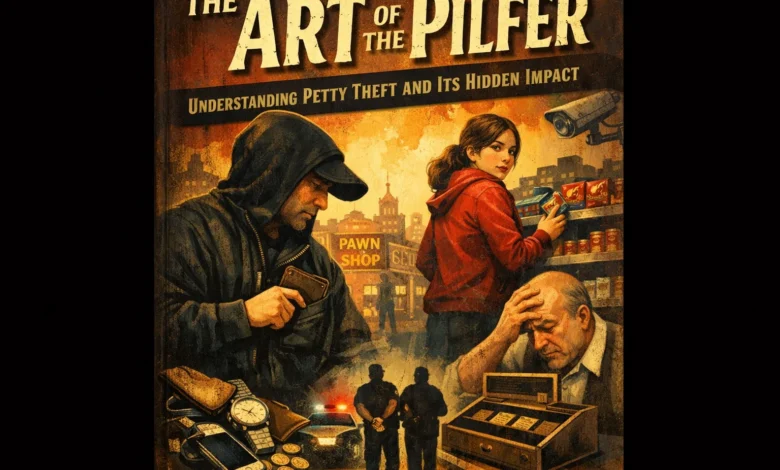
Pilfer: We’ve all been there. You reach into the office supply cabinet, grab a handful of pens, and think, “The company won’t miss these.” Or perhaps you’ve taken a few extra ketchup packets from a fast-food joint, stuffed them in your bag, and justified it as payment for the fries they messed up last Tuesday. Congratulations—you’ve just engaged in what is technically known as a pilfer. It sounds fancy, doesn’t it? Almost French. But whether we call it “borrowing without asking” or “creative acquisition,” pilfering sits in a strange gray area of human behavior. It is the act of stealing things that are not very valuable or stealing a small amount of something, often repeatedly and stealthily.

The word itself carries a weight that is simultaneously lighter than “robbery” yet heavier than “taking.” To pilfer is to engage in the quiet, sneaky removal of items. Unlike a bank heist or a carjacking, pilfering usually doesn’t involve masks, getaway cars, or dramatic music. It involves pockets, purse linings, and the universal human ability to rationalize bad behavior when no one is looking. In this deep dive, we’re going to explore every nook and cranny of this concept—from the linguistic roots of the word to the psychological reasons we do it, and from its impact on businesses to how famous figures in history have used it (or been accused of it). By the time we’re done, you’ll never look at a free pen the same way again.
The Linguistic Roots: Where Did “Pilfer” Come From?
Let’s take a trip back in time, specifically to the mid-16th century. The word “pilfer” didn’t just appear out of thin air; it has a pedigree that smells distinctly of old French and medieval skullduggery. Linguists trace its origin to the Middle French word pelfrer, which essentially meant to pillage or plunder. This came from the Old French pelfre, meaning “booty” or “spoils”. Interestingly, the word “pelf” in English once referred to stolen goods or money acquired dishonestly, specifically wealth that is considered worthless or ill-gotten.
When the word first popped up in English around 1548, it had a very specific vibe. It wasn’t used for conquering armies sweeping through cities and looting gold. No, it was used for the smaller, more contemptible acts of theft—the kind of stealing that makes you seem cheap rather than dangerous. The dictionary definitions are quite consistent on this point. Merriam-Webster notes that to pilfer is “to steal stealthily in small amounts and often again and again”. Meanwhile, Collins emphasizes that it usually involves “small cheap things”. The Oxford Learner’s Dictionary adds the workplace context, stating it is often done “especially from the place where you work”.
This etymological journey reveals a lot about our social judgments. We have a hierarchy of thievery. At the top, you have grand larceny and embezzlement—crimes that require brains or brawn. At the bottom, you have the pilferer. It’s a word that implies a lack of grandeur. You can’t pilfer a yacht. You can’t pilfer a skyscraper. You can, however, pilfer a yacht’s complimentary soaps or the skyscraper’s toilet paper rolls. The word itself is almost dismissive, yet the cumulative effect of these small acts is often massive.
Pilfering vs. Stealing: What’s the Real Difference?
If you look in a thesaurus, “pilfer” sits under the umbrella of “steal,” but it’s a very specific corner of that umbrella. The Cambridge Thesaurus lists synonyms like filch, swipe, and snatch. But the distinction matters greatly, especially if you’re trying to define a crime or explain to your boss why you took the entire snack drawer.
The Scale of the Act
The primary difference is value and quantity. If you take a television from a store, you have robbed it. If you take a pack of gum, you have likely pilfered it. But it’s not just about the item; it’s about the pattern. Stealing can be a one-time event. Pilfering, by its nature, often suggests a repeated action. The synonym discussion in Merriam-Webster clarifies that “pilfer implies stealing repeatedly in small amounts”. This repetitive nature is key. It turns an action into a habit.
The Method of Operation
Robbery often involves force, fear, or breaking. Pilfering involves stealth. It’s the art of sleight of hand. It’s the employee who takes home a ream of paper over six months, one sheet at a time. It’s the guest at a hotel who empties the complimentary toiletries cart into their suitcase when the housekeeper isn’t looking. There’s a certain furtiveness to it. The dictionaries often use words like “stealthily” and “surreptitiously” to describe the action. A robber wants you to know you’ve been robbed (eventually), but a pilferer hopes you never notice because the loss is so small per incident that it blends into the background noise of life.
The Psychology Behind the Pilfer
Why do people do it? Most pilferers aren’t starving. They aren’t usually hardened criminals planning a life of crime. In fact, the vast majority of pilfering is done by ordinary people who consider themselves honest citizens. So, what gives? The psychology here is fascinating and speaks to the quirks of the human brain.
The “Perk” Mentality
In many workplace environments, there is an unspoken culture that certain items are “perks.” Pens, notepads, staples—these are often viewed as trivial. Employees who would never dream of taking cash from the register feel no guilt about taking a box of pens home for their kids. This is pilfering driven by entitlement or the perception that the item is a “cost of doing business.” The definition from Collins highlights this perfectly, noting that the items are usually “small cheap things,” which psychologically feels less criminal. The brain rationalizes: “This is insignificant. It doesn’t matter.”
The Thrill of the Sneak
Sometimes, it’s not about the item at all. For some, the act of pilfering—of successfully taking something without getting caught—triggers a small adrenaline rush. It’s a low-stakes risk. The danger is minimal (at worst, you look cheap), but the reward is a tiny thrill. This is often seen in teenagers who shoplift candy or makeup—not because they can’t afford it, but because it feels rebellious. As the examples from Merriam-Webster show, this behavior spans all ages, from pilfering office supplies to more mischievous acts like stealing street signs.
Opportunity and Environment
Pilfering is often a crime of opportunity. If an office has an unlocked supply closet with no inventory tracking, the temptation rises. If a retail store has a blind spot in its camera coverage, shrinkage (the retail term for loss) tends to increase. It’s a sad truth about human nature that when we feel we can get away with something with little consequence, many of us will test the boundaries. The concept of “pilferage” in business is a constant battle against this opportunistic mindset.
Pilferage in the Workplace: A Billion-Dollar Problem
While we might laugh about taking a few pens, the cumulative effect of pilfering—or “pilferage”—is no joke for businesses. The term “pilferage” refers to the act or practice of stealing small quantities or articles, and it is a massive drain on the global economy. It is the death of a thousand cuts for profit margins.
The Numbers Add Up
Let’s do the math. If an office has 100 employees, and each employee takes just $5 worth of supplies per month (a conservative estimate if you count pens, paper, sticky notes, and the occasional coffee pod), that’s $500 a month, or $6,000 a year of pure loss. Multiply that by thousands of businesses, and you’re looking at billions of dollars. In the retail sector, pilferage is a core component of “shrinkage,” which costs companies tens of billions annually.
Industries Most Affected
Pilferage doesn’t hit every industry equally. The hospitality industry is a prime target. Hotels constantly battle the pilfering of towels, bathrobes, and even light bulbs. One of the recent examples highlighted in the news shows that even street signs and public art aren’t safe, with towns reporting that signage has been “pilfered” multiple times.
The restaurant industry also suffers. “Dine and dash” is a form of pilfering, but more common is the pilfering of inventory by staff—taking a bottle of wine, eating food that was supposed to be sold, or giving away drinks to friends. As the Collins example notes, “The staff were pilfering behind the bar”. This internal theft is often harder to catch than external theft because it involves trusted individuals.
Famous Pilferers in Pop Culture and History
Believe it or not, pilfering has a rich history in storytelling and real-life scandals. It’s the go-to trope for the “lovable rogue” character who isn’t really bad, just a little sneaky.
The Artful Dodger
Perhaps the most famous pilferer in literature is Jack Dawkins, better known as the Artful Dodger, from Charles Dickens’ Oliver Twist. The Dodger is a pickpocket, which is a form of pilfering. He steals handkerchiefs and wallets—small items—with incredible stealth. Dickens made us love him despite his criminal ways because his pilfering seemed like a survival mechanism rather than true malice.
Modern Day Pilfering in Film
In modern cinema, we see the trope continue. Characters who “liberate” office supplies or steal from big corporations are often framed as anti-heroes. The act of the is used to show that a character is street-smart or anti-establishment. However, the reality is often less glamorous. When high-profile individuals are caught pilfering, the tone shifts. For instance, there have been numerous scandals involving celebrities or politicians accused of the from campaign funds or charities—small amounts that add up to significant sums, showing that the isn’t just for the little guy.
Legal Ramifications: When Petty Becomes Felony
So, what happens if you get caught? The law treats the as theft, but the severity depends on the value of the stolen goods. This is where the line between petty theft and grand theft is drawn.
Petty Theft vs. Grand Theft
Most jurisdictions classify theft of items under a certain dollar amount (often $500 or $1,000) as petty theft or petty larceny. This is where most the falls. If you are caught the a handful of candy or a few office supplies, you’re likely looking at a misdemeanor charge, fines, and potentially a short stint in jail or community service. However, if you the repeatedly and the total value of what you’ve taken over time exceeds the threshold, prosecutors can sometimes aggregate the thefts into a single felony charge. As the definition of “pilferage” suggests, it is the “amount so stolen” that matters, and over time, that amount can become substantial.
Employment Consequences
Beyond criminal charges, the social and professional consequences of being caught the are often worse than the legal ones. Being fired for theft is a career-killer. It goes on your record. If you’re caught pilfering from your employer, you can say goodbye to references and trustworthiness in your industry. It’s one thing to be bad at your job; it’s another to be a thief. Employers view internal pilferage as a breach of the most fundamental trust.
Prevention: How Businesses Fight Back Against Pilferage
Given the cost of the, businesses have developed a wide arsenal of tools to prevent it. From high-tech surveillance to psychological tactics, the fight against the sneaky thief is constant.
Surveillance and Accountability
The most obvious tool is the camera. Closed-circuit television (CCTV) has become ubiquitous in retail and office environments. Just knowing that they are being watched can deter would-be pilferers. As the free dictionary notes, “pilfer” implies stealth, and cameras make stealth nearly impossible. Additionally, inventory tracking systems that use barcodes and RFID tags make it much harder to slip items out of a facility without detection.
Cultural Shifts
Some companies are taking a different approach: they are reducing the temptation. Instead of having open supply closets, they use a “check-out” system for equipment. Others are simply giving employees a budget for office supplies, allowing them to purchase what they need for home use legitimately. This removes the moral gray area. When a company says, “Here is a $50 allowance for home office supplies,” the employee no longer feels the need to pilfer.
Related Terms: Pilfer, Filch, Purloin, and Swipe
To truly master the concept of the, we need to understand its cousins. English is a language rich with synonyms for stealing, each with its own unique flavor. The “Synonym Discussion” section of Merriam-Webster provides a brilliant breakdown of this.
| Term | Definition | Nuance & Example |
| Steal | To take without right or detection. | The broadest term; applies to tangibles and intangibles. Steal a kiss, steal a base, steal a car. |
| Pilfer | To steal in small quantities, repeatedly. | Suggests habit and low value. Pilfering office pens over months. |
| Filch | To snatch quickly and stealthily. | Often impulsive and sly. Fitched a cookie from the tray. |
| Purloin | To remove or carry off for one’s own use. | Formal or humorous; often implies misuse of position. Purloined documents, purloined the last slice of pie. |
As we can see, while all these words describe taking what isn’t yours, “pilfer” holds a unique place. It is the term for the habitual, small-time thief. It lacks the aggression of “rob” and the formality of “purloin.” It’s the word you use when you want to sound specific about the scale of the theft.
Quotes About Theft and Morality
Throughout history, writers and thinkers have had a lot to say about the nature of stealing, particularly the small, sneaky kind that the represents. Here are a few poignant quotes that capture the spirit of what we’ve been discussing.
“Who steals my purse steals trash; ‘tis something, nothing; ‘Twas mine, ‘tis his, and has been slave to thousands; But he that filches from me my good name Robs me of that which not enriches him, And makes me poor indeed.”
— William Shakespeare, Othello
This quote highlights the distinction between taking physical goods (like pilfering) and taking reputation. Interestingly, it suggests that stealing things of little value (trash) is less harmful than stealing honor. However, in a modern context, getting caught the does, in fact, rob you of your good name.
“Stealing a little, they put you in jail; stealing a lot, they make you king.”
— Bob Dylan
Dylan’s lyric speaks to the hypocrisy of scale. The person who pilfers a few dollars from a cash register faces consequences, while the one who orchestrates a massive financial fraud often walks away with a bonus. It puts the small-time pilferer in a perspective of social injustice.
“A man who has to be punctually at a place, who has time only to the a moment from his leisure, cannot be expected to have any other than a superficial knowledge.”
— Joseph Conrad, Lord Jim
Here, Conrad uses “pilfer” metaphorically. He suggests that stealing moments leads to a shallow understanding. It expands the definition beyond physical goods to the theft of time—another form of pilfering we often overlook.
The Ethics of the Small Steal
We’ve covered the legal and business perspectives, but let’s get personal for a moment. Is the really that bad? This is where the discussion gets philosophical. We all have our justifications.
The Case for the “Harmless” Pilfer
Proponents of the “harmless pilfer” argue that the victims are often faceless corporations with insurance and billions in profit. Taking a pen from a massive office supply chain or a hotel chain is seen as a victimless crime. It’s a tiny redistribution of wealth from the rich to the individual. When we pilfer from our employers, some argue it’s a form of “emotional wage”—compensating ourselves for work we feel undervalued for.

The Case Against Any Pilfer
However, the counter-argument is strong. Firstly, the costs of pilferage are passed down. If a hotel loses 10% of its towels to pilfering, the price of the room goes up for everyone else. If a store experiences high shrinkage, they hire security, which adds to operational costs. Ultimately, the consumer pays for the pilferer’s “free” goods.
Secondly, there is the argument of character. Philosophers like Plato argued that justice is doing what is right even when no one is watching. Pilfering is the ultimate act of doing wrong when no one is watching. If you rationalize taking a pen today, what stops you from rationalizing taking something bigger tomorrow? The habit of pilfering can erode personal integrity over time.
How to Protect Yourself from Being a Victim of Pilferage
If you run a business or even just a household, you are susceptible to pilferage. It’s not just about corporate espionage; it’s about roommates taking your food or guests taking your DVDs. Here’s how to tighten up.
For Businesses: The Audit Trail
The best defense against the is a good audit trail. If you are a manager, don’t make supplies freely available without tracking. Create a system. Even a simple sign-out sheet for expensive equipment or high-value items can drastically reduce pilfering. The act of signing creates a psychological barrier.
Additionally, conduct random audits. When employees know that inventory checks happen sporadically, the opportunity for sustained thedisappears. As the definition from the American Heritage Dictionary implies, pilferage often goes unnoticed because it happens in small increments. Regular audits disrupt that pattern.
For Individuals: Awareness
On a personal level, if you have a roommate or family member who tends to “borrow” your things without asking, communication is key. Establish clear boundaries about what is communal and what is private. In shared spaces, lock up valuables. It might seem extreme, but it prevents the slow, frustrating drain of your belongings that comes from someone who habitually pilfers.
Conclusion: The Weight of the Small Theft
As we wrap up this exploration of the word and the act, it’s worth reflecting on the duality of pilfering. On one hand, it is the most relatable form of theft. Almost everyone has done it, and almost everyone has a justification ready. It is the crime of pens and paperclips, of an extra sugar packet or a spool of thread. It seems so small as to be meaningless.
Yet, the cumulative impact tells a different story. Businesses lose billions. Trust erodes in workplaces. And on a personal level, the habit of taking what isn’t yours—no matter how small—has a way of corroding the conscience. The word “pilfer” might sound quaint, a relic from a time when people stole chickens from the manor, but it remains profoundly relevant today. Whether it’s the digital pilfering of time at work, the physical taking of goods, or the metaphorical the of ideas, we are constantly navigating the line between “perk” and “theft.”
Ultimately, understanding the is about understanding human nature. We are creatures of convenience, opportunity, and rationalization. But we are also creatures capable of integrity. The next time you reach for that pen or that extra something, remember the old French origins of the word—pelfre, meaning spoils. Is that small item really worth the spoiling of your own character? Usually, it’s not. And if you find yourself on the receiving end of a the, remember that small actions have big consequences, and that a little vigilance can save a lot of trouble. It’s the little things, after all, that often matter the most.
Frequently Asked Questions
What is the difference between pilfer and steal?
While both words mean to take something without permission, the key difference lies in the value and the frequency. “Steal” is a general term that can apply to anything from a small candy bar to a multimillion-dollar painting. “Pilfer,” on the other hand, specifically refers to stealing things of little value or stealing in small quantities, often repeatedly. As Merriam-Webster notes, to pilfer is to “steal stealthily in small amounts and often again and again”. So, if you take a car, you steal it. If you take a handful of pens from your office over the course of a year, you the them.
Can pilfering get me arrested?
Yes, absolutely. Even though pilfering involves small items, it is still theft. While you might not be looking at a lengthy prison sentence for taking a few cheap items, you can be charged with petty theft or petty larceny, which is a misdemeanor in most jurisdictions. This can result in fines, community service, and a criminal record. Furthermore, if the total value of the items you have pilfered over time reaches a certain threshold (often $500-$1,000 depending on the state), you could potentially be charged with a felony. The consequences extend beyond the legal system, as being fired for they can permanently damage your professional reputation.
What does pilferage mean in a business context?
In business, pilferage refers to the act of stealing small quantities of goods, supplies, or materials. It is a major component of “shrinkage,” which is the loss of inventory. Pilferage can be committed by employees (internal theft) or by customers (shoplifting). While each incident of pilferage might seem insignificant to the thief, the cumulative cost to businesses is enormous, amounting to billions of dollars annually in the retail and hospitality sectors. Businesses combat pilferage through security cameras, inventory controls, and employee training.
Are there any synonyms for pilfer that have different meanings?
Yes, several synonyms carry unique nuances. “Filch” suggests snatching something quickly and often impulsively, like filching a grape from the grocery bag. “Purloin” is a more formal or often humorous term that implies a degree of stealth, frequently used for documents or secrets. “Swipe” is informal slang suggesting a quick, effortless theft. “Embezzle” is different because it specifically refers to stealing money or assets that have been entrusted to you by your employer, usually in larger sums. Understanding these distinctions can help you use the precise word for the type of theft being described.
Why do people who normally don’t steal still pilfer?
The psychology behind the often involves rationalization and opportunity. Many people justify pilfering by telling themselves the items are of low value, that the “company can afford it,” or that it’s a way of getting back at an employer they feel undervalues them. This is often called the “perk” mentality. Additionally, the lack of oversight and the ease of committing the act create an environment of opportunity. Unlike armed robbery, which requires a willingness to do serious harm, pilfering feels like a low-risk, low-consequence act, which makes it accessible to people who would otherwise consider themselves honest.