
The Ultimate Guide to Choosing the Perfect Lighted Vanity Mirror
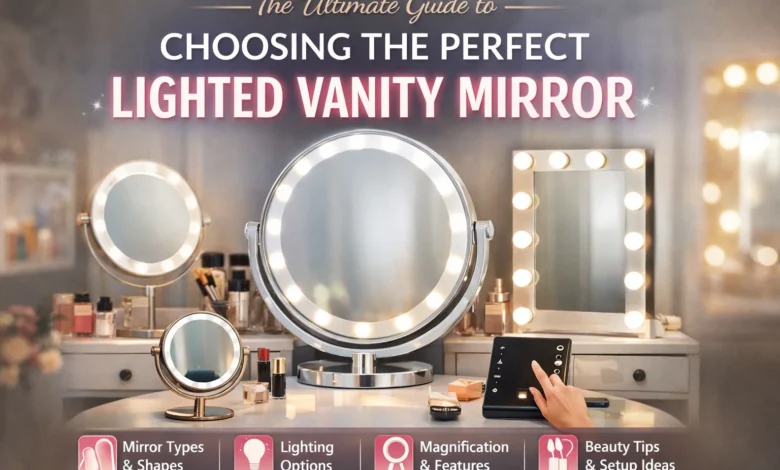
Lighted Vanity Mirror: Let’s be real for a moment. You have probably stood in front of a bathroom mirror at a hotel or a friend’s house and thought, “Wow, I look amazing in this light.” That is not magic, and it is not just you having a good skin day. That is the power of a properly lit vanity mirror. It is one of those home upgrades that you do not know you are desperately missing until you finally have one, and then you can never go back to the dim, shadowy struggle of a standard bathroom light.


A lighted vanity mirror is exactly what it sounds like—a mirror with integrated LED lights built right into the glass or frame. But calling it just a “mirror with lights” is like calling a smartphone just a “phone.” These things are sophisticated. They offer adjustable color temperatures, dimming features, anti-fog technology, and even smart memory settings that remember exactly how you like your lighting. Whether you are an avid makeup enthusiast, someone who hates the foggy mirror after a hot shower, or just a design lover wanting to add a modern touch to your space, this guide is going to walk you through every single detail you need to know. We are talking sizes, shapes, installation tricks, and the specific tech specs that separate a great mirror from a regrettable purchase.
Why Your Bathroom Needs a Lighted Vanity Mirror
The difference between a standard mirror and a lighted vanity mirror is the difference between a flashlight and the sun. Standard bathroom lighting usually comes from a single overhead fixture or a pair of sconces. While those are fine, they often cast harsh shadows on your face. That shadow under your chin? That dark spot under your eyes? That is just bad lighting, not bad genetics.
A lighted vanity mirror solves this problem by distributing light evenly across your face. Because the LEDs are integrated directly into the mirror, the light hits you straight on, eliminating those annoying shadows that make shaving or applying foundation a guessing game. It is like having a professional studio light built into your wall.
Beyond the functional benefits, there is the aesthetic upgrade. A sleek, illuminated mirror turns your bathroom from a purely utilitarian space into a spa-like retreat. The soft glow of a backlit vanity mirror adds depth and ambiance to the room, especially at night when you do not want to blast the main overhead light. It signals to guests that you pay attention to the details, and honestly, it just looks really, really cool.
Understanding the Different Types of Illumination
When you start shopping for a lighted vanity mirror, you will run into a lot of jargon about how the light actually hits you. Generally, we categorize these into three distinct styles: frontlit, backlit, and a combination of the two. Knowing the difference will save you from buying the wrong vibe for your space.
Frontlit mirrors have the LED lights visible on the front surface of the glass, usually around the perimeter. These provide the brightest, most direct illumination. If your main goal is task lighting—like plucking eyebrows, detailed skincare, or precision grooming—this is your best friend. The light shines directly onto your face without obstruction. However, because the lights are right there on the front, they can sometimes be a little harsh on the eyes if you are sensitive to bright things.
Backlit mirrors take the opposite approach. The LEDs are hidden behind the mirror, casting a soft halo of light onto the wall behind it. This creates a gorgeous ambient glow that is incredibly flattering and relaxing. It is the “spa lighting” you dream about. The downside? It is softer, so if you need intense light to see every pore, a purely backlit mirror might leave you squinting. The best of both worlds is a combination mirror. Many modern lighted vanity mirrors offer both front and back lighting simultaneously or toggled independently, giving you the soft mood light for a bath and the bright task light for makeup.
The Magic of Color Temperature and CRI
Here is where things get a little technical, but do not click away—this is the most important part. You have probably noticed that light can look yellow, white, or blue. That is color temperature, measured in Kelvin (K). A good lighted vanity mirror will allow you to switch between these temperatures, often via a touch sensor on the glass.
Warm light (around 2700K to 3000K) looks yellow and cozy, similar to an old incandescent bulb. It is great for unwinding in a bath, but terrible for makeup because it makes you look more yellow than you are. Cool light (5000K to 6500K) looks blue and clinical—like a hospital or a department store. It is very bright and alerting, but it can wash you out. Natural or daylight (around 4000K to 4500K) is the sweet spot. It mimics the sun and shows colors accurately.
But temperature is only half the story. You also need to look for CRI, or Color Rendering Index. A CRI of 90 or above is the standard you want for a vanity mirror. A high CRI means the light shows reds, blues, and greens accurately. A low CRI makes everything look dull and gray. If you want to ensure your lipstick matches your shirt and your foundation is blended, you need a high CRI and the ability to adjust to natural light settings. Many high-end mirrors now feature a CRI of 95+, which is as close to actual sunlight as you can get indoors.
Anti-Fog Features and Smart Technology
There is a specific kind of disappointment that comes from finishing a nice, hot shower, turning to the mirror, and seeing… nothing. Just a wall of white steam. This is where the anti-fog feature on a lighted vanity mirror becomes a non-negotiable necessity rather than a luxury.
Anti-fog technology is surprisingly simple. A heating pad or demister is attached to the back of the mirror. When you turn it on (usually with a dedicated touch button), it gently warms the glass surface. Because the glass is warmer than the surrounding air temperature, condensation cannot form. It usually kicks in within 30 to 45 seconds, ensuring your reflection stays crystal clear no matter how steamy the room gets. This is especially valuable in master bathrooms that lack a separate water closet.
But the tech does not stop there. Modern lighted vanity mirrors are getting smarter. We are seeing models with memory functions that save your last brightness and color temperature settings, so you do not have to tap through menus every single morning. Some include motion sensors that turn the lights on automatically when you walk into the room. Others have built-in Bluetooth speakers so you can listen to your morning news from the mirror, or even wireless phone charging pads integrated into the base. It sounds like science fiction, but it is very much a reality.
Size, Placement, and Installation Logistics
Before you fall in love with a specific mirror, you need to talk about size and installation. A tiny mirror over a massive double vanity looks ridiculous, and a giant mirror crammed into a powder room looks oppressive. The golden rule is that your lighted vanity mirror should be a few inches narrower than your vanity or sink.
If you have a single sink, the mirror should be centered over the sink, extending slightly to the left and right. For a double sink, you have a choice: one very long horizontal mirror, or two separate mirrors centered over each sink. If you go with two, ensure they match the scale of the sinks below them. As for height, the center of the mirror should generally sit around 60 to 63 inches from the floor, but feel free to adjust based on the height of the primary users.
Now, installation. This is where people get tripped up. Lighted mirrors need electricity. You have two main options: plug-in or hardwired. A plug-in model comes with a cord that you can hide behind the vanity and plug into a standard outlet. This is the easiest DIY route. A hardwired model connects directly to a junction box in the wall, just like a light fixture. It looks cleaner—no visible cords—but it requires a licensed electrician if you are not comfortable with wiring. Do not guess with electricity. If you are unsure, hire a pro. It is worth the peace of mind.
Table: Comparison of Lighted Vanity Mirror Styles
| Mirror Style | Lighting Type | Best For | Key Features to Look For |
| Hollywood/Bulb Style | Front-lit (directional) | Professional makeup, Detailed grooming | High brightness, adjustable angles |
| Backlit LED | Ambient (halo effect) | Spa atmosphere, Nighttime ambiance | Soft glow, sleek frameless look |
| Frontlit Perimeter | Direct task lighting | Shaving, Skincare routines | High CRI, Even light distribution |
| Combination | Front + Back | Versatility (makeup + relaxation) | Dual-mode switching, Memory function |
| Tri-Fold Tabletop | Front-lit | Portable use, Travel, Desks | 10x magnification, Battery/USB powered |
How to Choose Between Wall-Mounted and Tabletop Units
Not every lighted vanity mirror needs to be bolted to the wall. Depending on your setup, a tabletop unit might be the better, more flexible option. Understanding the pros and cons of each will help you match the mirror to your actual daily habits.
Wall-mounted lighted vanity mirrors are permanent fixtures. They are hardwired or plugged in and attached securely to the wall. The advantage here is the clean, built-in look. They do not take up counter space, which is a huge win for cluttered bathrooms. They also provide a larger, uninterrupted reflection. The downside is permanence. Once you drill those holes and install the bracket, you are committed. Moving it requires patching holes and potentially moving electrical wires.
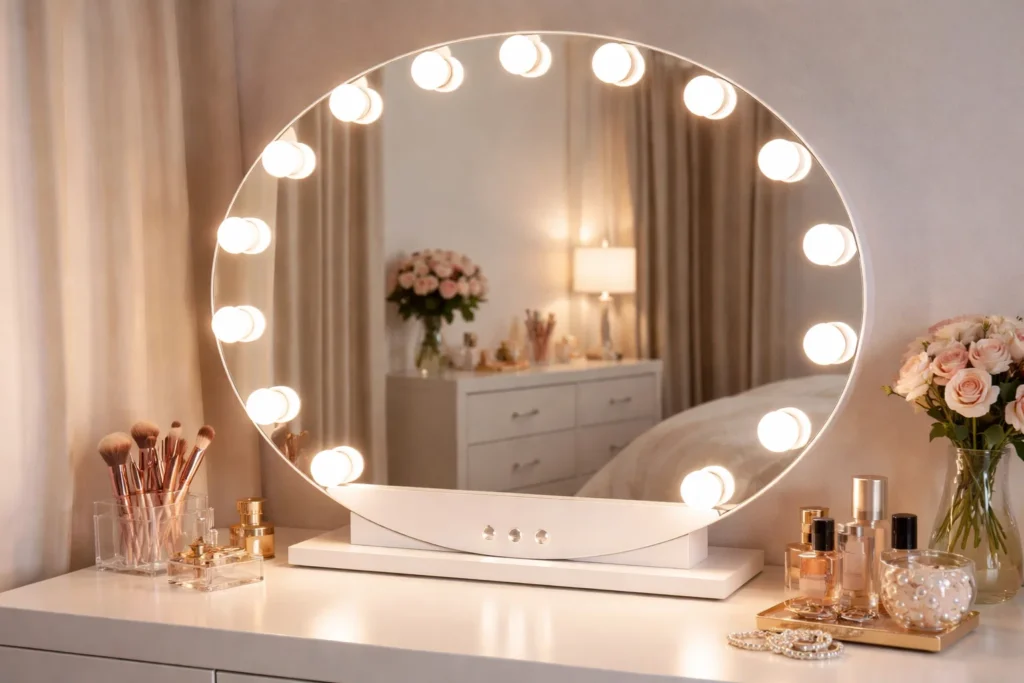
Tabletop lighted vanity mirrors are freestanding units that sit on your counter or desk. They are usually smaller, ranging from 8 to 15 inches in width, and often feature a stand or a clamp. These are incredibly versatile. Many come with a 1x standard side and a 10x magnification side for extreme close-ups. They are usually rechargeable via USB, meaning you can move them anywhere without worrying about wall outlets. They are perfect for renters, for guest bathrooms, or for people who want the flexibility to move their mirror from the bathroom to a bedroom vanity.
Maintenance and Longevity
Investing in a quality lighted vanity mirror means you want it to last. The good news is that LED lights are incredibly durable. Most manufacturers rate their LEDs for 50,000 hours of use. If you use the mirror for two hours every single day, that is nearly 70 years of life. You will likely remodel the bathroom again before those lights burn out.
However, the mirror glass itself needs care. In a humid bathroom, the edges of a cheap mirror can start to “desilver,” turning black and corroded. Look for mirrors with copper-free coatings or epoxy resin seals on the edges to prevent this. When cleaning, avoid ammonia-based cleaners like Windex, as they can seep into the edges and damage the backing. Use a simple microfiber cloth with a little water or a vinegar-based solution. For the touch sensors, just a dry or slightly damp cloth is best. Do not spray liquid directly onto the mirror where the electrical components are housed.
Quotes from Real Users
“I used to do my makeup by a window because I didn’t trust my bathroom light. Since installing a front-lit vanity mirror with a CRI of 95, I can finally wear the right shade of concealer. It’s a game changer for anyone who cares about their skin looking good in natural light.” – Sophia R., Verified Buyer.
“The anti-fog feature is not a gimmick. I live in a cold climate, and after a hot shower, my bathroom is a steam room. My old mirror would stay fogged for thirty minutes. This one clears in forty seconds. I don’t know how I lived without it.” – James T., Homeowner.
“I bought a round backlit mirror for a small powder room. It made the space feel twice as big. The soft halo of light on the wall adds depth, and guests always ask where I got it. It looks much more expensive than it actually was.” – Elena K., Interior Design Enthusiast.
Conclusion
Choosing a lighted vanity mirror is about so much more than just finding a reflective surface. It is about upgrading your daily ritual. It is about starting your day with clear, accurate light that makes you look and feel your best. It is about ending your day with a soft, spa-like glow that helps you decompress.
Do not settle for the harsh shadows and foggy surfaces of a standard bathroom setup. Whether you opt for a high-tech smart mirror with memory settings and Bluetooth, a simple yet elegant backlit frame, or a portable magnifying unit for your desk, the investment in proper lighting is an investment in yourself. Measure your space, check your color temperature preferences, and get ready to see a reflection you actually trust. The perfect lighted vanity mirror is out there, and now you have the tools to find it.
Frequently Asked Questions
What size lighted vanity mirror should I buy for my double sink?
For a double sink, you have two excellent options. You can install one large continuous mirror that spans the length of the vanity, leaving about 1 to 2 inches of space on each side. Alternatively, you can hang two separate lighted vanity mirrors. If you choose two, ensure each mirror is centered directly over its respective sink. The width of each mirror should roughly match the width of the vanity cabinet door below the sink.
Are lighted vanity mirrors difficult to install?
It depends on the type and your electrical comfort level. Plug-in models are very DIY-friendly; you just mount the bracket on the wall, hang the mirror, and plug the cord into a nearby outlet. Hardwired models, which require connecting the mirror’s wires directly to a junction box in the wall, are more complex. For those, I strongly recommend hiring a licensed electrician to ensure safety and code compliance.
What is the ideal color temperature for makeup application?
For makeup application, you want a color temperature that mimics natural daylight, which is usually between 4000K and 4500K. This “natural white” light is balanced—it is not too yellow (which distorts color) and not too blue (which can be harsh and unflattering). Many high-quality lighted vanity mirrors allow you to toggle between warm, natural, and cool light.
Can I replace the LEDs in my vanity mirror if they burn out?
Typically, no. Most modern LED vanity mirrors feature integrated, non-replaceable LED strips. The good news is that these LEDs are rated for an extremely long lifespan, often 50,000 hours or more. If you use the mirror for an hour a day, that is over 130 years of use. The mirror finish will likely degrade before the lights do. Always check the warranty, but you generally do not need to worry about replacing the bulbs.
What is the difference between frontlit and backlit mirrors?
A frontlit lighted vanity mirror has the LEDs visible on the front edge of the glass. This provides direct, bright task lighting perfect for shaving or makeup. A backlit mirror hides the LEDs behind the glass, casting a soft, indirect “halo” glow onto the wall. This creates ambient, flattering lighting that is great for relaxation but less intense for detailed work. Some premium models offer both.