
Small Kitchen Design Ideas That Prove Size Doesn’t Limit Style
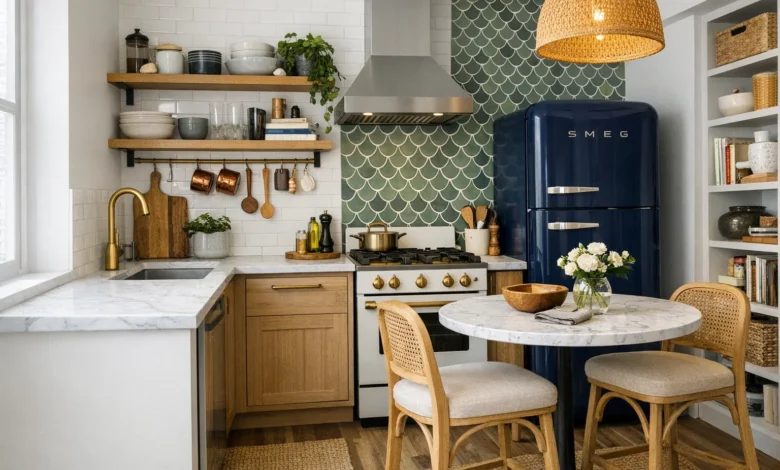
Small Kitchen Design Ideas: Let’s be real—cooking in a cramped kitchen can feel like a battle. You’re juggling pans, running out of counter space, and playing an endless game of cupboard Tetris. But here’s the good news: with the right small kitchen design ideas, even the tiniest galley or L-shaped space can become a functional, beautiful heart of your home. I’ve helped dozens of homeowners transform their pint-sized prep zones, and the secret isn’t knocking down walls—it’s working smarter with every inch.


The key is shifting your mindset. Instead of fighting the lack of square footage, embrace clever layouts, vertical storage, and light-enhancing tricks. Whether you’re remodeling a city apartment kitchen or refreshing a vacation cottage, these small kitchen design ideas will boost efficiency without breaking the bank. From pull-out pantries to magnetic knife strips, we’ll cover actionable tips that feel less like a sacrifice and more like a win.
Start with a Smart Layout to Maximize Every Step
Before you buy a single cabinet or pick out a tile backsplash, you need to nail the layout. The most brilliant small kitchen design ideas fall flat if your fridge, sink, and stove are fighting for elbow room. The classic “work triangle”—the distance between your cooking, cleaning, and food storage zones—should be tight but not cramped. Aim for a total of 12 to 27 feet between the three points. In a tiny kitchen, you might even shrink that to 10 feet, and that’s perfectly fine.
Galley layouts work wonders for narrow spaces, placing everything along two parallel walls. If you have a bit more width, an L-shaped design opens up corner room for a small table or rolling cart. U-shaped kitchens can feel cozy, but be careful—anything under eight feet between the legs becomes a squeeze. The point is to measure your daily flow. Do you constantly bump the oven door when opening the dishwasher? That’s a sign to rethink the arrangement. And don’t overlook the one-wall kitchen: a straight run of cabinets and appliances works surprisingly well if you add a peninsula or an island on wheels.
Light Colors and Reflective Surfaces Open Up the Room
Dark cabinets and matte black countertops might look dramatic in a magazine, but in a small kitchen, they absorb light and visually shrink the space. One of the most powerful small kitchen design ideas is to flood the room with brightness. Stick with white, cream, pale gray, or soft pastels for your upper cabinets and walls. These hues bounce natural light around, making the room feel twice as airy. You don’t have to go full-on sterile hospital white—warm off-whites like “Swiss Coffee” or “Alabaster” add coziness without eating up visual square footage.
Now, take it a step further with reflective surfaces. Glossy subway tiles, a mirrored backsplash, or polished quartz countertops act like little light amplifiers. Even your appliances can help: choose stainless steel or matte white finishes instead of black or dark slate. If you have a window, keep treatments minimal—a simple Roman shade or sheer curtain lets sunlight pour in. No window at all? Install under-cabinet LED strips and a bright overhead fixture. The goal is to eliminate dark corners, because shadows are the enemy of spaciousness.
Use Vertical Space Like a Pro (Yes, All the Way to the Ceiling)
In a small kitchen, floor space is prime real estate, but walls are your best friend. Look up—how much empty drywall do you see above your cabinets? Most people stop at standard 30-inch tall uppers, leaving a dusty gap all the way to the ceiling. That’s a wasted opportunity. Run your cabinets to the ceiling, or install open shelving above them. You can store holiday platters, pretty glassware, or rarely-used appliances up there. Even a row of baskets hides clutter while adding texture.
Beyond cabinets, think about vertical rails, pegboards, and magnetic strips. Mount a sturdy pegboard on an empty wall to hang pots, lids, and utensils—it’s like art for your kitchen that also saves drawer space. A magnetic knife strip keeps blades accessible and frees up a whole drawer. Install a tension rod under the sink to hang spray bottles. Use stackable shelves inside upper cabinets to double your plate storage. The rule is simple: if a surface is vertical, find a way to hang or attach something useful to it.
“In a tiny kitchen, every inch of vertical space is like finding an extra closet. Go up, not out.” – Sarah Richardson, interior designer.
Smart Storage Hacks That Hide the Clutter
Let’s talk about the real villain of small kitchens: clutter. Mixers, blenders, toasters, cutting boards—they pile up on counters faster than you can say “spatula.” The best small kitchen design ideas focus on hiding these items in plain sight. Start with deep drawers instead of standard cupboards for your base cabinets. Deep drawers with dividers let you see every pot lid and mixing bowl at a glance, no digging required. Pull-out trash and recycling bins keep smelly garbage out of sight but within easy reach.
Then, get creative with the odd spaces. That narrow gap between the fridge and the wall? Slide in a rolling pantry rack for canned goods and spices. The toe-kick area under your lower cabinets can become a shallow drawer for baking sheets or cookie trays. Inside corner cabinets, install a “magic corner” pull-out shelf or a lazy Susan. For under the sink, add a sliding basket that fits around the pipes. Even the space above your fridge can hold a custom pull-out shelf for bulky items like slow cookers. The mantra is “don’t let a single cubic inch go unused.”
Multi-Functional Furniture and Rolling Carts
When you can’t add more built-ins, bring in pieces that work double-duty. A butcher block cart on locking casters is a small kitchen’s MVP. Push it against the wall when you need floor space, then roll it to the center for extra prep surface during cooking. Look for carts with towel bars, drawers, or wine racks underneath. Some even drop leaves that expand into a breakfast bar. The same idea applies to drop-leaf tables—folded down, they’re a slim console; opened up, they seat two for dinner.
Another brilliant move is using a magnetic spice rack on the side of your fridge or a fold-down counter attached to a wall. I’ve even seen homeowners mount a sturdy cutting board that slides out from under a top drawer. For seating, skip bulky chairs and choose backless stools that tuck completely under a peninsula or narrow table. And don’t forget the inside of cabinet doors: stick a small wire rack there for foil, wrap, or pot lids. Every object in a small kitchen should earn its keep by doing at least two things.
Choose Appliances That Fit Without Sacrificing Function
Giant restaurant-style ranges and French door refrigerators are gorgeous—and completely impractical for a compact space. The good news is that appliance makers now offer “small footprint, big capability” options. An 18-inch dishwasher fits under a standard counter and handles a day’s worth of dishes for one or two people. A 24-inch wide refrigerator with a bottom freezer gives you plenty of storage without dominating the room. For cooks, consider an apartment-size range (20 to 24 inches wide) or even a two-burner induction cooktop paired with a compact wall oven.
Microwaves are another space hog. Instead of a countertop model, install an over-the-range microwave or a built-in drawer microwave under a lower cabinet. If you rarely use a full oven, a combination microwave-convection oven can replace both. And for the truly tiny kitchen (think under 50 square feet), look at portable induction burners and a compact fridge drawer system. The trick is to be honest about how you actually cook. If you roast a turkey twice a year, you don’t need a massive oven taking up permanent real estate.
Table: Appliance Dimensions for Small Kitchens
| Appliance Type | Standard Size | Small Kitchen Alternative | Space Saved |
| Refrigerator | 30–36″ wide | 24″ counter-depth model | 6–12″ width |
| Dishwasher | 24″ wide | 18″ compact dishwasher | 6″ width + storage drawer |
| Range/Stove | 30″ wide | 20–24″ apartment range | 6–10″ width |
| Microwave | 1.5 cu ft countertop | Over-the-range or drawer | Full counter space |
| Sink | Double bowl | 24″ single deep bowl | More under-sink storage |
Open Shelving for Airiness (But Do It Right)
Open shelving is a polarizing topic. Some designers swear it makes a small kitchen feel bigger. Others warn that it just shows off your mess. I’m in the middle: when done thoughtfully, open shelves are among the most effective small kitchen design ideas. The key is to limit them to one wall or a small section. Replace a few upper cabinet doors with glass fronts or remove doors entirely from one cabinet run. This creates visual breathing room because your eye travels through the shelves rather than hitting solid wood.
But you cannot just pile dishes haphazardly. Curate what you display: stack white plates, nest similar bowls, and line up matching mugs. Add a few cookbooks leaning against a ceramic canister. Avoid plastic cups or mismatched Tupperware—keep those behind closed doors. Also, plan for dust. Open shelves need weekly wiping, so only store items you use often. If you’re a messy cook or hate cleaning, stick with glass-front cabinets instead. They give the airy look without exposing every coffee stain.
Corner Solutions That End the “Black Hole” Problem
Ah, the corner cabinet—where good intentions go to die. That dark, deep space usually becomes a graveyard for dusty bread machines and abandoned cake pans. But you can conquer corners with smart hardware. A blind corner pull-out system (sometimes called a “magic corner”) uses two shelves that slide out together, giving you full access to every inch. They’re not cheap—expect $300 to $800 for the hardware alone—but they unlock a huge amount of usable storage.
If a pull-out is out of budget, install a lazy Susan. Two-tiered versions work best, and you can find them for under $100. Another trick: use a diagonal cabinet door that opens at a 45-degree angle, which gives you a wider opening to reach inside. For the truly budget-savvy, remove the corner cabinet door entirely and turn the space into open shelving with a curved corner shelf. You’ll lose a bit of depth, but you’ll actually use what’s there. Don’t forget the countertop corner, either—a corner sink or a diagonal cooktop can free up valuable straight counter runs.
Mirror Magic and Glass Accents
Mirrors aren’t just for bathrooms. A well-placed mirror in a small kitchen doubles the sense of space instantly. Try a mirrored backsplash behind the stove or sink—it reflects the room and gives you an easy surface to wipe splatters. For a less obvious look, hang a large framed mirror on an empty wall opposite a window. It will bounce outdoor light across the room and create the illusion of a second window. Just avoid mirrored cabinet doors on every surface, which can feel dizzying.
Glass is another secret weapon. Use glass cabinet inserts to show off pretty dishware while keeping dust away. A glass pendant light or a clear acrylic counter stool feels almost invisible, reducing visual clutter. Even your table can be glass-topped with a slim metal base. The idea is to let light flow through objects rather than stopping at solid wood or dark finishes. And if you’re tiling, choose glossy ceramic or glass tiles—they reflect more light than matte stone or slate.
Handleless Cabinets for a Sleek, Unbroken Line
Those little knobs and pulls might seem minor, but in a small kitchen, they add visual noise. Handleless cabinets—using push-to-open mechanisms or recessed finger pulls—create a smooth, uninterrupted surface that tricks the eye into seeing more space. The look is modern, but it works for traditional kitchens too if you use flat-panel doors painted in a soft cream. Plus, no handles means no catching your belt loop or hip on a protruding knob when you turn around in a tight aisle.
You don’t need to replace all your cabinets to get this effect. Consider handleless doors only on the upper cabinets or on a bank of drawers. Another hybrid option: install “J-pull” or “C-pull” routed grooves into the top or bottom edge of your cabinet fronts. They cost very little if you’re ordering new doors, and they’re surprisingly ergonomic. If you already have handles, try swapping bulky metal pulls for slim leather tabs or small round ceramic knobs that blend into the door color.
Pull-Out Pantries and Slim Storage Units
A walk-in pantry is a luxury most small kitchens can’t afford. But a pull-out pantry—basically a tall, narrow cabinet on wheels or glides—fits in a 12-inch wide gap. Slide it between the fridge and the wall or next to the stove. Inside, you can store canned goods, spices, oils, and dry goods on five or six shelves. When you need something, just pull the whole unit out. Some models have a door that mimics your other cabinets, so it disappears when closed.
For even tighter spots, look at “slim pull-out towers” that are only 6 to 9 inches wide. These are perfect for cutting boards, baking sheets, and foil rolls. You can also install a pull-out spice rack next to the stove—every jar visible at a glance. Another clever idea is a pull-out recycling center with three slim bins. The point is to stop stuffing things into deep, messy cabinets and instead use vertical pull-outs that bring everything to you. They cost a bit upfront ($150–$400 each), but the daily convenience is priceless.
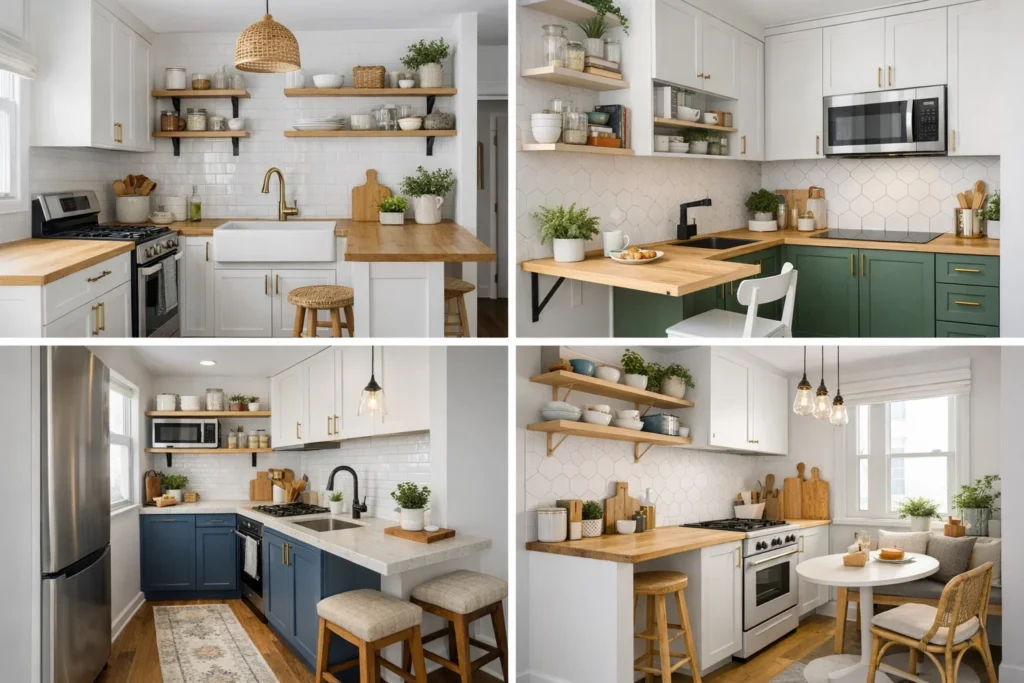
Lighting Layers That Banish Shadows
One overhead light fixture is not enough. In a small kitchen, shadows fall exactly where you don’t want them—on your cutting board, inside your sink, and over your cooktop. The solution is layered lighting. Start with ambient lighting: flush-mount ceiling lights or recessed LEDs that evenly fill the room. Then add task lighting: under-cabinet LED strips that shine directly onto your countertops. These are easy to install with adhesive backing and plug-in adapters. Aim for 4000K color temperature (bright white, not yellowish) for true food prep visibility.
Finally, add accent lighting. A small pendant over the sink or a miniature track light aimed at open shelves adds depth and highlights your favorite pieces. If you have glass-front cabinets, put a tiny puck light inside each one. And don’t ignore toe-kick lighting—LED strips along the floor base make the cabinets look like they’re floating, which visually expands the floor area. For under $100, you can transform a dim, cave-like kitchen into a bright, welcoming workspace.
Compact Seating That Doesn’t Hog Floor Space
Eating in your kitchen is cozy, but a bulky table with four chairs can take over the whole room. The best small kitchen design ideas for dining include fold-down tables, breakfast bars, and built-in banquettes. A wall-mounted drop-leaf table folds flat when not in use—some even have storage cubbies inside. A narrow breakfast bar attached to a peninsula gives you two or three stools that tuck completely underneath. For a more permanent solution, build a corner banquette with lift-up seats for hidden storage.
If you prefer a traditional table, look for a pedestal base (no corner legs to stub your toes) and a round or oval top. Round tables allow easier movement around them. For chairs, choose backless stools or stackable wooden chairs that hang on a wall hook. Another trick: use a narrow bench along one wall instead of individual chairs. You can push the bench flush under the table when not in use. And remember, you don’t need seating for eight—two comfortable spots are better than four cramped ones.
The Power of a Single Statement Piece
In a tiny kitchen, too many patterns, colors, and textures feel chaotic. But one bold, beautiful element can actually make the space feel intentional and larger. For example, a vivid cobalt blue range against white cabinets draws the eye and creates a focal point, distracting from the lack of square footage. Or try a dramatic geometric tile floor—because the floor is a continuous surface, a strong pattern makes the room feel like a cohesive whole rather than a series of small zones.
Other statement ideas: a copper range hood, a waterfall marble island (even a small one), or a vibrant painted ceiling. Just pick one. Everything else should be neutral and subdued. The statement piece works like a magnet—your gaze lands there, and the surrounding walls seem to recede. Avoid the common mistake of adding a busy backsplash, colorful countertops, and patterned cabinets all at once. In small spaces, restraint is your superpower.
Use Every Door and Drawer Face for Storage
The front of your cabinets and the sides of your fridge are untapped real estate. Stick a slim over-the-door organizer on the inside of your pantry door for spice jars or snack pouches. On the outside of a lower cabinet door, mount a small trash bag holder or a paper towel rack. The side of a refrigerator can hold a magnetic rack for kitchen shears, timers, and grocery lists. Even the side of a cabinet next to the stove can support a narrow wire shelf for cooking oils and salt.
Drawer fronts offer another opportunity. Stick adhesive hooks inside a drawer front to hang measuring cups or pot holders. For deep drawers, attach a slim caddy to the inside of the front panel for lids or small gadgets. And don’t forget the space above your upper cabinet doors: if there’s a gap between the top of the door and the ceiling, add a small basket screwed into the door’s interior top edge for lightweight items like dish towels. The rule is simple: if it’s a flat surface, find a way to attach something useful to it.
Go Handle-Free with Touch-Latch Cabinets
We touched on this earlier, but it’s worth repeating because it’s such a game-changer for tight spaces. Touch-latch cabinets (also called push-to-open) eliminate hardware. You just press the door or drawer front, and it pops open. This means no protrusions to bump into when you’re shuffling from sink to stove. It also creates that clean, seamless look that makes a small kitchen feel more expensive and less cluttered. The hardware is surprisingly reliable—spring-loaded magnetic catches have been used for decades.
Installation is straightforward for new cabinets: you order doors without pre-drilled holes and add the touch latch inside the cabinet box. For existing cabinets, you can retrofit with adhesive magnetic catches, though they’re less durable. Another pro tip: combine touch-latch upper doors with lower drawers that have a slight “tip” to open—this keeps your most-used zones smooth and silent. The only downside? You’ll have to wipe fingerprints off door fronts more often. But for the clean aesthetic, it’s a small price to pay.
Consider an Appliance Garage for Countertop Clutter
You know that lineup of small appliances—toaster, coffee maker, stand mixer—that slowly colonizes your limited counter space? An appliance garage is a roll-up or lift-up door that hides them away but keeps them plugged in and ready to use. Usually installed in a corner of the countertop, it looks like a mini cabinet with a tambour door (those slatted roll-ups) or an upward-lifting door. Inside, you can have electrical outlets so you never unplug your coffee grinder again.
If a built-in garage is too permanent, try a large covered caddy or a vintage bread box. Or use a small rolling cart with a butcher block top that slides under a counter—pull it out, use the appliance, slide it back. Another trick is to store appliances on a deep pull-out shelf inside a lower cabinet, then lift them to the counter when needed. The goal is to reclaim at least 3 to 5 square feet of continuous counter space for actual food prep. Once you experience a clutter-free counter, you’ll never go back.
Window Treatments That Let Light Flood In
Heavy drapes or bulky valances are a mistake in a small kitchen. Instead, choose window treatments that disappear when open. Roller shades in a light-filtering fabric mount inside the window frame, taking up zero wall space. Roman shades in a neutral linen add softness without blocking light. If you want privacy but maximum light, consider frosted window film—it’s a peel-and-stick solution that lets sunshine pour in while blurring the view from outside.
For windows above the sink, skip treatments entirely. That window is your main light source and your only view. Just keep the glass clean. If you must have something, a simple spring tension rod with a sheer café curtain that covers only the bottom half of the window allows top light to stream in. And never, ever use dark curtains or heavy blackout shades in a small kitchen—they’ll make the room feel like a cave.
Go Big on the Backsplash (Yes, Big)
Counterintuitive, but hear me out: a single expansive backsplash that runs from counter to upper cabinets—and even continues up to the ceiling behind open shelves—creates a strong horizontal line that tricks the eye into seeing more width. Choose large-format tiles (like 12×24 inches) or a single slab of quartz or stainless steel. The fewer grout lines, the less visual interruption. A continuous backsplash in a light, glossy material reflects light and streamlines the look.
Avoid tiny mosaic tiles or busy patterns that fragment the wall into a thousand little pieces. If you love patterns, use it on just one wall or as a narrow accent stripe. Another pro move: run the same countertop material up the backsplash. This creates a seamless “waterfall” effect that’s incredibly elegant and easy to clean. And don’t forget the area behind the stove—a sheet of magnetic stainless steel there lets you attach spice tins right on the wall.
Conclusion
Designing a small kitchen isn’t about accepting less—it’s about being more intentional. The small kitchen design ideas we’ve covered prove that with smart layouts, vertical thinking, and clever storage, even a 50-square-foot galley can feel open, organized, and even luxurious. Start with the non-negotiables: good lighting, light colors, and a workable triangle. Then layer in the hacks that fit your lifestyle, whether that’s a pull-out pantry, a rolling cart, or handleless cabinets. Remember, every inch has potential. The goal isn’t to pretend your kitchen is huge—it’s to make it work so well for you that you forget about the square footage altogether.
H2: Frequently Asked Questions (FAQ)
H3: What is the single most effective small kitchen design idea for under $100?
The most impactful low-cost idea is adding under-cabinet LED strip lighting. For about $30 to $60, you can buy plug-in or battery-operated motion-sensor lights that banish countertop shadows immediately. This one change makes your kitchen feel larger, safer for chopping, and more high-end. Second place goes to a magnetic knife strip ($15), which frees an entire drawer. Both deliver huge visual and functional returns without any renovation.
H3: How do I incorporate small kitchen design ideas if I rent and can’t make permanent changes?
Renters have plenty of options. Use removable adhesive hooks inside cabinet doors for pot lids. Install a tension rod under the sink for spray bottles. Buy a rolling kitchen cart that you can take with you. Stick removable wallpaper or peel-and-stick tiles on the backsplash. Swap bulky cabinet handles with slim leather pulls (keep the originals to reinstall later). And use over-the-door organizers on pantry and cabinet doors. None of these damages walls or cabinets, but they transform your efficiency.
H3: Are open shelves a good small kitchen design idea for messy cooks?
Generally, no. Open shelves require you to keep dishes neatly stacked and wiped weekly. If you tend to leave dirty cups out or have mismatched Tupperware, stick with glass-front cabinets instead. They give a similar airy feel but hide the chaos. If you love the look but need a compromise, do just one small section of open shelves for your prettiest items—like white dinner plates and a few cookbooks—and keep the rest behind closed doors.
H3: What colors make a small kitchen look bigger beyond white?
While white is the gold standard, other light hues work beautifully. Pale sage green, very light blue-gray (like “Silver Mist”), soft butter yellow, and warm blush pink all reflect light well while adding personality. The trick is to keep the color consistent on walls and cabinets, then use white or light wood for trim and countertops. Avoid dark, saturated colors like navy or charcoal, and skip high-contrast combinations like black and white, which can make the space feel choppy.
H3: Can I have a kitchen island with these small kitchen design ideas?
Yes, but it must be the right size. For a galley kitchen, a narrow island on wheels that is no wider than 18 to 24 inches works. For an L-shaped kitchen, a small butcher block cart that fits into the “corner” of the L is ideal. The key rule: leave at least 36 inches of walking space between the island and other counters. If you can’t, skip the island and use a peninsula attached to one wall instead. Or use a folding table that drops down when not in use.
H3: How do I make a windowless small kitchen feel brighter?
Layer your lighting aggressively. Start with bright white (4000K) recessed lights or flush mounts. Add under-cabinet LED strips. Install a mirrored backsplash to bounce artificial light around. Use high-gloss white paint on cabinets and walls. Choose a light-reflective countertop like white quartz. Finally, add a small skylight alternative—a “light tube” or solar tunnel can bring natural light into interior rooms for a few hundred dollars. Failing that, a large piece of white-framed art with a picture of a sunny window can trick the brain.