Frankie Lymon: The Boy Soprano Who Changed Rock and Roll Forever
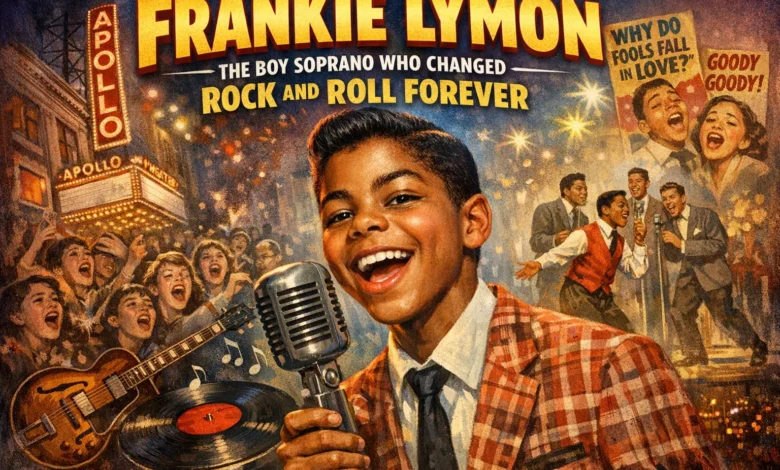
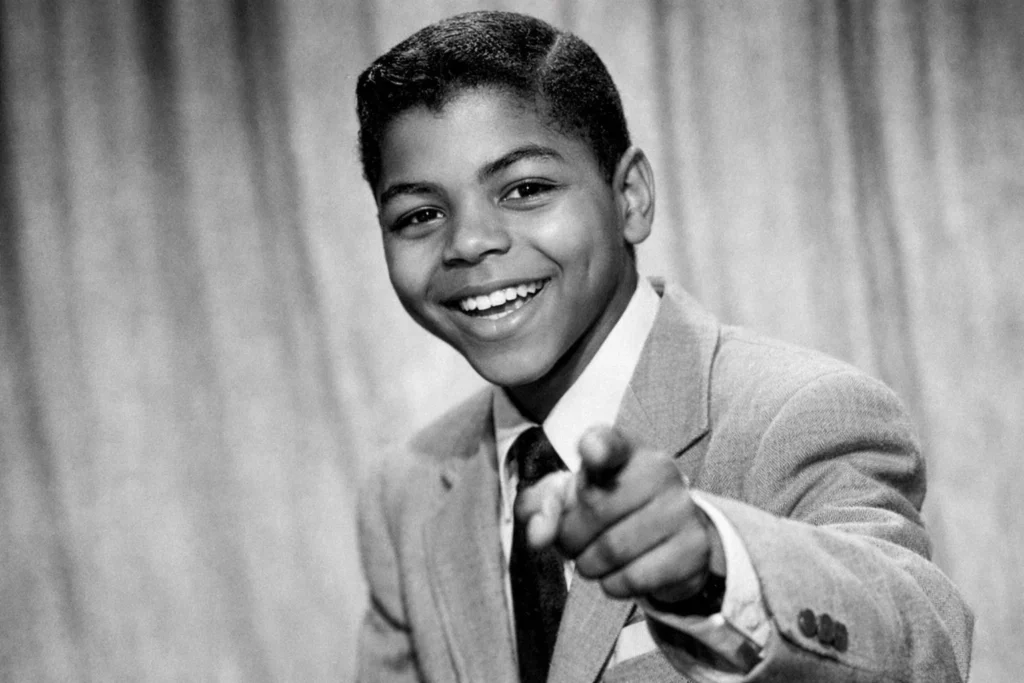
Frankie Lymon: Before Michael Jackson spun his first moonwalk, before Stevie Wonder signed with Motown, there was Frankie Lymon. He was the original teenage phenomenon, a 13-year-old kid from Washington Heights with a voice that sounded like it came from somewhere beyond his years—a clear, soaring soprano that cut through the noise of mid-1950s rhythm and blues and introduced white America to the raw, infectious energy of rock and roll. If you know the song “Why Do Fools Fall in Love,” you know the voice that launched a thousand imitators. But the story of Frankie Lymon is far more than a one-hit wonder narrative. It is a tale of dizzying highs, crushing lows, and a legacy that continues to influence music decades after his untimely death.


Frankie Lymon wasn’t just a singer; he was a pioneer. As the lead vocalist of the Teenagers, he became the first black teenage pop star, a distinction that came with immense pressure and an industry ill-equipped to protect a child navigating fame, addiction, and the treacherous waters of show business. His voice, described by contemporaries as both angelic and powerful, helped bridge racial divides in music at a time when segregation was still the law of the land. Yet, by the time he was 25, Frankie Lymon was found dead on his grandmother’s bathroom floor, a victim of the very heroin addiction that had plagued him since his mid-teens. His life was a flash of brilliance—a meteor that burned bright across the pop culture sky before extinguishing far too soon. This article explores the full arc of Frankie Lymon’s journey: from the streets of Harlem to the Rock and Roll Hall of Fame, and the complicated, often heartbreaking legacy he left behind.
To understand Frankie Lymon is to understand the birth of rock and roll itself. His story is one of extraordinary talent colliding with exploitation, a narrative that would be repeated with countless young stars in the decades that followed. But unlike so many who came after, Lymon was the blueprint. He was the first to show the world that a teenager, with the right voice and the right song, could capture the hearts of millions. Yet, he was also the first to demonstrate the dangers that lurked beneath the surface of fame—the manipulative contracts, the sudden loss of relevance when the voice changed, and the ease with which a young man could fall prey to addiction. Let’s dive into the life of this doo-wop icon, exploring the music that made him immortal and the circumstances that made his story a cautionary tale.
The Early Years: Growing Up Fast in Washington Heights
Franklin Joseph Lymon was born on September 30, 1942, in the Washington Heights neighborhood of New York City. His family struggled to make ends meet. His father, Howard Lymon, was a truck driver, and his mother, Jeanette, worked as a maid. Both parents sang in a gospel group called the Harlemaires, and music was a constant presence in the Lymon household. Frankie and his brothers, Lewis and Howie, sang together as the Harlemaire Juniors, honing their harmonies from a young age. A fourth brother, Timmy, was also a singer, though not with this particular group. Despite the musical foundation, life was hard. The Lymon family often struggled to pay the rent, and by the age of ten, Frankie was already working as a grocery boy to help support his family.
This early exposure to adult responsibilities shaped Frankie Lymon in profound ways. In a heartbreaking 1967 interview with Ebony magazine, he reflected on his childhood, stating, “I never was a child, although I was billed in every theatre and auditorium where I appeared as a child star. I was a man when I was 11 years old, doing everything that most men do. In the neighbourhood where I lived, there was no time to be a child”. This statement is perhaps the key to understanding the tragedy that would later unfold. While other kids played stickball, Frankie was navigating an adult world of hustling and survival. He reportedly augmented his income through less conventional means, including relationships with older women, and by his own account, was introduced to heroin at age 15 by a woman twice his age.
The harsh realities of his environment didn’t dampen his musical ambitions. At age 12 in 1954, Frankie Lymon attended a school talent show where he heard a local doo-wop group called the Coupe De Villes. He was immediately drawn to their sound and befriended the lead singer, Herman Santiago. Soon, he became a member of the group, which was going through various name changes, calling themselves both the Ermines and the Premiers. It was the beginning of a partnership that would soon change the course of popular music.
The Birth of a Hit: How “Why Do Fools Fall in Love” Changed Everything
The origin story of the song that made Frankie Lymon a star is as legendary as it is serendipitous. In 1955, a neighbor in the building where bassist Sherman Garnes lived gave the group a stack of love letters written by his girlfriend. He thought they might inspire the boys to write their own songs. Herman Santiago and Jimmy Merchant took one of the letters and began adapting the words into a song. The original title was “Why Do Birds Sing So Gay?” based on a line from the letters, and Santiago was initially slated to sing lead.
The group, now calling themselves the Teenagers, landed an audition with Richard Barrett, a singer with the Valentines, who was impressed enough to get them in front of record producer George Goldner at Gee Records. The day of the audition, however, fate intervened. Original lead singer Herman Santiago was late. According to group lore, Frankie Lymon stepped up and told Goldner he knew the song because he had helped write it. When he opened his mouth to sing, his voice—a pure, untrained soprano that effortlessly floated above the harmonies—stopped everyone in the room. Goldner knew immediately that he had found something special.
ChartPeak Position
Billboard Pop Singles Chart No. 6
Billboard R&B Singles Chart No. 1 (5 weeks)
UK Singles Chart No. 1
Goldner signed the Teenagers to Gee Records, and in January 1956, “Why Do Fools Fall in Love” was released. It was an immediate sensation. The single soared to No. 6 on the Billboard pop chart and held the No. 1 spot on the R&B chart for an astonishing five weeks. The song was unlike anything else on the radio. It had the tight harmonies of doo-wop, but Frankie Lymon’s lead vocal—childlike yet emotionally sophisticated—gave it an urgency and innocence that resonated with teenagers across racial lines.
The song’s lyrics, simple and timeless, captured the universal confusion of young love:
“Why do birds sing so gay?
And lovers await the break of day
Why do they fall in love?
Why does the rain fall from above?
Why do fools fall in love?”
The success was immediate and overwhelming. Disc jockeys across the country started billing the group as “Frankie Lymon and the Teenagers,” and the name stuck. Suddenly, a group of five kids from New York—three African American and two Puerto Rican—were the biggest thing in music. Their success was not just commercial; it was culturally significant. At a time when racial integration was fiercely contested, the Teenagers presented a harmonious vision of young people of different backgrounds creating art together. They became icons of the burgeoning rock and roll movement, appearing in Alan Freed’s rock-and-roll movies Rock, Rock, Rock (1956) and Mister Rock and Roll (1957).
The Teenagers Phenomenon: Chart Success and Racial Integration
The success of “Why Do Fools Fall in Love” was just the beginning. Over the next year and a half, Frankie Lymon and the Teenagers became a hit-making machine. They released a string of singles that dominated the R&B charts and crossed over to the pop audience. “I Want You to Be My Girl” became their second major hit, reaching No. 13 on the Billboard Hot 100. Other notable tracks included “I Promise to Remember” and “Who Can Explain?” “The ABC’s of Love,” and the socially conscious “I’m Not a Juvenile Delinquent”. Each record showcased Lymon’s remarkable vocal ability, his phrasing and timing belying his age.
The group’s appeal was multifaceted. Their doo-wop harmonies were tight and polished, but the energy was raw and youthful. Frankie Lymon, with his slight frame, infectious grin, and undeniable stage presence, was the focal point. He could sing ballads with heart-wrenching sincerity and up-tempo numbers with a swagger that made teenagers swoon. The group’s integrated lineup—with Frankie Lymon, Jimmy Merchant, and Sherman Garnes as the African American members, and Herman Santiago and Joe Negroni as the Puerto Rican members—was groundbreaking. They performed on stages across the country and around the world, bringing a message of youthful unity through music.
Their popularity led to a tour of Europe in early 1957. During a show at the London Palladium, the pressure began to show. George Goldner, their producer, started giving Frankie Lymon solo spots in the show, pushing him to the forefront and creating tension within the group. The seeds of the group’s breakup were being sown. By mid-1957, Frankie Lymon had officially departed from the Teenagers to pursue a solo career. The group’s final single, “Goody Goody,” was credited to “Frankie Lymon & the Teenagers,” but in reality, it was Lymon recording with session singers—the beginning of the end.
The Solo Years: A Voice Changes, A Career Declines
When Frankie Lymon left the Teenagers at the age of 14, he was at the peak of his fame. But the music industry of the 1950s was unforgiving, and Lymon was about to face a challenge that no amount of talent could overcome: adolescence. As he entered his mid-teens, his voice began to change. The clear, piercing soprano that had defined his sound was giving way to an unremarkable tenor. For a singer whose entire brand was built on that unique vocal quality, this was a career-threatening development.
His solo career began promisingly enough. He moved to Roulette Records, but the hits did not follow. His highest-charting solo single was a cover of “Little Bitty Pretty One,” which peaked at No. 58 on the Hot 100 in 1960—a far cry from the Top 10 success he had enjoyed with the Teenagers. The song had actually been recorded in 1957, before his voice changed, a fact that only underscored the challenge he faced. Attempts to sing in falsetto to replicate his earlier sound were met with limited success.
The decline in his career was accelerated by another, more destructive factor: heroin. In that 1967 Ebony interview, Frankie Lymon revealed he was first introduced to heroin at 15 by an older woman. The addiction took hold quickly, and his performances became sporadic and unreliable. By 1961, Roulette Records had terminated his contract, and Lymon entered a drug rehabilitation program. For the next several years, he struggled through short-lived deals with 20th Century Fox and Columbia Records, none of which revived his career.
There was also a scandal that further damaged his public image. On July 19, 1957, during a live appearance on Alan Freed’s ABC television show The Big Beat, Frankie Lymon danced with a white teenage girl while performing. In the racially charged atmosphere of the time, this simple act of youthful exuberance caused an uproar, particularly among Southern television station owners. The show was subsequently canceled. This incident, combined with his changing voice and growing addiction, marked a rapid fall from grace for the one-time teen idol.
A Tangled Web: The Three Wives and Legal Battles
The personal life of Frankie Lymon became as complicated as his professional one. In the early 1960s, he began a relationship with Elizabeth “Mickey” Waters. They married in January 1964 in Alexandria, Virginia, and she gave birth to their only child, a daughter named Francine. Tragically, Francine died just two days after birth at Lenox Hill Hospital. The marriage to Waters was later deemed legally invalid because she was still married to her first husband at the time. After their relationship failed, Lymon moved to Los Angeles.
It was in Los Angeles that Lymon became involved with Zola Taylor, a member of the iconic group the Platters. Taylor claimed that she and Frankie Lymon were married in Mexico in 1965. However, Lymon himself reportedly said the marriage was a publicity stunt, and Taylor was unable to produce any legal documentation to prove the union. A gossip column from June 1966 quoted Zola as saying the whole thing was “a joke that she went along with at the time”. The relationship ended after a few months, reportedly due to Lymon’s drug use.
The most stable relationship of his final years was with Emira Eagle, a schoolteacher he met while stationed at Fort Gordon, Georgia. After being arrested on a heroin charge in June 1966, Frankie Lymon was drafted into the United States Army instead of receiving a jail sentence. While stationed near Augusta, Georgia, he met and fell in love with Emira. They were married in June 1967. However, Lymon repeatedly went AWOL from the Army to secure singing gigs at small Southern clubs, eventually receiving a dishonorable discharge. Despite these troubles, he moved into Emira’s home and continued to perform sporadically, trying to rebuild his life.
These three relationships—with Waters, Taylor, and Eagle—would later become the center of a bitter legal battle over the royalties for “Why Do Fools Fall in Love.” After Lymon’s death, all three women claimed to be his legal widow, each seeking rights to the song’s substantial earnings. The case became a media spectacle and served as the basis for the 1998 film Why Do Fools Fall in Love, starring Larenz Tate as Lymon, Halle Berry as Zola Taylor, Vivica A. Fox as Elizabeth Waters, and Lela Rochon as Emira Eagle. The legal battles over his estate lasted for decades, a sad postscript to a life marked by financial exploitation.
The Final Act: A Comeback Cut Short
By early 1968, Frankie Lymon seemed to be on the verge of a second chance. He had signed a new management deal with Sam Bray’s Big Apple label and returned to recording. Roulette Records, his old label, expressed interest in releasing his new material and scheduled a recording session for February 28. A major promotional campaign was being arranged by CHO Associates, owned by prominent radio personalities. After years of struggle, it appeared Frankie Lymon might finally be making a comeback.
He was staying at his grandmother’s apartment in Harlem, the same neighborhood where he had grown up. According to reports, he celebrated his good fortune by relapsing into heroin use after having remained clean since entering the Army two years prior. On February 27, 1968—just one day before the scheduled recording session—Frankie Lymon was found dead on the bathroom floor of his grandmother’s apartment. He was 25 years old. A syringe was found by his side. The cause of death was officially listed as “acute intravenous narcotism”—a heroin overdose.
| Marriage Claimant | Status | Outcome |
| Elizabeth “Mickey” Waters | 1964 marriage in Virginia | Later deemed invalid; still married to first husband |
| Zola Taylor (The Platters) | Claimed 1965 marriage in Mexico | No legal documentation found; Lymon called it “publicity stunt” |
| Emira Eagle | June 1967 marriage in Georgia | Legally recognized as widow |
The death of Frankie Lymon was a tragedy that resonated deeply within the music community, though it garnered far less media attention than his rise had. He was buried in an unmarked grave at Saint Raymond’s Cemetery in the Throggs Neck section of the Bronx. It was a stark contrast to the heights of fame he had experienced a decade earlier. For years, his final resting place remained anonymous, a forgotten symbol of the music industry’s disposability. It wasn’t until the 1990s, thanks to fundraising efforts by a music store and fans, that a headstone was finally installed to honor the singer who had helped invent rock and roll.
Legacy and Redemption: The Rock and Roll Hall of Fame
For a long time, the story of Frankie Lymon seemed destined to be remembered only as a cautionary tale—the child star who burned out too fast and died too young. But in the decades following his death, a reevaluation began. Music critics and historians started to recognize the immense impact he and the Teenagers had on popular music. They were not just a successful doo-wop group; they were architects of rock and roll itself. The Teenagers’ sound influenced countless artists, from the Jackson 5 to the Beach Boys, who covered “Why Do Fools Fall in Love” as the B-side to their hit “Fun, Fun, Fun”.
In 1993, the legacy of Frankie Lymon was formally cemented. He was posthumously inducted into the Rock and Roll Hall of Fame as a member of the Teenagers. The honor recognized not just the commercial success of “Why Do Fools Fall in Love,” but the group’s pioneering role in breaking down racial barriers in the music industry and setting the template for the teenage pop idol. Rolling Stone magazine would later rank “Why Do Fools Fall in Love” at No. 314 on its list of the 500 Greatest Songs of All Time.
A year later, in 1994, Frankie Lymon received a star on the Hollywood Walk of Fame at 7083 Hollywood Boulevard. The ceremonies were a form of redemption, finally giving the singer the recognition he deserved after decades of obscurity. The 1998 film Why Do Fools Fall in Love brought his story to a new generation, highlighting the complexities of his life, his musical genius, and the legal battles that followed his death. Today, Frankie Lymon is remembered as a foundational figure in rock and roll—a voice that captured the innocence and excitement of the genre’s earliest days, and a life that revealed its dangers.
FAQ: Your Burning Questions About Frankie Lymon Answered
What was Frankie Lymon’s cause of death?
Frankie Lymon died of a heroin overdose on February 27, 1968, at the age of 25. He was found on the bathroom floor of his grandmother’s apartment in Harlem with a syringe by his side. His death certificate listed the cause as “acute intravenous narcotism”.
How old was Frankie Lymon when he recorded “Why Do Fools Fall in Love”?
Frankie Lymon was only 13 years old when he recorded “Why Do Fools Fall in Love” in 1955. The song was released in January 1956 and became a massive hit, making him one of the first teenage pop stars.
Was Frankie Lymon married three times?
Yes, Frankie Lymon was involved in three high-profile marriages or marriage claims. He married Elizabeth “Mickey” Waters in 1964, though the marriage was later deemed invalid. He reportedly married Zola Taylor of the Platters in Mexico in 1965, though no legal documentation was produced. His third marriage, to Emira Eagle in 1967, is generally recognized as his legal marriage.
Is Frankie Lymon in the Rock and Roll Hall of Fame?
Yes, Frankie Lymon was posthumously inducted into the Rock and Roll Hall of Fame in 1993 as a member of the Teenagers. The honor recognized the group’s significant contributions to the early development of rock and roll music.
What is the legacy of Frankie Lymon and the Teenagers?
Frankie Lymon and the Teenagers are remembered as pioneers of rock and roll and doo-wop. They were one of the first integrated vocal groups to achieve massive mainstream success, breaking down racial barriers in popular music. Their hit “Why Do Fools Fall in Love” is considered a classic, and they influenced generations of artists, including the Jackson 5, Diana Ross, and the Beach Boys.
Conclusion
The story of Frankie Lymon is one of the great American tragedies—a tale of extraordinary talent, meteoric rise, and devastating collapse. In his 13th year, he possessed a voice that captured the optimism and energy of a generation poised on the brink of cultural revolution. He sang about love with a wisdom beyond his years, yet he was denied the simple joys of childhood. The same industry that propelled him to stardom was ill-equipped to protect him from exploitation, addiction, and the cruel reality of a changing voice. He became a symbol of the music industry’s ability to create and discard young talent with equal speed.
Yet, despite the sorrow of his final years, the music of Frankie Lymon endures. “Why Do Fools Fall in Love” remains a timeless classic, covered by Diana Ross, the Beach Boys, and countless others, each version paying homage to the 13-year-old boy who first gave it life. His induction into the Rock and Roll Hall of Fame and his star on the Hollywood Walk of Fame are testaments to a legacy that transcends his brief time on Earth. He was a pioneer, a trailblazer who showed the world what a teenager could achieve in the realm of popular music, for better and for worse.
In remembering Frankie Lymon, we honor not just the singer, but the complex human being behind the voice. He was a child forced to become a man, a star who lost his way, and a talent so immense that his light continues to shine more than fifty years after his death. His life is both an inspiration and a warning—a reminder of the transformative power of music and the profound responsibility that comes with nurturing young artists. As the opening notes of his signature song still echo through radio stations and streaming services, Frankie Lymon’s voice remains a vibrant, immortal piece of rock and roll history, asking us all: why do fools fall in love?